On Thursday night, after a week of wrangling middle schoolers on bicycles in increasingly hot temperatures, I mustered the will to hop back on the bike for a dinner date. We were torn between Stellina Pasta Cafe (an old favorite) or Farmhaus (something new). I’d read a couple of good reviews about Farmhaus, so it was on my list of places to try.
Matthew voted for Stellina, and I was too tired to care much one way or the other, so we biked there, only to find a thirty minute wait (not outrageous, but it was already 7:30pm and we were HUNGRY). Fortunately, Farmhaus was only a few blocks away, so we decided to try our luck there.
We walked in the door and were immediately hit by the strong fishy smell (the seafood is the main component of their menu that is NOT local). We exchanged a look. Ultimately, they had a table and a menu with some nice vegetarian options, so we stayed.
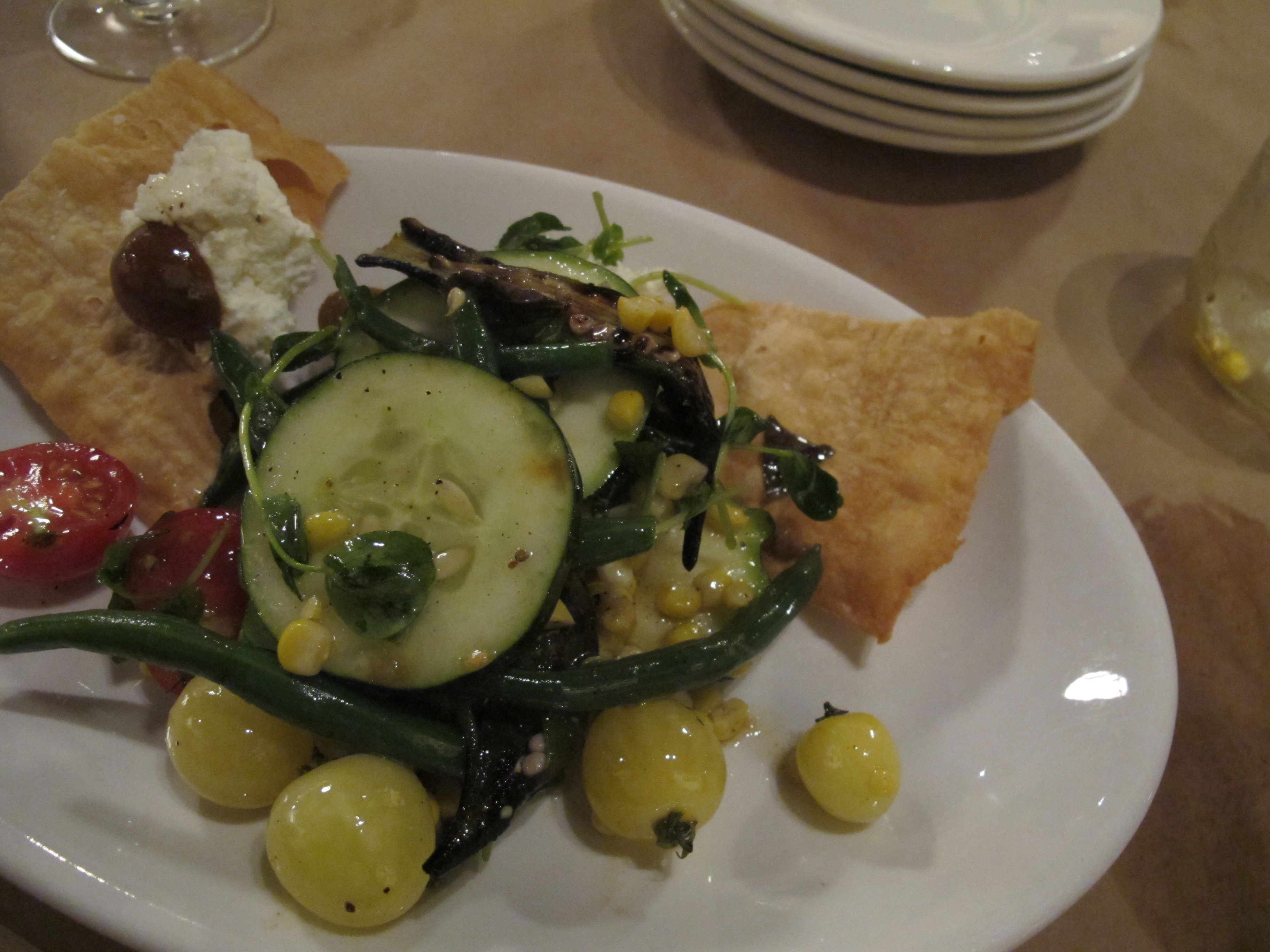
We choose between three or four salads that all sounded fabulous, settling on the marinated vegetable salad (not sure that’s the exact name).
 It arrived in a canning jar — fun! For ease of eating we dumped it out on the plate. A flavorful and fresh start to our meal, the corn melted in my mouth, buttery and sweet, a nice compliment to the other veggies.
 By this point, after the initial wall of odor and adjustment period, our olfactory systems became desensitized to the fishy smell.
 Next up, sweet potato nachos. These were only so-so. To be fair, we made some changes to this dish. We ordered it without bacon and subbed goat cheese for the blue cheese because someone doesn’t like blue cheese. They came with some kind of a house-made catsup. Our homemade catsup beats Farmhaus’, no contest.
We discovered a new wine, a “sweet” shiraz (Jam Jar, S. Africa) that was basically a perfect red wine for us. Not really “sweet” in our book, but definitely not dry — a perfect dinner accompaniment.
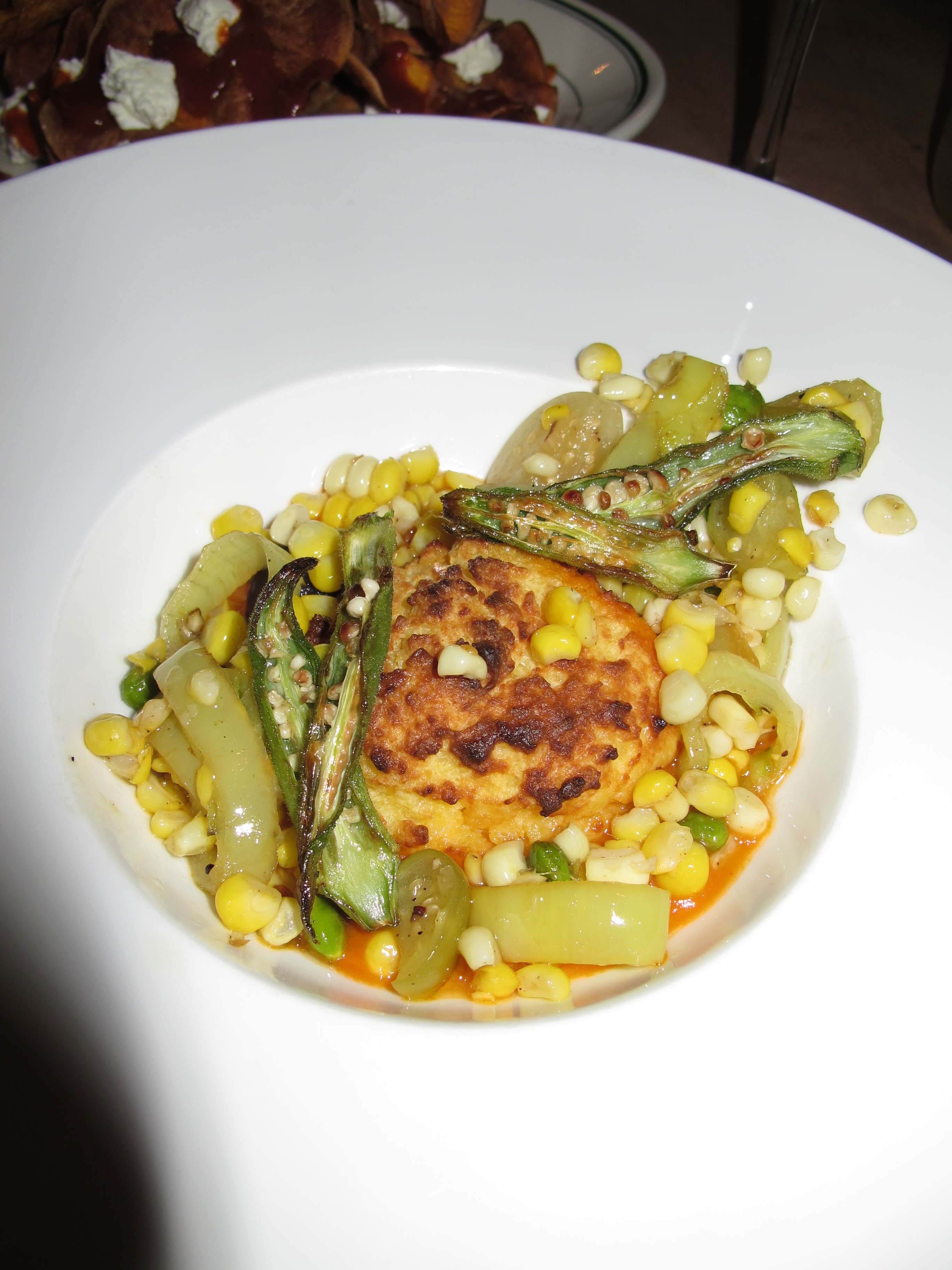 For our entree, we shared the vegetarian succotash, tomatillos, grilled okra, corn, and peppers, served over spoon bread. Mmm, spoon bread — my first, but definitely not my last, encounter with this food. We ate this and were very sad that we couldn’t lick up the last bits in the bowl 😦 In some cultures, that’s considered very polite.
I don’t have a dessert pic, but we ordered a peach and ricotta pastry. The pastry was light and flaky, with a generous amount of fresh, local peaches, served hot out of the oven with peach sorbet on top to cool things off.
We chatted with our waiter about local biking options and headed home after a delicious dinner adventure, both glad we ended up at Farmhaus.





 Her Green Life