Moving boxes

And so we find ourselves in a new year — yesterday was a holiday, today we returned to normal time.

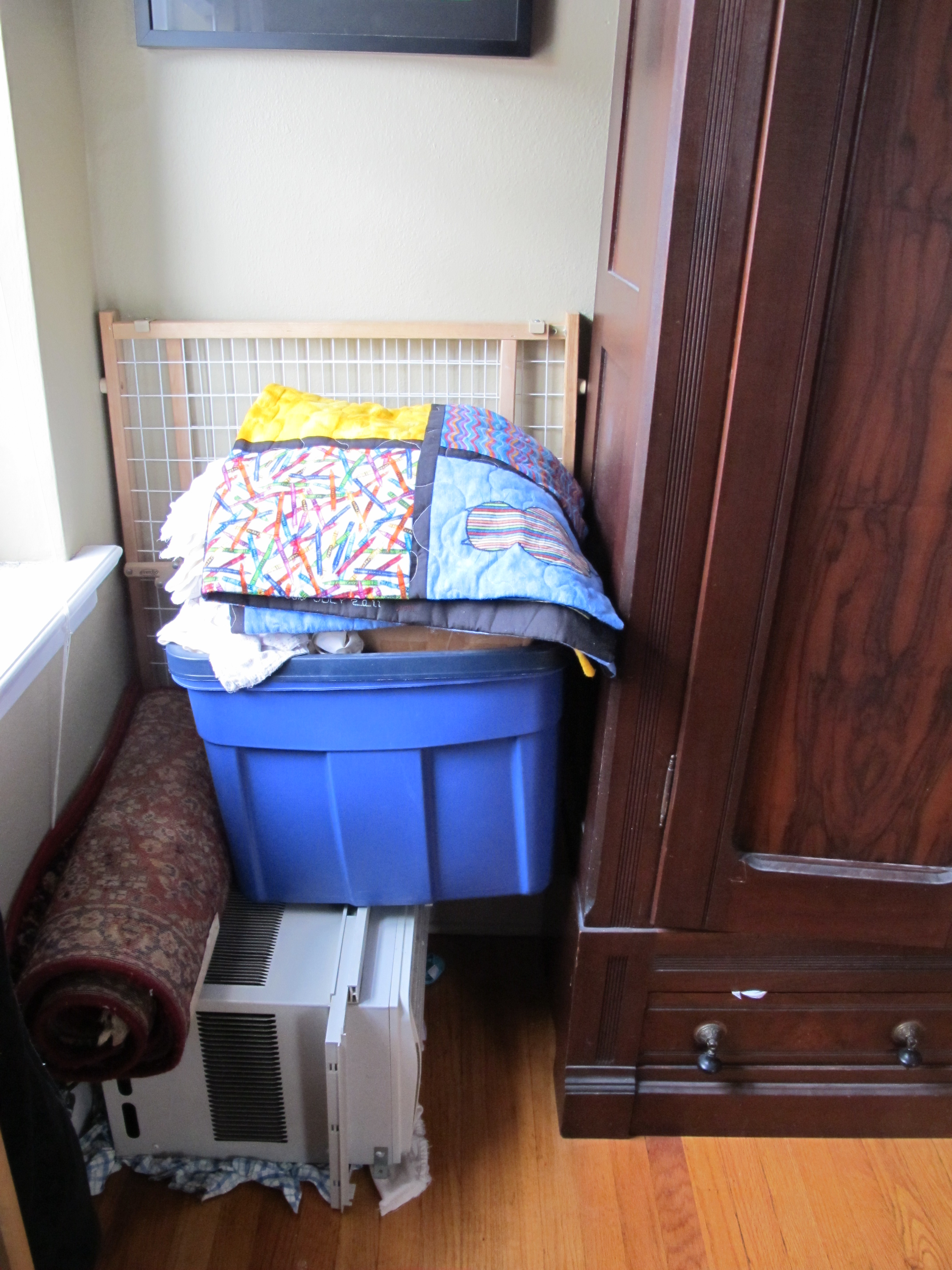
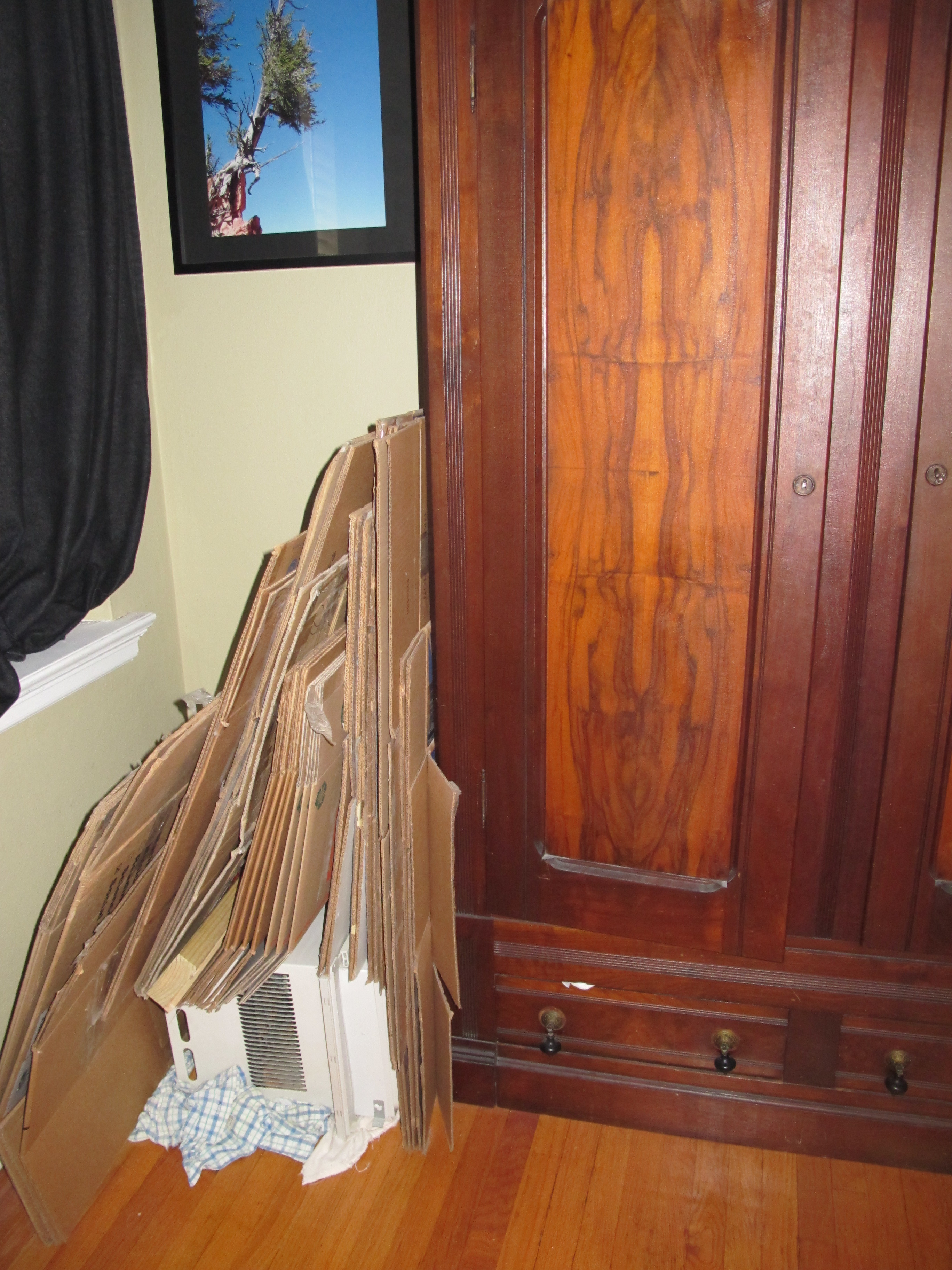
I kicked things off by tackling the moving boxes that have been sitting in the corner of Gabriel’s bedroom since we moved to this apartment eighteen months ago.  Why now, after letting them sit there for a year-and-a-half?  Your guess is as good as mine!

IMG_3528

The boxes ended up in G’s room because I wasn’t really thrilled about the basement in our building — not horrible, but definitely basement-y: some bugs here and there, a bit musty, and long overdue for some cleaning attention.  I didn’t want the boxes, which will [theoretically] be carrying our possessions to our non-existent house one day, getting musty or pest-infested, so I kept them upstairs, and this was the most out-of-the-way option.

That corner of Sir’s bedroom has not seen the light of day, nor the business end of a vacuum or dust rag, since we finished unpacking, and, since it doesn’t appear that we’ll be repacking them anytime soon, I decided I wanted the boxes out of there.

IMG_3532

Several trips carting boxes down two flights of stairs (empty, broken down boxes are so awkward and unwieldy to move — gah!), followed by some cleaning and rearranging in the bedroom, and voilà!  This little project won’t be completely finished until we get the window AC unit out of there, but somehow I don’t think I’ll have any immediate takers on that item with our current arctic weather.  At least all of the dust is gone, and I can fully open the curtain in that corner.

The boxes are now in the basement, where I should have put them in the first place, I suppose.  The blue plastic bin in the photo, which previously inhabited a different corner of Sir’s bedroom, is stuffed to overflowing with his old baby clothes.  The minimalist, decluttering side of me just wants to drop everything off at the St. Vincent de Paul thrift store and be done with it, but I can’t quite bring myself to do that.  Maybe that will be a project for next year.

2013 in photo review

In lieu of Christmas cards, I created a picture video to share with friends and family this year.  I had a lot of fun making it, though next time around, I’ll create a shorter version — this is a bit lengthy (so many great photos!).

Wishing you all the best in the new year!

Biking down Candy Cane Lane

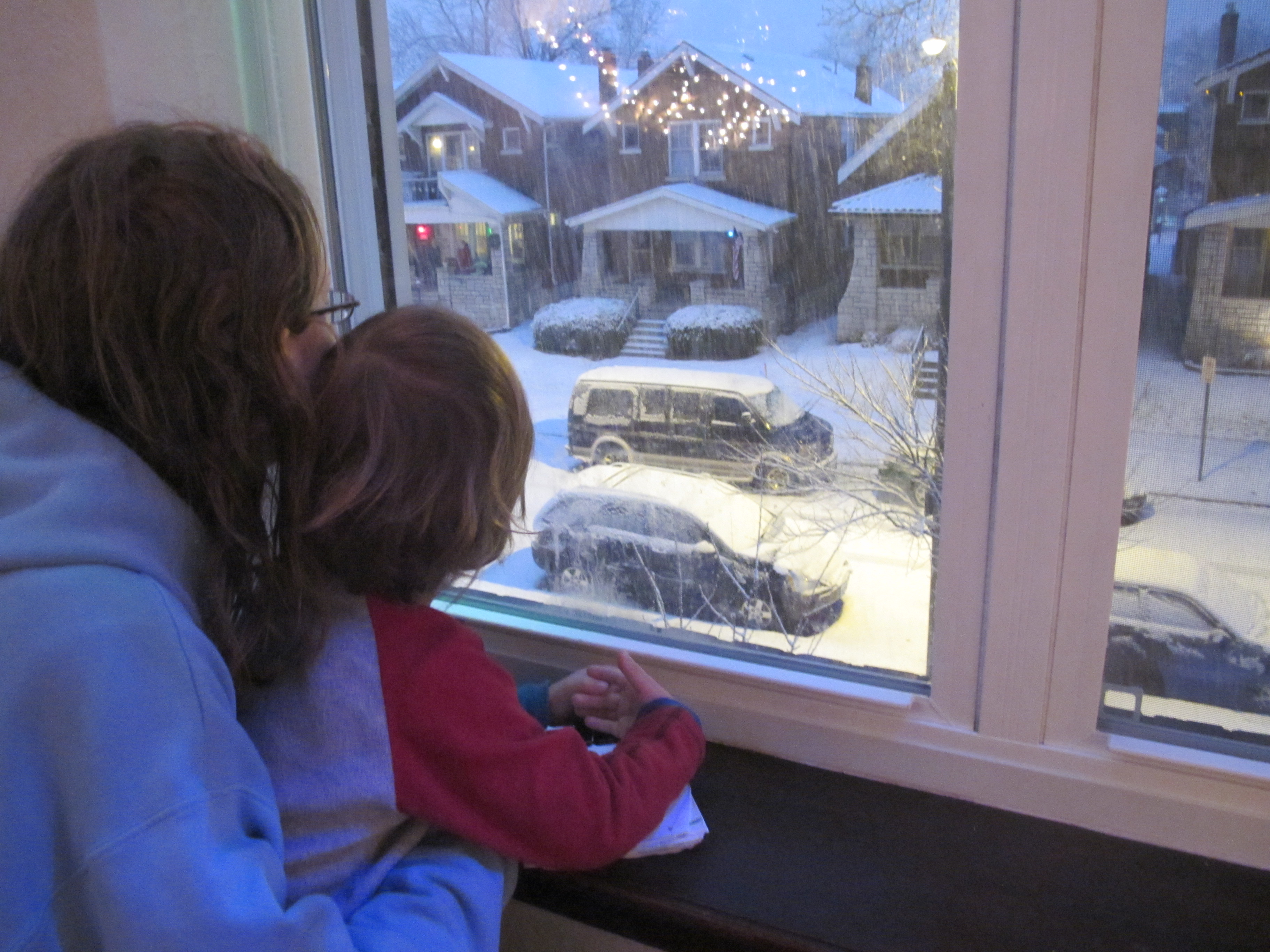
Tomorrow we will wake to rain, rain, rain, but last Saturday, we woke to this:

IMG_3352

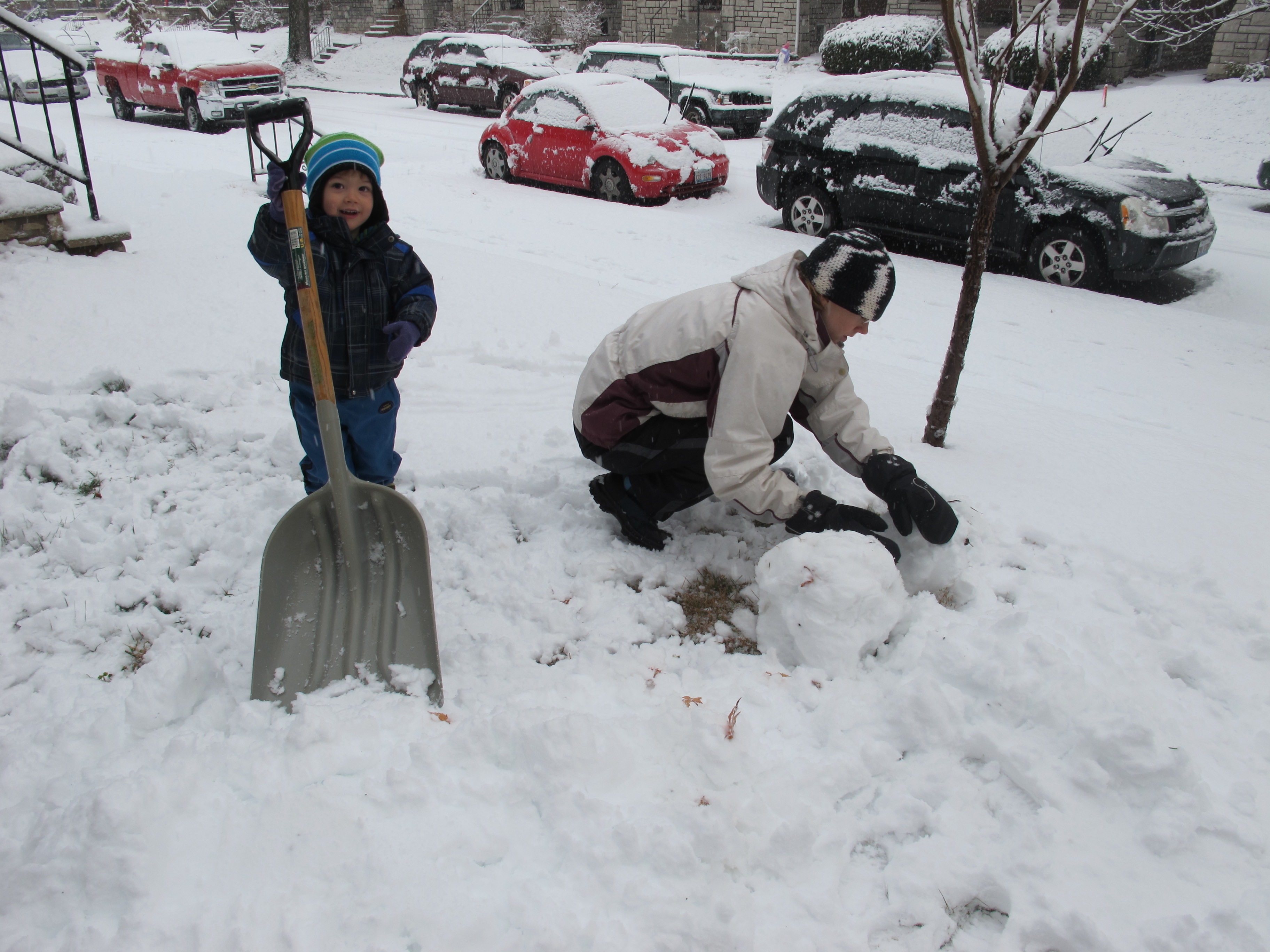
A magical snow.  After breakfast, we bundled up and headed outside . . .

IMG_3358

. . . to shovel and make a snowman.  Our shoveling efforts paid off.  The people on our side of the block (the side that’s in shadow all day this time of year, with no sun to aid melting) who didn’t shovel had snow- and ice-covered sidewalks as late as yesterday morning, but our walk stayed clear.

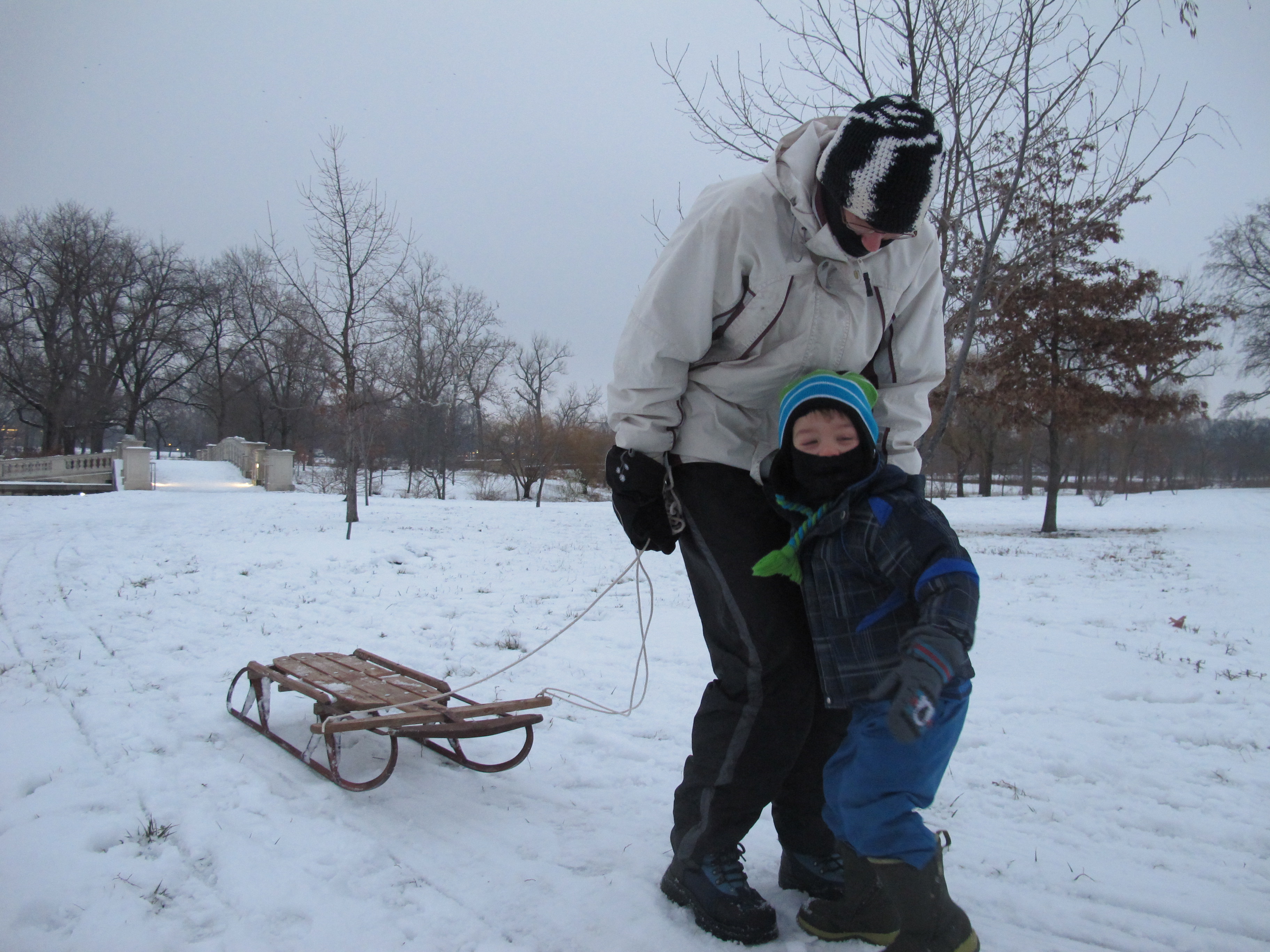
Matthew had been itching to go sledding all day, so after Gabriel’s nap, we climbed into the car and headed to Art Hill.  (If it had been up to me, we would have taken the easy, no driving on questionable roads required, approach and hit the nice little hill at the end of our street, but I knew that wouldn’t fly.)

IMG_3385

Gabriel’s first time sledding on Art Hill was a success.  The three of us managed to pile onto our old school runner sled, and Matthew safely steered us away from the hay bales and water at the bottom of the hill.

As I mentioned last week, they don’t clear the side streets, and this snow stuck around for quite awhile, even with somewhat warmer temps, melting a bit during the day, then freezing back into ice overnight.

I waited all week for the streets to clear so we could bike down “Candy Cane Lane,” a street not to far from us where all of the residents on the block go CRAZY with Christmas lights and decorations.  It’s a bit of a Christmas destination, and I knew the best way to enjoy it would be on bike (or foot).

All of the stars finally aligned last night: streets almost 100% clear, fifty degree temps even after the sun was down, and time to make it happen.  We chose a route that had a number of nicely lit blocks, so really the whole ride was one big light show.

IMG_3386

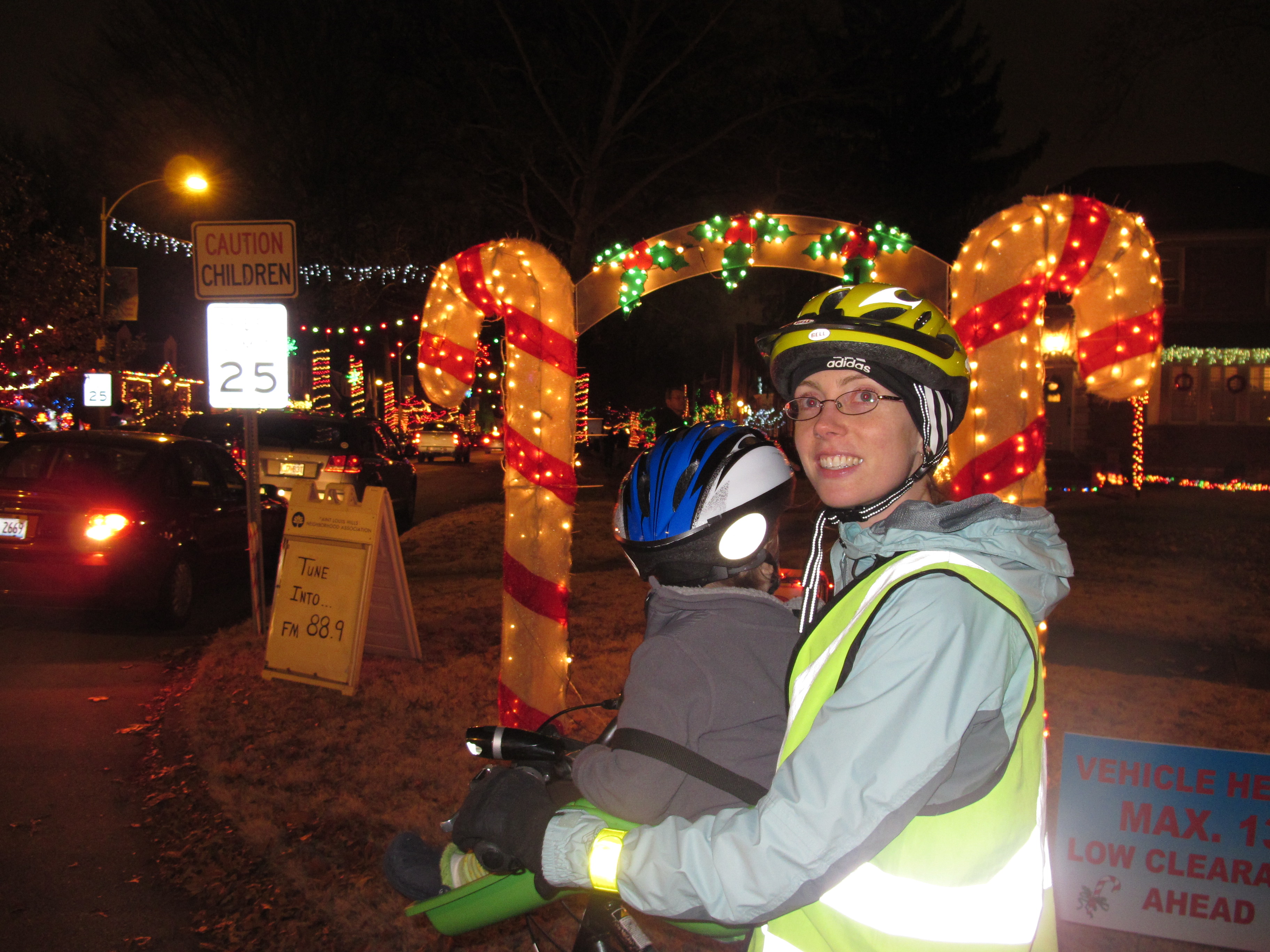
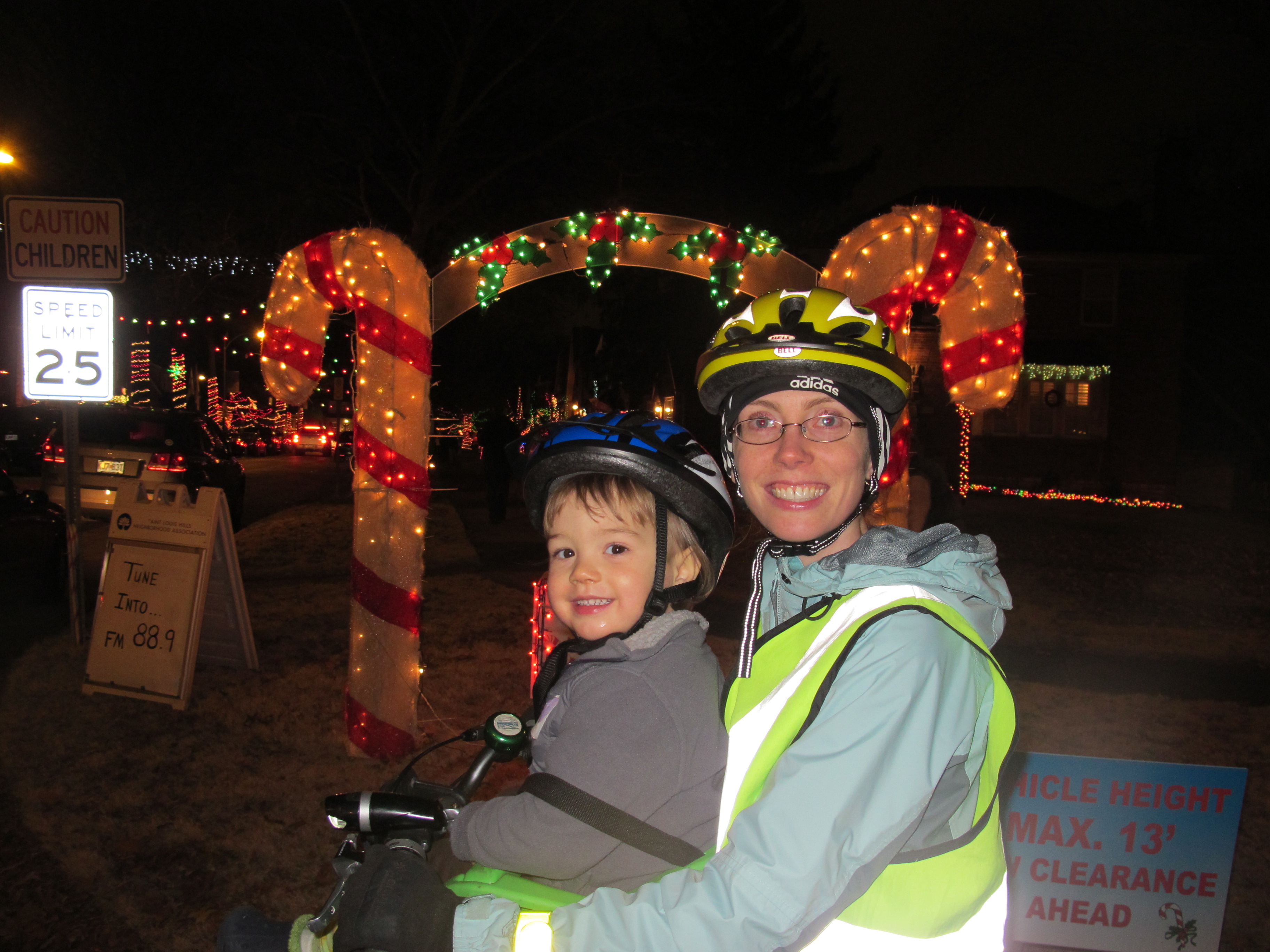
We snapped a few pictures (which of course don’t do it justice, though they show off my blinding reflective vest) and joined the queue of slowly moving vehicles on Candy Cane Lane.  I felt like I was doing a “slow bicycle race” for most of the block.

IMG_3388

I’m so glad we were able to make this happen (we snuck it in just before it gets cold again), and it’s certainly a Christmas tradition I hope to continue in future years.

Food philosophy: Fad diets

I was in the car returning from a Whole Foods/Trader Joe’s run last week, when the DJ on the radio station mentioned something about a new diet, the “honey diet.”  While I didn’t bother going to the station’s website for more details, the gist was “replace all white sugar with honey, eliminate all carbohydrates one [or two?] days a week, and, whatever you do, don’t. eat. potatoes.  EVER.”

Um, yeah, can you say, “Fad diet?”  Like a string of fad diets before, the “honey diet” picks something to villainize, in this case, the humble potato, along with carbohydrates in general.  Would potatoes be a problem if you’re sitting around all day consuming nothing but french fries (and oil and salt)?  Sure.  But potatoes, especially locally and/or organically grown potatoes cooked with the skins on, can certainly be part of a healthy diet.

I read the phrase “Paleo diet” before I heard it spoken anywhere, and in my head it was pronounced “pa-lay-o,” with the emphasis on the “lay.”  I didn’t realize it was referring to our Paleolithic ancestors, and thus pronounced “pay-lee-o” for quite some time.

My first reaction was, “Haven’t we already [more or less] done this?  It was called Atkins.”

Or, to paraphrase a quote from Zoolander,  “Atkins? Lo-carb? Paleo? They’re all the same [diet]. I feel like I’m taking crazy pills.”

The thing is, I agree with some of the Paleo principles, especially those of the “Eat real food” variety.  I also agree that there are benefits from minimizing some of the foods that Paleo says we should minimize or eliminate, like dairy and added sugar.  The diet also talks about eating eggs and meat from pasture-raised animals, another plus.

One of my problems with Paleo is the vilification of whole grains and legumes.  I just can’t get on board with eliminating two major categories of nutrient-packed foods, both of which can be good vegetarian sources of protein.

From an environmental and world-population standpoint, we can’t all eat a diet based on pasture-raised meat.  There were far, far fewer humans on this planet when our Paleolithic ancestors were running around, so it worked then.  Now?  Not so much.

The Paleo diet also doesn’t take into account the fact that the idealized Paleolithic humans had far different lifestyles and energy needs than we do today, nor the fact that few of our Stone Age ancestors lived past the age of thirty, meaning we don’t know how this diet will play out, health-wise, in an age when people are regularly living seventy years or more.

The blog post, Archaeologists Officially Declare Collective Sigh Over “Paleo Diet,” while apparently satirical, and not reflective of a real scientific conference, offers some good food for thought in the midst of an over-hyped fad diet:

What people seem to ignore, he said, was that the fresh fruits and vegetables forming the basis of the Paleo Diet were created by the same agricultural process that produced cereal grains. “Nearly every food item you currently eat today has been modified from its ancestral form, typically in a drastic way, ” he began. “The notion that we have not yet adapted to eat wheat, yet we have had sufficient time to adapt to kale or lentils is ridiculous. In fact, for most practitioners of the Paleo Diet, who are typically westerners, the majority of the food they consume has been available to their gene pool for less than five centuries. Tomatoes, peppers, squash, potatoes, avocados, pecans, cashews, and blueberries are all New World crops, and have only been on the dinner table of African and Eurasian populations for probably 10 generations of their evolutionary history.

“You really want to be Paleo? Then don’t buy anything from a store. Gather and kill what you need to eat. Wild grasses and tubers, acorns, gophers, crickets- They all provide a lot of nutrition. You’ll spend a lot of energy gathering the stuff, of course, and you’re going to be hungry, but that’ll help you maintain that lean physique you’re after. And hunting down the neighbor’s cats for dinner because you’ve already eaten your way through the local squirrel population will probably give you all the exercise you’ll ever need.”

In a world where we’re faced with an overabundance of unhealthy food choices (not to mention other barriers to healthy eating, like lack of time or money to prepare healthier foods), the black and white, “Eat this.  Don’t eat that,” structure of fad diets is seductive.

The trick is to build your own healthy eating plan, whatever that looks like for you, but which can probably include almost all food, in moderation, if most of your calories come from a variety of real, whole, unprocessed foods.  Look any “diet” over with a critical eye, take the good advice (if any), and leave the rest.  Fads come and go; healthy eating habits last a lifetime.

Now, if you’ll excuse me, I have some potatoes to cook.

Next up: “Great Grains,” my approach to carbohydrates.
Life goes on

Does anyone else remember watching the TV show Life Goes On in the early ’90s?  I watched very little television growing up, but this was a weekly tradition for my family for a couple of years.  Not really related to this post, other than sharing a title, but I now have the theme song stuck in my head.  Anyhow.

The week before Thanksgiving, we learned that Matthew’s job would be cut to .75 FTE effective January 1, making us a household of two part-time wage earners (I currently average between 15 and 20 hours/week).

Matthew has also been carrying the health insurance for our family, and, while coverage is still available to part-time employees, our monthly premiums will double.  This increased cost of insurance means that, while his hours are only cut to 3/4 time, his take home income will effectively be cut in half — gulp!  (I’m looking into what we would pay for similar coverage in the health insurance marketplace.)  I know we’re not the only people in this boat, but it’s a little scary.

The news came just as we were getting to the break even point most months, and maybe starting to save a little bit some months.  In most respects, we’re pretty frugal, and we saved like crazy during the three or four years where we had two full-time incomes, so we’ll be okay for the short term.

Long term, we’re questioning the wisdom of both of us being in the same field (public health), one where jobs largely depend on grant funding (soft dollars), are often not particularly well-paid, and offer few guarantees position longevity.

The news also came just as we were going to go ahead and make a big purchase, a longtail cargo bike, having narrowed it down to either the Yuba Mundo or the Xtracycle Edgerunner.  While there’s some temptation to put that kind of large expenditure on hold, the fact is we have the money, this is something that we’ve been thinking about for a long time, and, if we’re going to continue making most trips with Gabriel by bike instead of by car, we want (if not quite need) something other than the trailer option.  For us, going ahead with the purchase makes more sense than not.

That said, we were leaning toward the Edgerunner, which will cost noticeably more than the Mundo, so we’re a bit back to the drawing board on that final decision, which makes the fact that we’re actually getting a longtail seem not quite real.

For the most part, we’re not panicking, though I agree with the sentiment of an unemployed friend who said that she’s okay most of the time, but every few weeks it all gets a little overwhelming.  For me, it hits home most when considering long term savings, like retirement and G’s college fund, as well as larger [potential] expenses: the bike, getting speech/language therapy for Gabriel, and airfare and lodging for the three of us for a West Coast wedding next summer.

These things are clearly all optional, driving home the point that, in the scheme of things, we are very fortunate.  We are not questioning  whether or not we’ll have food on the table or a safe, warm place to live.  We’re taking things as they come, while exploring short- and long-term career options (a bit more on that in a future post).

Though perhaps a bit different than before, life goes on.