Green confusion

Trying to green your life but not always sure what the green choice is?  You’re not alone. “Delusions Abound on Energy Savings,” a recent post on the NYTimes Green blog, shares some results from a study about our energy saving beliefs and behaviors.

One common misconception involves laundry.  What saves more energy, line-drying clothes instead of using the dryer, or switching your washing machine from a warm water wash to a cold water wash?

Most people picked line drying, but washing in cold water actually saves more energy.  Mr. GreenLife provided this explanation: It takes a lot of energy to heat water.  Compared to heating enough water to fill a washing machine, the process of removing that water from the clothes in a dryer consumes less energy.  (I’m sure his explanation included more scientific details that failed to make it through my important information filter.)

Your best bet?  Cold water wash AND line drying.

I took most of their findings with a grain of salt, because they focused simply on energy use, not overall environmental impact.  For example, buying energy-efficient appliances saves more energy than switching off lights or unplugging appliances when not in use, but they don’t factor in the environmental impact of discarding what may be a perfectly functional, but older model refrigerator, just to upgrade to a new energy-efficient model.

I’m also not sure how “driving a more fuel-efficient car” comes out on top of “biking or using public transportation.”  Again, they omitted some important details on the overall environmental impact.  I highly recommend driving a more fuel-efficient car, but not driving that car at all is even better.

The complete journal article is available here through the Proceedings of the National Academy of Sciences (PNAS).

Yeah, PNAS.  Maybe they should have thought that acronym through a little bit  more.  Or maybe research scientists/academics do have a sense of humor?

Shopping spree

In a complete reversal from my teenage years, I really dislike shopping, and it’s not just that I’m spending my own money now instead of my parents’.   I now prefer getting rid of stuff to acquiring more, but over the last several weeks, we’ve made some contributions to our local economy.

First came our Home Eco trip, which netted a new Kleen Kanteen (stainless steel water bottle), some new-to-us glass jars (from their resale section — love that they have this), a gardening tool, and these on-the-go silverware holders.A local St. Louis woman makes the Sew Good and Trendy Eco-Wrappers from either repurposed fabric scraps or hemp.  The wrapper includes an organic cloth napkin and spots for a knife, fork, and spoon (supply your own, those are not included).  I initially balked at the price, but when you consider that these are made locally with quality materials . . . . Eh, worth it.

Unwrapped

We replaced some of our non-stick cooking pans with these new-to-us pans from The Future Antique and picked up a hand blender there, too.

I just realized that all of these purchases were food-related.  No wonder I like them so much 😉

Caught red-handed

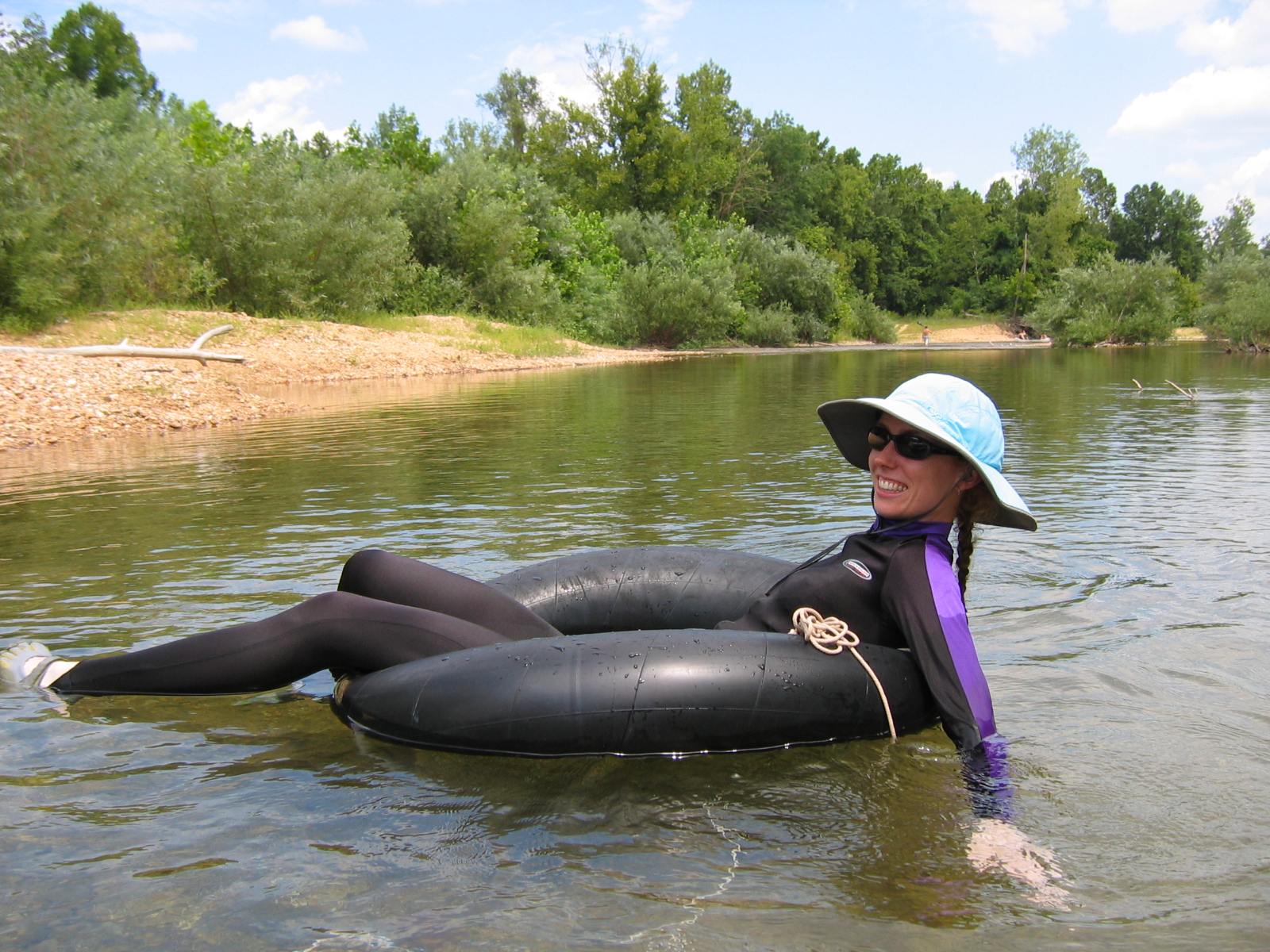
Bright and early on Sunday morning, we piled into a car with two friends and headed two hours south to float the Black River.  In an attempt to avoid head-to-toe sunscreen without getting fried, I pulled out the dive skin I bought for snorkeling (or, in my case, pukeling*) on our trip to Mexico almost two years ago.

What’s the environmental impact of wearing sunscreen vs. wearing sun protective clothing?  I’m not sure, though the calculation depends in part on how long the sun protective clothing lasts.  If the clothing lasts long enough, it may indeed be better overall (health + environmental impact) than buying and applying chemical-laden lotion from plastic bottles.

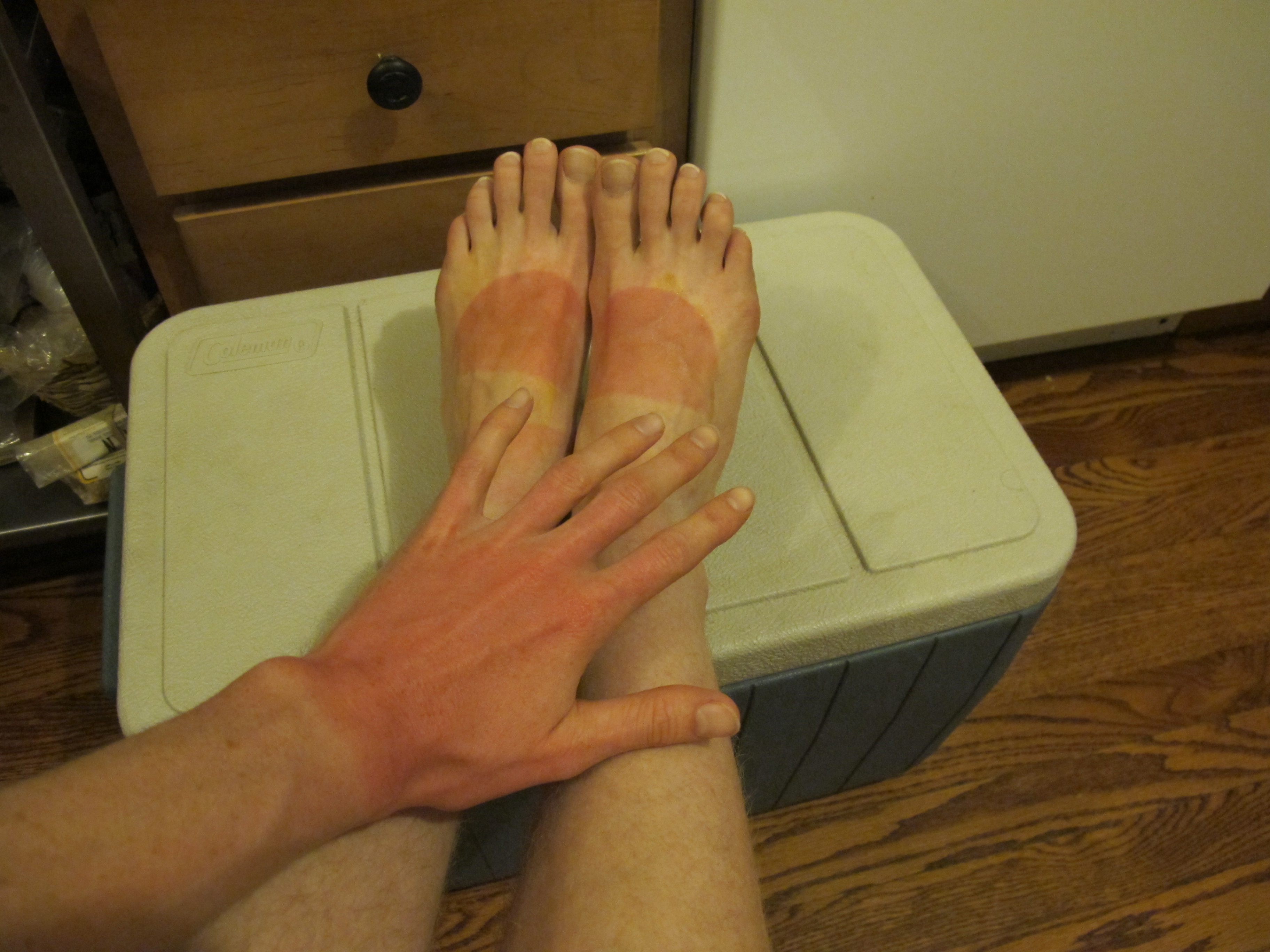
Can you spot the problem in the above picture?

Hint 1: The dive skin performed beautifully.

Hint 2: Unfortunately, the dive skin did not cover everything.

I’m kicking myself because I know better.  Ouch.

*Snorkel + puke = pukel.  Disgusting and entirely possible, though I did manage to remove the snorkel from my mouth before feeding the fish.

Plastic

My wait for a copy of Colin Beavan’s No Impact Man at the library finally ended last week.  I’m only 70 pages into the book, but I’m comfortable recommending this read.  In fact, go to your library website and request it now (maybe you won’t have to wait as long as I did).  Then come back here for more.

Book requested?  Okay.  Colin’s book inspired this post, and will, perhaps, inspire other posts if I get around to writing them.

I found this bit on plastic particularly horrifying:

“A thousand miles off the coast of California, in the middle of the Pacific Ocean, there is a swirling soup of floating trash twice the size of the continental United States.  [It] contains six times as much plastic, by weight, as bio-matter.”

And

“In the North Pacific alone, an estimated 100,000 sea turtles and sea mammals, a million seabirds, and countless fish starve to death each year after plastic blocks their digestive tracks.”  (Emphasis added.)

Plastic wreaks havoc not only on the environment, but also on human health.  (I won’t go into detail on that here.  If you want to know more, one possible read is Slow Death by Rubber Duck.  I haven’t read it, but Rebecca reviewed it here.)

Beth Terry at Fake Plastic Fish dramatically reduced her plastic consumption.  Click here to read her guide for some great places to start.

A recent TreeHugger article lays out an argument for eliminating disposable plastic while acknowledging that there may be some situations where plastic IS the best material for the task.  It took me forever to find that article again, but I did it for you because it’s worth a read, so click the link up there.

This doesn’t have to be an all or nothing proposition.  One change I’ve been focusing on over the past several weeks is buying more food (food that I would normally get in plastic bags) from bulk bins so I can reuse the rather large number of plastic bags I’ve accumulated.

So, what will you do to reduce your plastic waste?  See Beth Terry’s guide (link above) if you need inspiration, and then share your action step here.

Quotes from No Impact Man by Colin Beavan, p. 54.