Green baby strategies

While I’m far from having everything figured out on the “green parenting” front, I have learned a few things over the last ten plus months.  So, in no particular order, here are eight strategies to help you and your baby go green.

1. Buy Used
Okay, this one is rather obvious, but it bears repeating.  The million (or billion?) dollar baby industry spends a lot of time and effort telling us (especially first-time moms) that we need a big, custom nursery with shiny new furniture, a dresser AND closet full of brand-new baby clothes (that will acquire stains and be outgrown in the blink of an eye), and a whole array of toys and entertainment devices that a newborn could care less about.  Their strategies prey on our insecurities as new parents, trying to convince us that we can make up for perceived deficits in our parenting knowledge and skills by spending money.
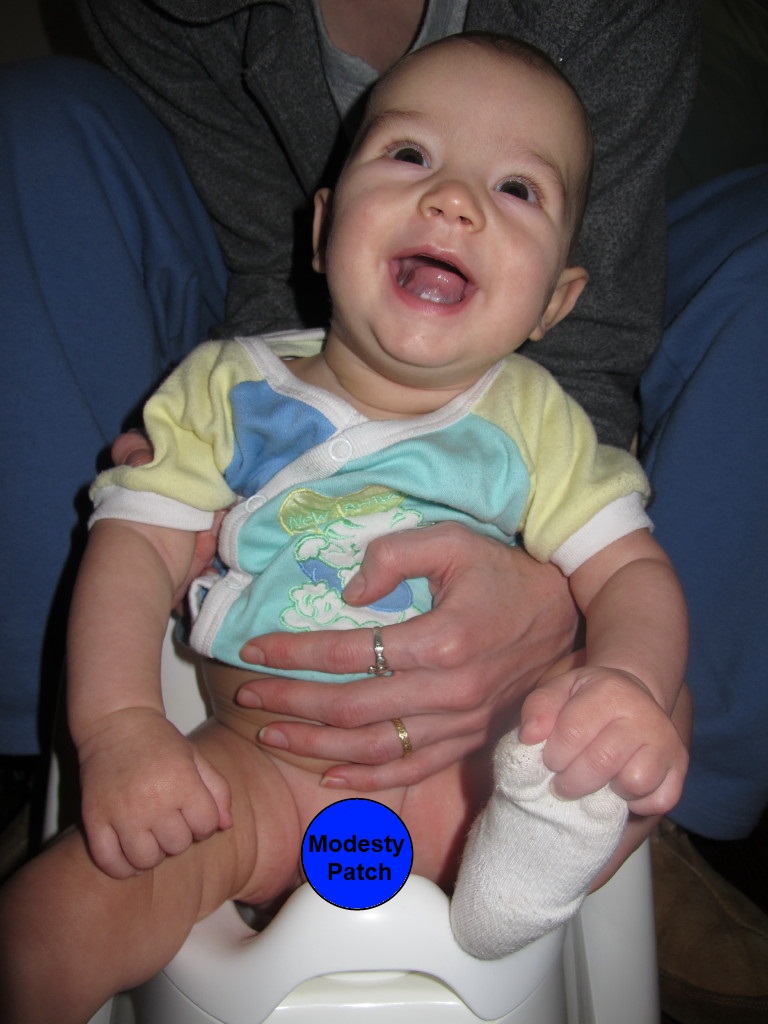
Baby Bjorn potty, like-new condition, $8 on CL ($30 new)

Since most baby stuff is used for a relatively short period of time, you can find many items in pretty good condition at regular thrift stores, baby/kid-specific consignment shops, Craigslist, and/or garage sales.  Make a specific list (but be flexible on things like color), and then ask family and friends to keep an eye out for things as well.

2. Something Borrowed
Even better than buying used, check with friends and family about borrowing items.  Your cousin may not want to SELL that baby swing or bouncy seat, preferring to keep it for a future baby, but she may be willing to loan it to you for the few months that it will be useful.

3. Skimp on Laundry
A new addition does not have to mean tons of extra laundry.  Sure, there will be some additional laundry in the form of diapers if you use cloth, but there’s no reason you should be averaging over a load a day!  A shirt or blanket with a bit of drool, or pants that are slightly damp at the waist from a minor diaper leak, can be removed, aired-out, and re-worn.  Comfortable shirts and pants can transition from daytime to bedtime, with no need for an extra change of clothes.

Basket case

4. Be Flexible
Sir graduated from the [second-hand] Moses basket to a Pack ‘n Play that my sister picked up for us at a garage sale.  Our initial assumption was that it would be a temporary solution while we worked on finding a crib and making room for said crib in our small, one-bedroom apartment.  He slept well in the playpen, so we decided to forgo the crib. 

5. Think Outside the Box
Instead of a big, bulky high chair that separates baby from the table and keeps him from really being part of the meal, we started with a small, portable seat that clamped on the table.  It seemed safe enough, but I was a bit worried, especially as Sir often demonstrates  his enthusiasm for food by kicking and bouncing in his seat.

Who, me?

I was all ready to visit a local baby consignment store to look for a booster seat that we could use with a chair at the table, when Matthew came up with the solution in the above photo: phone books stacked on a chair underneath the clamp-on seat.  His idea transfers the weight to the chair instead of the table, allowing us to continue to use the clamp-on seat, but making it safer and more stable, no purchase necessary.

6. Seek suggestions
When I wrote about our crunchy diaper problem and my search for used cloth diapers, several readers responded with helpful suggestions.  Based on your ideas, I contacted a local diaper service and purchased thirty of their “seconds” for twenty dollars.  Despite some signs of wear, these are good quality, thick prefolds that are more than adequate for our needs.

7. Wait on It
Sometimes not having the time or energy to do the research for a purchase, or actually get to a store [or online] to make the purchase, can be a good thing.  Babies’ needs change very quickly, and something that might seem absolutely essential today may well be old news in a week or two.  Waiting gives you time to find a more long-term solution and avoid an unnecessary impulse buy, but you may also discover you can live without a what’s-it or thing-a-ma-jig.

8. But Don’t Drive Yourself Crazy
I’m NOT so good at following my own advice on this one, but I’ll toss it in anyway.  If you’re spending lots of time and energy trying to hunt down a particular item, or burning gallons of gas driving to far-flung garage sales, you’ve probably hit a point of diminishing returns.

The bottom line is that having a baby is WAY less green than not having a baby, and, as I continue to discover, parenting is all about compromises (my friend writes a blog devoted to that subject).  Sometimes buying new does make sense — in these cases, try to keep the item in good condition to loan, sell, or donate once you’ve finished using it.

Your Turn
I’m sure there are lots of other ideas out there — what are YOUR tips and tricks for minimizing your little one’s carbon footprint?


Related post: A basket for baby (my pre-baby thoughts on baby stuff)

A tale of two cakes — Cake #2

The chocolate cake goodness, started in this post, continued to my birthday weekend.  When Matthew asked what kind of cake I wanted, I gave him a couple of options: 1) something with chocolate and peanut butter (a cake or a tart) or 2) a chocolate pudding cake.

There are various definitions of “pudding cake,” and for Matthew’s birthday a few weeks ago,, I made him a vanilla rum pudding cake that was definitely more pudding than cake.  We actually weren’t sure why the recipe included the word “cake.”

The inspiration for my request came from a blog post I saw back in January.  Yes, I’ve been dreaming of a chocolate cake with vanilla pudding poured over it for over three months!

Unfortunately, like my original inspiration, all of the pudding cake “recipes” I found in online searches involved boxes — boxed cake mix and boxed pudding.  Eh, no thanks.

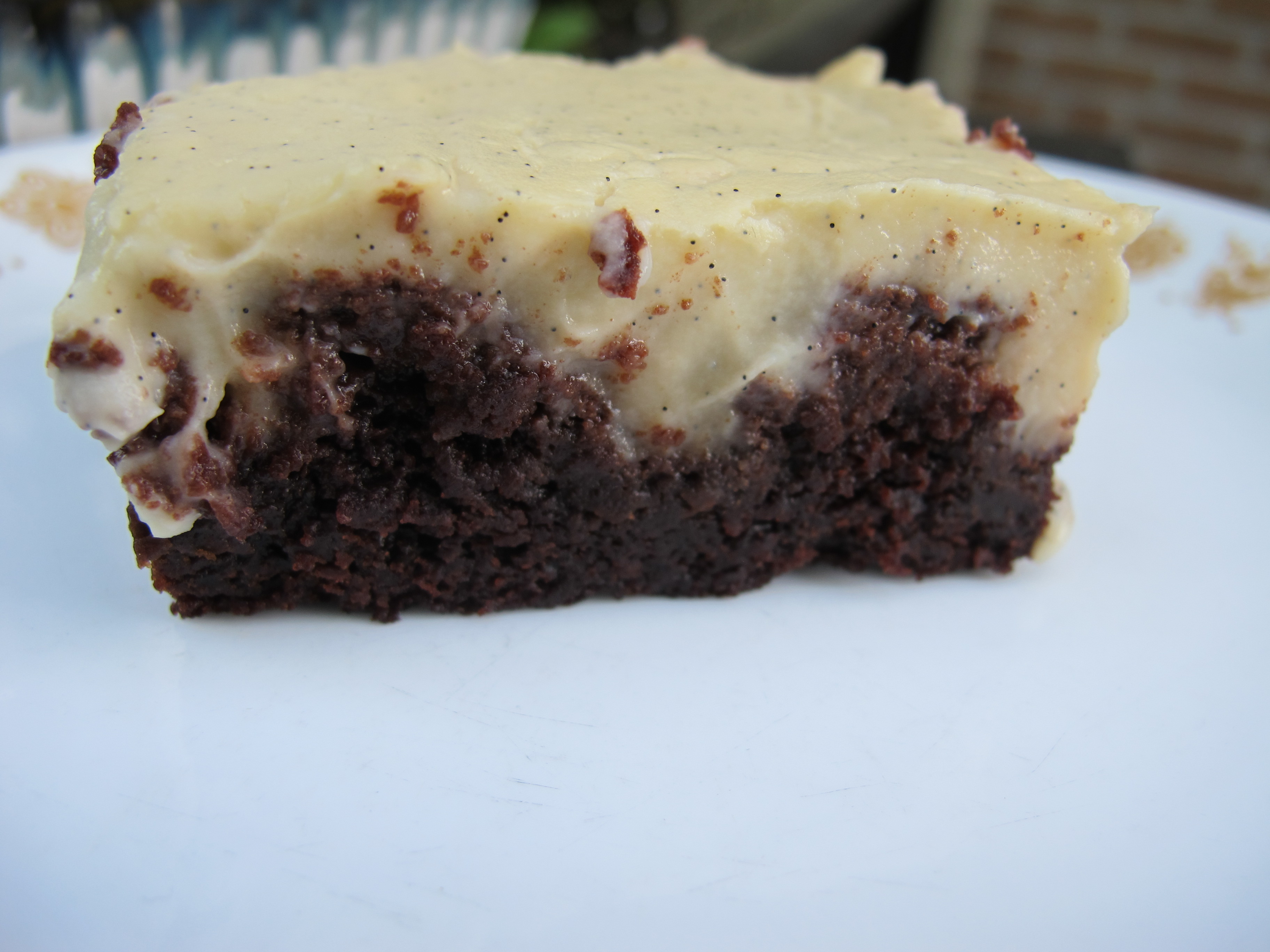
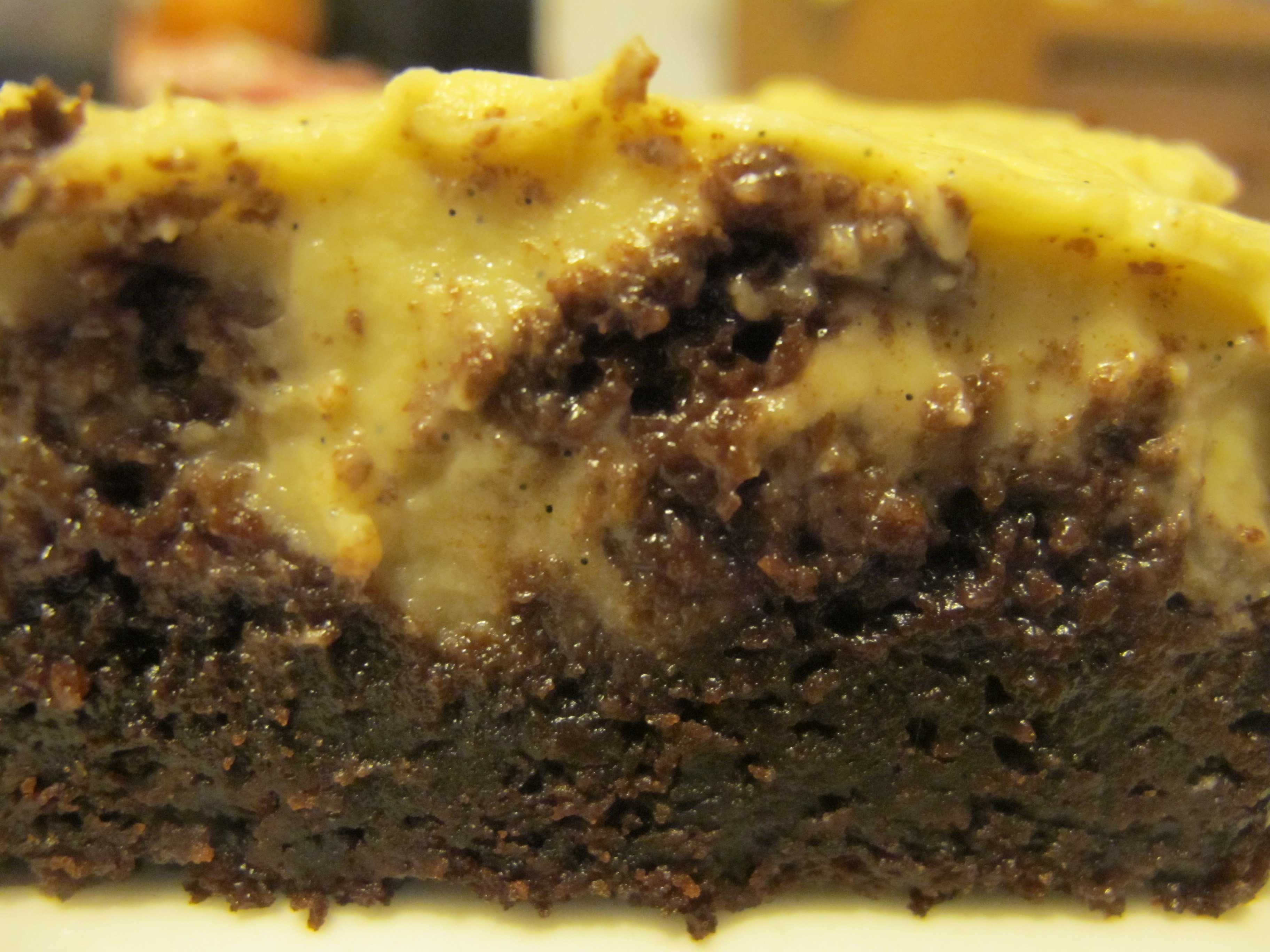
Instead, Matthew whipped up a chocolate cake (in not much more time than it takes to make a cake from a box) and some delicious, creamy vanilla pudding, creating the cake of my dreams.

He started with the chocolate cake from this recipe, making it as a sheet cake in a 9×13 pan instead of a layer cake.  He made two other changes: 1) regular cocoa powder instead of Dutch-process (it’s the only kind we buy — more antioxidants!) and 2) hot water instead of the coffee.

chocolate pudding cake

Recipe by Matthew

Ingredients
One 9×13 chocolate cake (ingredient list and recipe here)
1/2 c. sugar
2 T. cornstarch
1/4 t. salt
3 large egg yolks
1/2 c. heavy cream
5 t. vanilla
2 scraped vanilla beans (optional but delicious)
2 1/2 c. whole milk
5 T. unsalted butter

Directions
Make the chocolate cake.  Once the cake is in the oven, start on the pudding.

Whisk the sugar, cornstarch, and salt in a medium pan.  Then add the egg yolks, cream, vanilla, and vanilla bean scrapings to the same pan and whisk thoroughly.  Whisk in the milk.

Heat over medium high heat, whisking constantly until the pudding has thickened and is fully bubbling.  Continue heating (and whisking) for an additional thirty seconds, then remove from heat.

Whisk in the butter.  Pour through fine mesh strainer (we skipped this step with no ill results).  Set pudding aside for a few minutes to cool and thicken slightly.

When the cake finishes baking and is still warm, poke holes in the cake at one-inch intervals, using a wooden spoon handle.  Make the holes about 2/3 the depth of the cake, NOT all the way to the bottom of the pan.

Pour the warm vanilla pudding over the warm chocolate cake.  Gently spread pudding and help guide it into the holes.  There will still be a thin layer of pudding covering the top of the cake.

Refrigerate for at least an hour, and then revel in the chocolately, vanilla-y, pudding-y goodness.

Note: If you don’t let it set up in the fridge, you’ll have a big, gooey mess.  However, the cake really does taste best at room temperature, or slightly warmer.  I recommend letting it set as directed, then serving cake and allowing to come to room temperature before eating.

Early May garden tour

Matthew and his mom have been hard at work this spring, putting in time weeding and mulching now to [theoretically] reduce the workload later.  For mulch, Matthew purchased several bales of straw — transporting them to the garden two or three bales at a time on our bike rack — and Pam picked up more coffee bean sacks.

I must admit that I haven’t actually been to the garden in a couple of weeks, and things change quickly in a spring garden.  Fortunately, you can join me on a virtual garden tour.  (Unfortunately, you can’t taste the food virtually.)

This slideshow requires JavaScript.

A few things of note:

  • Most of the garden-fresh produce we’ve been eating has come from plants that wintered-over, some inside and some outside the low tunnel — lettuce, kale, carrots, and Swiss chard.
  • After years of struggling to grow spinach, we have a bumper crop this year, and it is delicious!
  • The attempts to winterize the artichokes failed, so Matthew started new plants from seed this year.
  • Our tomato seedlings look WAY better than anything I saw for sale at the farmers’ market on Saturday.  Just sayin’.
  • Some of the potatoes are already blooming, and Matthew cut scapes off of some of the garlic last weekend.
  • A rascally rabbit got inside the fence and dined on tender young pea shoots, so we mat not have much in the way of a spring pea crop.

Also, more exciting garden-related news: Matthew found out yesterday that he is the recipient of a Slow Food St. Louis biodiversity micro-grant!  His application included plans to grow celeriac and paw paws, both items that Slow Food StL identified as being of interest to local chefs.

If there’s anything I’m missing, I’ll let Matthew add it in the comments.

How’s YOUR garden growing?

Dinner & Bikes recap

After all my questioning whether or not to attend the StL edition of Dinner & Bikes on Sunday night, and time spent formulating a blog post as I processed things, the event itself was a bit anticlimactic.

But let’s start at the beginning.  I watched the weather forecast with rain and thunderstorms for Sunday and Sunday night all week, afraid that conditions would be such that biking would be inadvisable (I won’t say impossible, because you can theoretically ride a bicycle through most any weather condition, however, we try to avoid riding in severe thunderstorms).

Sunday afternoon arrived hot but dry (as in no rain — plenty humid still), and it looked like there was a good chance the rain and storms would hold off until we were safely back home.  Since we’re not acclimated to riding in the heat yet (and let’s be honest, I haven’t been riding all that much lately, period) we debated biking to MetroLink and using transit for part of the trip.

We left that as an option, but, as I expected, once we started rolling, I voted to keep going.  We were about four miles in when I started thinking fondly of the air-conditioned MetroLink cars, but by then it really didn’t make sense to reroute for that.  We continued on, enjoying the “down” part of getting downtown, and we arrived at our destination having covered eight sweaty miles in about forty-five minutes.

After being tempted by the scent of delicious food during the happy hour portion of the event, we finally got down to business, going through a buffet-style line with a variety of vegan dishes, including three or four that featured tofu, and most with Thai flavors.

The William A. Kerr Foundation hosted the event at their 21 O’Fallon Street building.  Given the mission of the foundation, and the LEED Platinum status of the building, I was disappointed to discover styrofoam plates and plastic forks in the buffet line.  Fortunately, I had my bamboo utensil set in my bag, but it hadn’t crossed my mind that I might need to bring my own plate.  Argh!

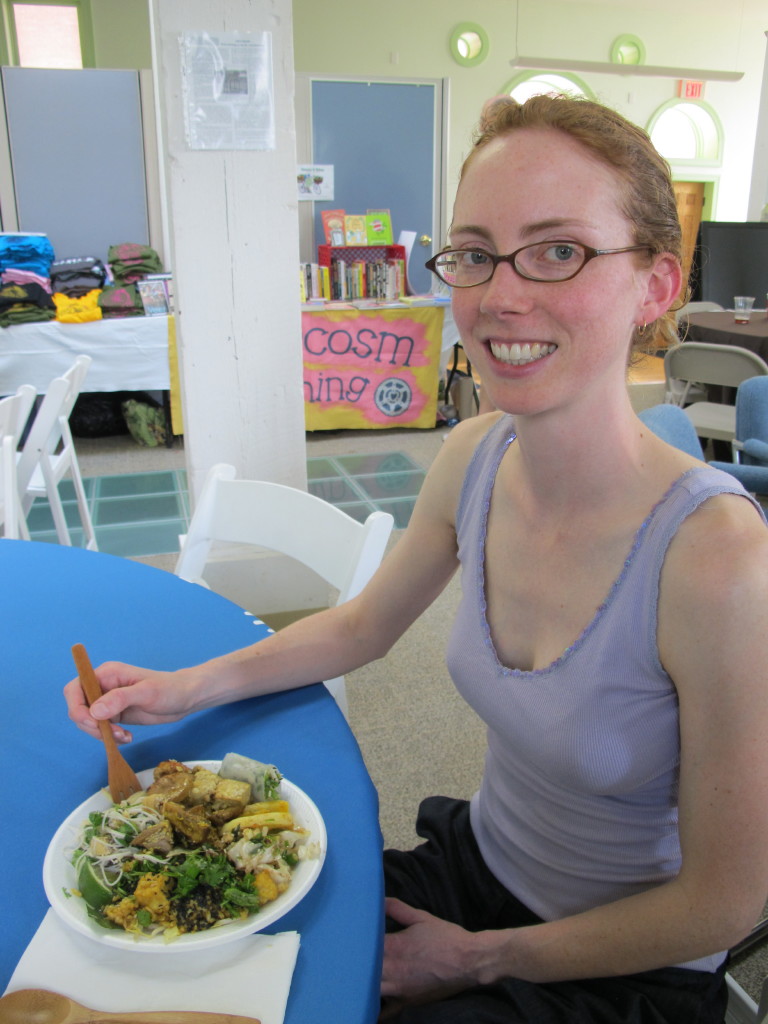
Matthew and I agreed that our top two dishes were the coconut tofu with plantain (three o’clock position in above photo) and the eggplant with shitake mushroom (middle of plate).  My compliments to The Touring Vegan Chef, AKA Joshua Ploeg, for a tasty meal.

We met some new cyclist friends over dinner, including the organizer of the StL World Naked Bike Ride, and caught up with old friends.

After dinner came the presentation portion of the event.  Elly Blue kicked things off with a talk on the economics of bicycling.  While she had some good points, from our perspective she was preaching to the choir.

Because of my work with bicycle advocacy and Complete Streets policies, I already know the stats and numbers — how expensive it is to build a mile of urban highway ($39 million on the low side, $65 million on average, even higher in some places) and how much bicycle infrastructure that you could build with that amount of money, the cost of owning and driving a car, etc.

Elly pointed out how the cost of owning and operating a car disproportionately affects people living in poverty, especially women, and how women with children face extra challenges to using bicycles for transportation, which, as a bicycling mama, had me nodding my head in agreement.

I pointed out in my pre-event post that the use of well thought-out, progressive infrastructure can be part of the solution for making bicycling more mainstream, and throughout the presentation, I noted examples of infrastructure that should be universally acceptable: bike corrals (i.e., designated, on-street bicycle parking in front of businesses), way-finding signs for bicyclists and pedestrians, and measures that slow motor vehicle traffic.

By the time we got to the video clip portion of the evening, we were both pretty beat and getting restless.  They started with some clips of bicycle advocacy in Portland, having read Mia Birk’s Joyride, this felt like more familiar territory.

Since a baby-free evening is a precious and rare thing for us, we felt we had reached a point of diminishing returns in staying longer, so we ducked out early.

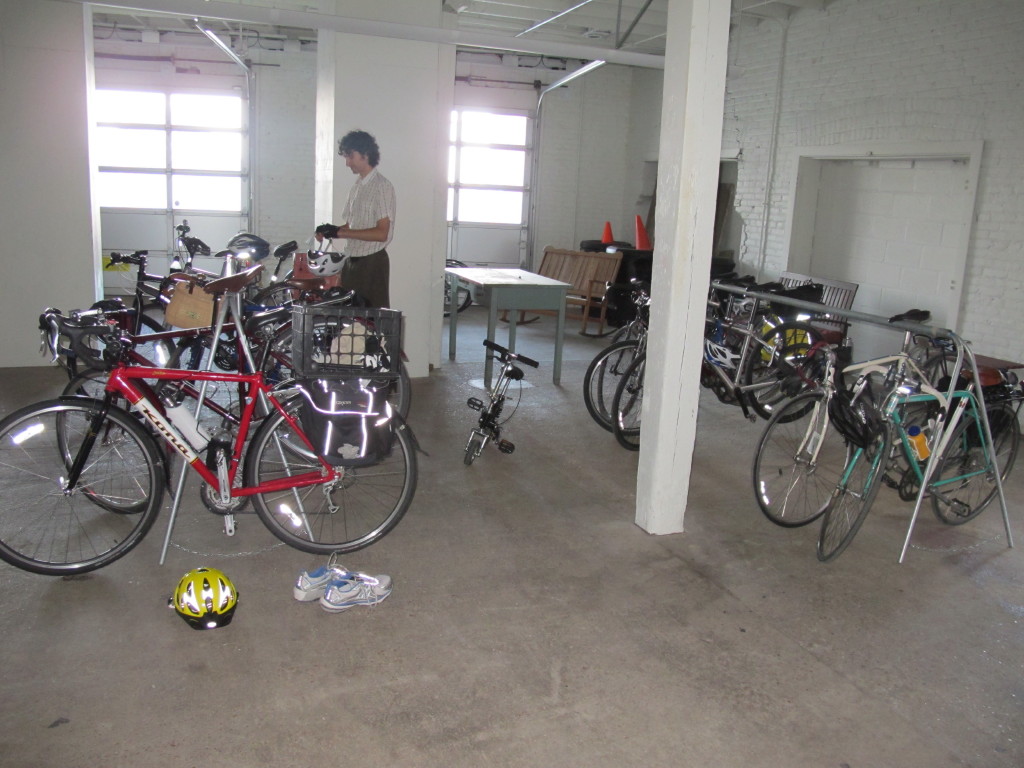
On our way there, I questioned how many attendees* would actually be biking to “Dinner & Bikes,” given the off-the-beaten-path location and the heat.  Unfortunately, the pessimist in me was correct — the indoor bicycle parking was sadly underutilized.

All-in-all, it was a nice evening.  I’m very glad we biked to the event (the ride home was especially nice), as the biking, along with the food, were definitely the highlights for me.

~~~~~~
*I wasn’t sure what to expect in terms of turn-out.  According to someone from Trailnet (the event sponsor), they sold about one hundred tickets.  It didn’t feel like there were one hundred people in the room — I’d ballpark it at 60-70, but I could be wrong.  I would have loved to see a larger turnout — more people engaging in bike-related activities and getting excited about promoting and increasing bicycle use would be a great thing.

A tale of two cakes — Cake #1

My mom and I celebrate our birthdays exactly one week apart, and this year we had Sunday birthdays.  These days, its rare for us to be together to celebrate, but this year my mom spent part of her birthday weekend with us, which meant I was able to treat her to a homemade birthday dinner and cake.

Remember that “One pumpkin, five ways,” post I wrote a couple of weeks ago?  Turns out it should have said SIX ways.  I transformed the last of the pumpkin puree into a delicious chocolate pumpkin cake, a recipe I created by merging our chocolate zucchini cake recipe with the pumpkin bread recipe.

Recipe merge verdict?  Success!  A rich, moist, chocolate cake, mildly sweet, yielding a delicious, buttercream-frosted final product.  Come back later this week for cake #2 (hint: it involves more chocolate and a delicious pudding).

Chocolate Pumpkin Cake

Recipe by Melissa
Yield: One 8×8 cake (double for 9×13 or layer cake)

 Ingredients
1 (15 oz) can pumpkin
1 cup sugar
2 cups whole wheat pastry flour
1/4 cup cocoa powder
1 tsp baking soda
1 tsp baking powder
4 tablespoons butter, melted and cooled
4 oz. semisweet chocolate
2 large eggs, beaten
1 tsp vanilla

 Directions
Cook the pumpkin and sugar together in a medium saucepan over medium high heat, stirring constantly, until thick and shiny, 5 to 7 minutes. Set aside to cool.

Use same, warm pan to melt butter and chocolate together.

Adjust oven rack to the lower middle position and heat the oven to 350 degrees. Grease and flour an 8×8 square cake pan.

Combine the wheat flour, cocoa powder, baking soda, and baking powder in a large bowl. In a separate bowl whisk the cooled pumpkin mixture, butter and chocolate mixture, eggs and vanilla together.

Gently fold the liquid mixture into the flour mixture with a rubber spatula until just combined (do not over mix). The batter will be very thick.

Scrape the batter into the prepared pan and smooth the top. Bake until a toothpick inserted into the center of the loaf comes out with just a few crumbs attached, 40-45 minutes, rotating the pan halfway through baking.

Cool completely before frosting.

Buttercream frosting

Yield: Frosting for one 8×8 cake  (double if doubling cake recipe)

Ingredients
1/2 pound unsalted butter (or use half Earth Balance, half butter)
1/2 pound powdered sugar
1/2 t. vanilla
1/2 t. almond extract

Directions
Set butter out on counter ahead of time to soften slightly.  (Do NOT melt butter!)  Weigh out 1/2 pound of powdered sugar, then sift into bowl.  Using electric beaters, whip butter and sugar together.  Add vanilla and almond.  Do not frost until cake is completely cooled.