Wonderful whole-grain waffles (without the sticking)

Along with pancakes, whole-grain waffles are part of our normal breakfast rotation around here. Our waffle iron was one of the few items on our very small wedding registry (this makes it easy to remember its origin) and is a gift from my parents.

From the beginning, getting the waffles to release nicely was a tricky proposition.  I don’t know if the issue is our waffle iron, our recipe, or some of both, but until we discovered our secret weapon, the first waffle of the batch always stuck.  I don’t mean it was a little tricky to remove; I mean we were scraping chunks of what should have been a beautiful waffle out of a hot waffle iron, cursing the thing while trying not to burn our fingers and swearing that we’d never make waffles again.

This happened with the first waffle (and sometimes the second and third, to a lesser degree) regardless of how much oil we used.  In addition to the environmental issues with disposable aerosol bottles, commercial non-stick spray is not recommended for waffle irons (or anything with a nonstick coating, really), because the propellant gunks up the surface, so we used a pastry brush to apply either canola oil or melted coconut oil in between every waffle.

Subsequent waffles usually released better (except for this one time when I swear every. single. waffle. in the batch was a hot mess, as was I by the end of it), and by the end of the waffle making session, our frustration would have faded a bit, eased by the fact that we were eating delicious waffles.  But the effort required made me eschew waffles in favor of pancakes on more than one occasion.

Enter the secret weapon.

On the way back from a camping trip two years ago, we stopped to do a little shopping.  I believe we were at T.J. Maxx, and, not unusually, I was much more interested in looking at their kitchen wares than at clothing.  They had a Misto oil sprayer, which I’d contemplated before, but never purchased due to concerns about how well it would actually work.  Matthew was interested in having something like that for applying oil to the top of rising bread dough, and we decided that for ten dollars, it was worth a try.

Back home, it sat in the box for a couple of months before I actually cleaned it (to remove any residual chemicals from manufacturing) and filled it with oil.  It then took another few months for us to think to use it to apply oil to the waffle iron, but once we did, holy moly, what a difference!  Consistently beautiful, easy-release waffles were ours!

DSC02142_sm

There have been a few hiccups along the way.  Every so often, the Misto clogs and needs to be cleaned (if you have one and it is refusing to spray anything but a sad stream of oil, this is likely your problem).  You need to wait for it to air-dry before refilling and using again, so if it just happens to clog in the middle of a batch of waffles, you’re s.o.l. (yes, I learned this the hard way).  I have not done so, but I’m somewhat tempted to buy a back-up so I have a clean, dry Misto waiting in the wings for just such occasions.

DSC02147_sm

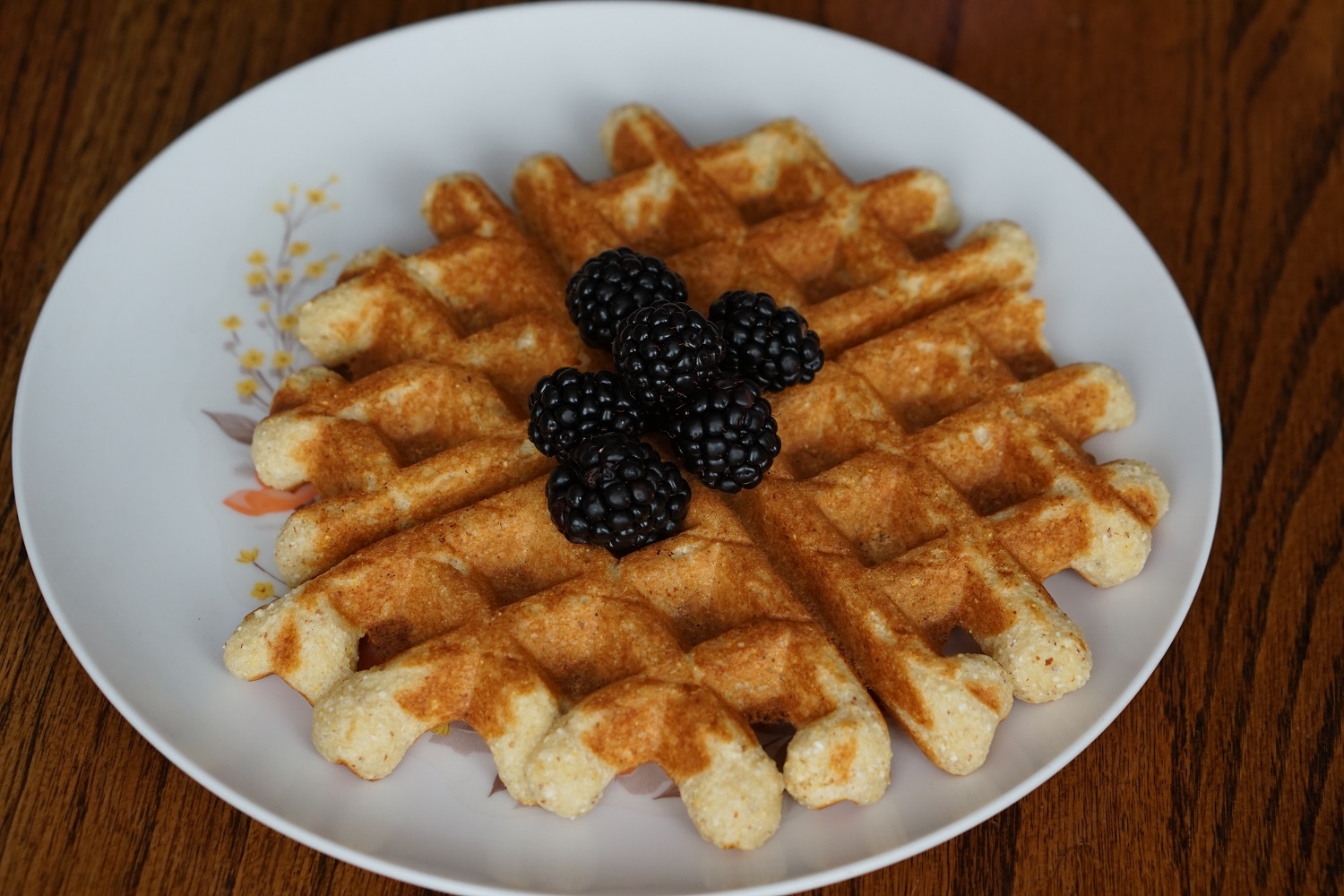
WHOLE GRAIN WAFFLES
Recipe adapted from 1000 Vegetarian Recipes by Carol Gelles

Quantities here are for a double recipe — enough to feed a crowd or freeze a bunch. Cut in half if you want less.

Ingredients
3 c. whole wheat pastry flour*
1 c. other flours (I use a mix of almond and/or cashew meal, coconut flour, and corn meal)
1/2 c. sugar
2 T. baking powder
2 2/3 c. milk
2/3 c. oil
4 eggs, separated
2 t. vanilla
1/3 c. rolled (NOT quick) oats, optional

Directions
In a large mixing bowl (big enough to hold wet and dry ingredients), sift together flours, sugar, and baking powder.

Beat egg whites until stiff peaks form (do this first while the beaters are still clean).  Then, use the mixer to combine the milk, oil, egg yolks, and vanilla.

Preheat the waffle iron.

Make a well in the dry ingredients and pour in the wet.  Stir gently until just combined, folding in the egg whites toward the end.

Apply oil to the hot waffle iron, ideally with a Misto.  I spray the bottom first, add the batter (I use about 1 cup of batter per waffle; this doesn’t totally fill our waffle iron, but that’s my preference) and then spray the top just before closing.  In our waffle maker, on a “medium” setting, these cook in about 3 minutes.  If you still see steam coming out of the waffle iron, it is probably too soon!

If it does stick a bit, use something wooden to help it release (metal will scratch the iron’s cooking surface).  Place on cooling rack.

*You can play with the ratios of different types of flour a bit, but I would not go much below 2.5 cups of whole wheat pastry flour.

DSC02144_sm

We make big batches and freeze them to enjoy over a few weeks.  To freeze, place thoroughly cooled waffles in freezer bags.

DSC02151_sm

In the morning (or at snack time), let thaw at room temperature for a bit and reheat in the toaster for an almost-as-good as fresh waffle!

These waffles are fairly sweet on their own.  I usually top with butter and just the tiniest bit of real maple syrup or homemade fruit sauce; chocolate chips and cherry sauce are the topping of choice when I’m feeling decadent (and nostalgic, as that was my go-to combo when using the Belgian waffle maker in the Notre Dame dining hall).

Black-eyed pea potato salad for a picnic

Last summer we made is to less then one Wednesday night Whitaker Music Festival (I didn’t say “zero” because we picnicked with G and some friends one night, but left before music started in order to get someone home to bed).*  We’re set to remedy that abysmal count this summer, with standing Wednesday night childcare (by which I mean grandma).

Whitaker nights mean picnics and picnic food.  Last week I whipped up a pasta salad full of veggies, including scapes, kale, and fennel from the garden, plus sides of pickled beets and artichokes.

20150603_181509[1]

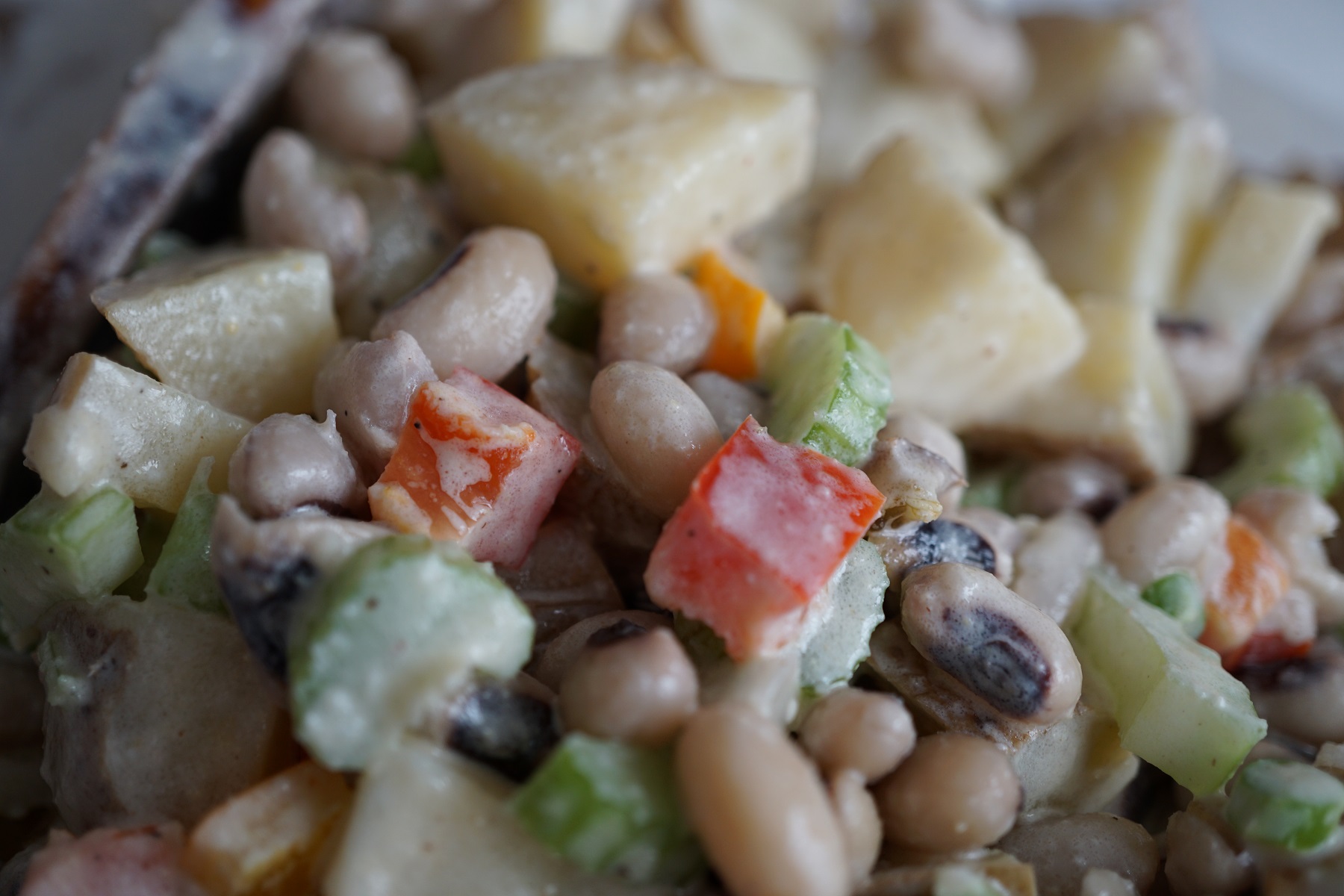
On Sunday, I cooked the very last of our garden potatoes.  We ate some for lunch, and I turned the rest into this potato salad.  While I usually cook in large batches, the remaining potatoes dictated the size of this recipe.  You could, of course, scale it up.

BLACK-EYED PEA POTATO SALAD

Recipe by Melissa
Serves 2-3

Ingredients
5-6 egg-sized potatoes
2 T finely diced onion
2 T finely diced garlic scapes (or 1-2 t minced garlic)
1/3 c. chopped bell pepper (I used frozen)
1/8 c. finely diced celery
2/3 c. cooked, drained black-eyed peas
1-2 T olive oil
1 T mayonnaise
1 t dijon mustard
2 T plain yogurt
1 t white wine vinegar
S&P to taste
Fresh herbs**

DSC01455_SMALL

Directions

Clean the potatoes.  Then place whole, skin-on potatoes in salted water.  Bring to a boil, and boil for 10-12 minutes until tender, but not over-cooked.  Cool, then cut into bite-sized pieces.

Prep your veggies.  Toss potatoes, beans, veggies and all of the other ingredients in a bowl to mix.  Keep chilled until ready to serve.

**Fresh dill would be great here, but our fresh dill is at the garden, which is miles away.  So.

DSC01457_small

I’m rounding out tonight’s meal with some leftover kale-quinoa quiche (which is great at room temp).  Artichokes will also make another appearance — they’re somewhat time-consuming to eat, which makes them not-so-great for meals with little ones, but perfect for relaxed, open-air dining.

Here’s a quick peek at our standard picnic gear.

DSC01462_small

Clockwise from top left: Mason jar wine glass, water bottle, s&p, cloth napkins, cloth utensil holder, and our fancy “plates.”  Not pictured — an insulated bag to keep everything cool in the 90-degree heat!

Our go-to picnic plates consist of the top and bottom of a large take-out container.  This option is perfect for picnics (or potlucks) — one person uses the container and the other uses the lid.  This system requires no on-site clean-up; when the meal is over, just put the lid on for no-mess transportation.  (I saw some people washing dishes in the restrooms last week, and, while I appreciated their attempts to avoid disposable options, the remaining bits of food and oils were clogging the sinks.)

Sadly, after years picnic and potluck use, our plastic container-plate is getting more than a little worn.  I’d like to find something similar, but made out of stainless steel, as a replacement.

I’ve been wanting to make a “chicken” salad (using chickpeas), and I’m having fun thinking of other picnic food ideas.  What’s your go-to food for a picnic?

**Check out the Garden’s “Hit a Green Note” challenge/pledge for sustainable picnicking 🙂

Have knives and cast iron, will travel

Over the past few years, we’ve stayed at a number of places with full kitchens while traveling, from time share units to VRBO places.  We’ve come to realize that not all “full” kitchens are created equal, and even those that are technically fully equipped may be sorely lacking in the quality department.

A good knife is one of the most important pieces of kitchen equipment you can have if you actually want to cook from scratch.  We’ve started bringing our paring knife and our chef’s knife with us on almost every trip.  A couple of knives take up minimal space, whether you’re traveling by car or by plane (of course they have to be in checked luggage!) — knife guard highly recommend to protect you and the rest of your stuff.

IMG_7480

The kitchens at the resort in Destin feature non-stick skillets.  Though I do try to minimize use of non-stick skillets to avoid ingesting the chemicals in the coating, I’m not completely opposed to them (I have yet to figure out how to successfully make scrambled eggs in a cast iron skillet) IF the coating is in good shape.  Unfortunately, this is rarely the case for pans I’ve encountered in vacation rentals, so this year, our cast iron came along for the ride.

IMG_7477

While the pan is a bit heavy, it doesn’t take up all that much room.  When packing, I stuck the pan in a paper bag to prevent oils from rubbing off on anything else, then put other kitchen stuff inside the pan.  Next time, I’d also bring our baby cast iron (6″ diameter), which is perfect for making one or two fried eggs.

On the implements and tools side, I also added a small fine mesh strainer, after learning that hard way that it’s pretty much impossible to rinse quinoa without said implement.

Dry goods and pantry items — I tried not to go too crazy here, there are grocery stores in Destin after all.  I focused on items that are hard to find and/or items that I can get a much better price buying from bulk food bins (I may be able to skip this step in future trips, as Destin is about to get a Whole Foods — then it will have ALL THE STORES (well, not TJ’s, but almost all the stores)).

  • natural, organic peanut butter
  • almonds and peanuts
  • organic raisins and cranberries (for oatmeal and snacking)
  • quinoa
  • brown rice
  • steel cut and rolled oats
  • [locally grown] black beans
  • lentils
  • organic canola oil
  • granulated onion and garlic
  • an herb blend

Plus some garden goods . . .

  • garlic scapes (enough that we didn’t need to buy garlic all week)
  • radishes
  • a bit of lettuce and spinach
  • a few turnips
  • a bit of broccoli and asparagus

On the trip from Atlanta to Destin, we stopped at a fruit stand and picked up some farm fresh eggs, peaches, and tomatoes.  And boiled peanuts!

After a couple of days on the road (during which time we actually ate a decent bit of food we’d packed/prepared ahead of time), I was ready to get back in the kitchen (said no one else at the resort).  I walked to the nearest grocery store (a Winn Dixie — do any of my southern readers have an opinion on which is better, Winn Dixie or Publix?), list and bags in hand, and stocked up for the week.

  • 2-lb bag of carrots
  • 1 bunch of broccoli
  • 1 head of red cabbage
  • 3 onions
  • 1 bunch of bananas (a vacation treat and prebiotics!)
  • 1 loaf of 100% whole grain bread
  • 1/2 gallon of organic milk
  • butter
  • cheese
  • mayo
  • mustard
  • all-fruit strawberry and apricot jams
  • 2 boxes of whole wheat pasta
  • 1 bag of breakfast cereal
  • 1 bag of chickpeas
  • 1 bag of black-eyed peas
  • 1 bottle of salad dressing
  • 1 bottle of barbeque sauce
  • 1 jar of dill pickles
  • 1 jar of pasta sauce
  • 1 bag each of frozen corn, peas, and green beans
  • 2 pints of Ben and Jerry’s 🙂

I’m sure I forgot something, but it was a relatively short list, which was good when it was time to me to play pack mule and walk back to our place.

I did a lot of cooking at the beginning of the week, which allowed us to coast later on, enjoying the leftovers and a couple of restaurant meals.

IMG_7417

Some of my vacation meal creations:

  • BBQ black beans and sauteed veg over rice
  • Pasta with broccoli, carrots, and red sauce
  • Quinoa pilaf with corn and garlic scapes, with black-eyed peas on the side
  • Fritatta with scapes, potato, spinach and mushrooms
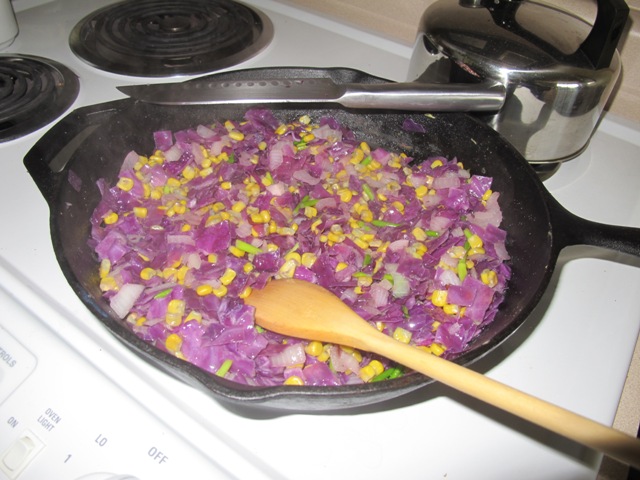
  • Pasta salad with peas, scapes, and red cabbage

It seems like there should be more, but that might be about it.  I’m pretty sure I beat out everyone else at the resort for “most time spent cooking,” but that was fine with me — I needed the breaks from the sun.  We had more leftovers than expected, because my MIL supplemented her meals with seafood from some local places she likes.

Our first meal out was at Thai Delights.  G requested a dish with noodles, broccoli, tofu, mushrooms, carrots, and tomato sauce.  He got everything but the tomato sauce — we ordered the “Drunken Noodles” and added mushrooms.  Matthew ordered the Pad See-Iw, and we shared the two dishes.  We enjoyed our meal so much that we returned three nights later for a reprise.  Same two entrees as the first time, plus we added a masaman curry.

On Friday night, we ordered a carry-out pizza from Mellow Mushroom to round out the odds and ends we needed to finish from the fridge.

For the drive home, we kept it simple with sandwiches for lunch.  For dinner, we ate the pasta salad I made in Destin.  We had a hard time finding a rest stop, so we ended up pulling over at one of those “Truck Rest Areas,” basically a place for truckers to stop along the interstate, with bare bones facilities.  It was not the most picturesque setting, but at least there was a picnic table.  To sweeten the deal, we found $50 cash — true story!

So, what are your must-haves if you’ll have access to a kitchen while traveling — those kitchen implements or special ingredients that you won’t leave home without?


Avoiding pitfalls in raising a healthy eater: Part 2

We left Part 1 with my struggles handing over the Whether and How Much reigns of meal time to Gabriel.  There are times we do a decent job of this, but there is certainly room for improvement.  The information in Fearless Feeding helped me see that G doesn’t need as much food as we do (by this age, growth slows dramatically, so it’s natural for appetite to decrease and choosiness to increase).  If he passes on the beans one day, it’s not the end of the world.

Little changes
Most nights, I plate meals in the kitchen.  We all get a bit of everything, with G getting slightly scaled-down amounts. But part of letting G take an active role is letting him serve himself.

I am a bit hesitant to do this for a couple of reasons: 1) it would mean he could take tons of, say, noodles, while ignoring the rest of the meal and 2) since we use dinner leftovers for lunch, this could lead to disproportionate amounts of things for those future lunches.  For now, I’m taking a scaled approach, plating some meals (or parts of some meals) and doing others as self-serve.  It’s fun to see him serving himself, and so far he does seem to take a bit of everything, even when it’s something he’s not crazy about, like lentil sloppy joes.

While it takes a bit of self-discipline, Matthew and I are both trying to refrain from encouraging G to eat “one more bite” of this or that, but rather to tune in to how he’s feeling.  If his stomach is telling him it’s full, then it’s fine to stop, even if it means leaving some food on his plate.

If we had already planned to offer a bit of dessert, and communicated those plans to G, we’ll go ahead with it, but make it a very small portion if he did not each much of his dinner (I know, that’s not letting him serve himself, but little changes, right?  Not to mention modeling that those foods are part of a normal, health diet in moderation).

Tummy troubles
Our new way of approaching meals and food may have other timely benefits.  A couple of weeks ago, I wrote about our stomach weirdness.  While Matthew and I seemed to get back in balance, Gabriel continued burping A LOT, and started asking why he was having “throw-up burps.”  Not good.

I got pretty freaked out about GERD and possible esophageal damage.  We started looking into possible causes (food allergies, high stomach acid, low stomach acid), tests (not fun to contemplate most of the tests on a 3-year-old), etc.  I wondered if the re-introduction of carrageenan-containing soy milk was to blame (though it had never seemed to be a problem for him before, the time-frame matched).  We started tracking symptom-timing and what he was eating.

At some point, we realized it might not be WHAT he was eating, per se, but how much and how fast.  He’s always had a big appetite, and, while it seemed a little crazy that he ate almost as much as me at some meals, I didn’t think much of it.

But it seems he somehow got into a habit of eating way TOO FAST, which led to him eating TOO MUCH (when you eat fast, you’re more likely to miss the “full” signals).  So, in addition to letting him serve himself and not pushing extra bites, we’re really focusing on eating slooooooooowly: taking small bites, noticing the flavors and textures in our mouths, chewing thoroughly, waiting until our mouths are empty before taking another bite — basically mindful eating.

This takes a good bit of effort, especially when he’s sooooo hunnnngry, but it seems to be paying off in terms of his stomach troubles.  The burping still surfaces after some meals, but not all, and usually to a much lesser degree.  We’re hoping that this is indeed a relatively simple solution, and we’re all benefiting from bringing more mindfulness to our eating.

Avoiding pitfalls in raising a healthy eater: Part 1

Over the past year, our foodie toddler has grown into a preschooler, and, while I don’t want to label him as picky (and by most standards, he isn’t!), he has been making his preferences known a bit more.

These days . . .
Legumes, which are an important part of our animal-product-light diet, are often a tough sell, unless we’re talking chickpeas or black-eyed peas.  Now, I love both chickpeas and black-eyed peas, but I don’t want to eat them every day.  Variety is important — each type of legume has a unique flavor, texture, and nutrient profile.

While he’ll eat 100% whole wheat pasta and bread (homemade, with lots of crunchy things in it!) until the cows come home, during meals where we serve non-wheat grains, like rice or millet, you’d think the kid was on the Paleo diet.

On the plus side, he’s pretty into almost any and all vegetables, and he is usually willing to try new things (and sometimes he surprises me by being into new things that I’m not-so-into, like the okonomiyaki).

Little by little, we’ve started allowing a few small sweets into his diet, but figuring out the balance is tricky.  We don’t have dessert every night, but we do like to bake, and sometimes it’s fun to share a bit of something special.  While I don’t want dessert to be a reward or bribe for eating a “good” meal, I’m also disinclined to offer him a cookie when he’s barely touched his dinner.

Avoiding food fights
In many ways, I felt like we were doing all the right things.  Offering a wide variety of nutrient-dense, wholesome foods — check.  Making one meal / he eats what we eat (no short-order cooking) — check.  Not using food as a reward or bribe — check.

But I also felt myself sliding into some not-so-great patterns, such as encouraging “just one more bite,” as well as my own overly-concerned response and frustration to what he was or wasn’t eating.

I sought some expert help, and found this post on the Raise Healthy Eaters blog, written by Maryann Jacobsen, RD.  While numbers 8 and 10 on Jacobsen’s “10 Things You Should Never Say to Your Child About Food” list are not issues around here, I recognized some form of most of the other comments as things I’d said (and often regretted as it was coming out of my mouth), not often, but more often than I liked.

A bit more digging led me to the book Fearless Feeding, co-authored by Jacobsen and Jill Castle (also a registered dietician).  Fearless Feeding is based on pediatric dietician Ellyn Satter’s Division of Responsibility.  In this system, it’s up to the parents to decide What, When, and Where.  But it’s up to the child to decide Whether and How Much.

After reviewing the chapter on toddlers and preschoolers, I realized that I’ve pretty much got the What, When, and Where.  The trick is trusting Gabriel to the Whether and How Much — that’s where I struggle.  More on that tomorrow, in Part 2 . . . .