Diva with a party in my pants

For 10+ years, I never really questioned the standard of disposable menstrual products, other than some vague curiosity when reading historical fiction.  My lack of questioning was due, at least in part, to the fact that for most of those years, I never bought any tampons or pads because my bargain-hunting mother stockpiled a lifetime supply (or so it seemed).  Between coupons, sales, and rebates, she never paid anything near full price for said items, and our bathroom cabinets were overflowing with feminine products.  (Hi Mom, I love you!)  I’m not complaining, because my mom’s savvy shopping and generosity no doubt saved me a lot of money, but it may have delayed my exploration of alternatives.

But four females can go through A LOT of tampons, pads, and liners, and the supplies eventually dwindled.  Plus, oh hey, I haven’t been living at home for more than 8 years now.  I’m an adult, maybe it’s time I bought my own tampons.  So I’m buying my own, halfheartedly looking for coupons and sales, experimenting with the cheaper generic options, all while trying to reduce my environmental impact, and I start to wonder, “What did women do before we had disposable menstrual products?  There have to be some alternatives out there.  What are my options now?”

Forty or so years of tampons and pads adds up to quite a bit of trash, but this, as with most “disposable” products of various types that cram store shelves today, represents a relatively new phenomenon.  Today we have non-disposable options that are just as convenient as disposables and more technologically advanced than just using a rag.Continue reading “Diva with a party in my pants”

Plastic

My wait for a copy of Colin Beavan’s No Impact Man at the library finally ended last week.  I’m only 70 pages into the book, but I’m comfortable recommending this read.  In fact, go to your library website and request it now (maybe you won’t have to wait as long as I did).  Then come back here for more.

Book requested?  Okay.  Colin’s book inspired this post, and will, perhaps, inspire other posts if I get around to writing them.

I found this bit on plastic particularly horrifying:

“A thousand miles off the coast of California, in the middle of the Pacific Ocean, there is a swirling soup of floating trash twice the size of the continental United States.  [It] contains six times as much plastic, by weight, as bio-matter.”

And

“In the North Pacific alone, an estimated 100,000 sea turtles and sea mammals, a million seabirds, and countless fish starve to death each year after plastic blocks their digestive tracks.”  (Emphasis added.)

Plastic wreaks havoc not only on the environment, but also on human health.  (I won’t go into detail on that here.  If you want to know more, one possible read is Slow Death by Rubber Duck.  I haven’t read it, but Rebecca reviewed it here.)

Beth Terry at Fake Plastic Fish dramatically reduced her plastic consumption.  Click here to read her guide for some great places to start.

A recent TreeHugger article lays out an argument for eliminating disposable plastic while acknowledging that there may be some situations where plastic IS the best material for the task.  It took me forever to find that article again, but I did it for you because it’s worth a read, so click the link up there.

This doesn’t have to be an all or nothing proposition.  One change I’ve been focusing on over the past several weeks is buying more food (food that I would normally get in plastic bags) from bulk bins so I can reuse the rather large number of plastic bags I’ve accumulated.

So, what will you do to reduce your plastic waste?  See Beth Terry’s guide (link above) if you need inspiration, and then share your action step here.

Quotes from No Impact Man by Colin Beavan, p. 54.

Lentil love

For some reason, I put lentils in a little box where the only use was for stews and soups, i.e., dishes in which I cooked them to mush.  A scrumptious lentil salad (with nice, firm lentils) at a recent church potluck reminded me of the versatility and deliciousness of lentils.

As I browsed Show Me Vegan the other day, I came across this post about Snobby Joes, a vegetarian version of sloppy joes made with, you guessed it, lentils!  Seriously, you have to try this recipe — so good! Click here for the recipe at Post Punk Kitchen.

Growing up, my mom made delicious sloppy joes (except for that one time she left the pan on the stove and almost burned the house down).  I was a bit nervous about how Snobby Joes would stack up next to my memory of my mom’s sloppy joes (the kind with ground beef).  The answer?  This recipe will be part of our regular rotation from now on.

In addition to tasting great, the lentils in Snobby Joes provide lots of healthy plant protein.  On a budget?  This dish leaves you with plenty of green in your wallet.

My Variations

If you’re swimming in tomatoes right now, like we are, you can use fresh tomatoes in place of the tomato sauce and paste.  Just puree some chopped fresh tomatoes in the blender until you have at least 1 1/4 cups of tomato sauce.  This will work best if at least some of the tomatoes are paste tomatoes (less water content).  If you don’t have any paste tomatoes, simply suck out the tomato juice from the cut slices before adding to the blender.  (Alternately, you could squeeze the juice into a bowl and drink it, but Method #1 dirties fewer dishes.)

Cooking the lentils for 20 minutes is important.  More cooking, and you’ll get lentil mush.  Less cooking, and they’ll be a little crunchy.  The fear of mushy lentil scared me into under cooking mine a bit this time around, not bad, but I’ll go for the full twenty next time.

Don’t have buns?  Bread or English muffins work well also.  We enjoyed these on our homemade 100% whole wheat bread.  Open-faced creates the perfect bread to filling ratio.

Photo courtesy of our dying digital camera — gotta love planned obsolescence!

Entry to Nupur’s Blog Bites 5: Sandwiches and Wraps

Reluctant dairy queen

Shortly after I stopped eating meat five-and-a-half years ago, I also eliminated almost all animal products from my diet.  I traded in cow’s milk for soy milk, and stopped buying eggs, cheese, and other dairy products.  To make this manageable, I never set a hard and fast, “Thou shalt not eat any animal products” rule, so if you offered me a nice homemade baked good, I enjoyed it, knowing full well that it had eggs in it.

I was a bit more stringent with the dairy, especially avoiding cheese and other fatty dairy products. My dairy avoidance was due, in part, to some anti-dairy explanation of milk as, “Filtered cow’s blood.”  Scientifically, that may be true, in a sense, but stating it as such shows some definite anti-milk bias.  Though if you want to talk about bias in the dairy industry, the pro-milk studies funded by dairy associations would be a better starting point.  I digress.  (I have other issues with/questions about milk, both on the environmental and health fronts, but I’ll save those for another day.)

Time passed, and my not-so-hard-and-fast rule turned into a less-hard-and-fast rule, and next thing you know, I’m writing posts like this one.  Since writing that post, we continue to purchase raw milk, though we switched to another local dairy, Greenwood Farms, because they sell certified raw milk, meaning they test their milk regularly and comply with stringent standards.  For all I know, Lavy Dairy’s milk MAY meet those same standards, but I do kind of like having the assurance.  Greenwood Farms milk does have a couple of downsides: 1) It costs more than 3 times (!) as much as the certified organic milk from Lavy Dairy and 2) Greenwood Farms uses standard plastic (read: non-reusable) milk jugs.  On the upside, they offer pick-ups at Tower Grove Farmers’ Market, which, compared to driving to Silex, MO, is almost as good as home delivery.

Although freezing milk, which we did with our large Lavy Dairy purchase, does not ruin it, it does change it a bit, and we prefer to avoid that with our premium-price product.  However, for two people who don’t actually drink milk, consuming a gallon of the stuff before it goes bad presents a bit of a challenge (it seems to stay good for about 10 days, which is similar to the point when pasteurized milk goes bad).  We plan to experiment with cheese making, but we don’t have the cultures and vegetable rennet.  In the meantime, we’ve been making yogurt and ice cream.

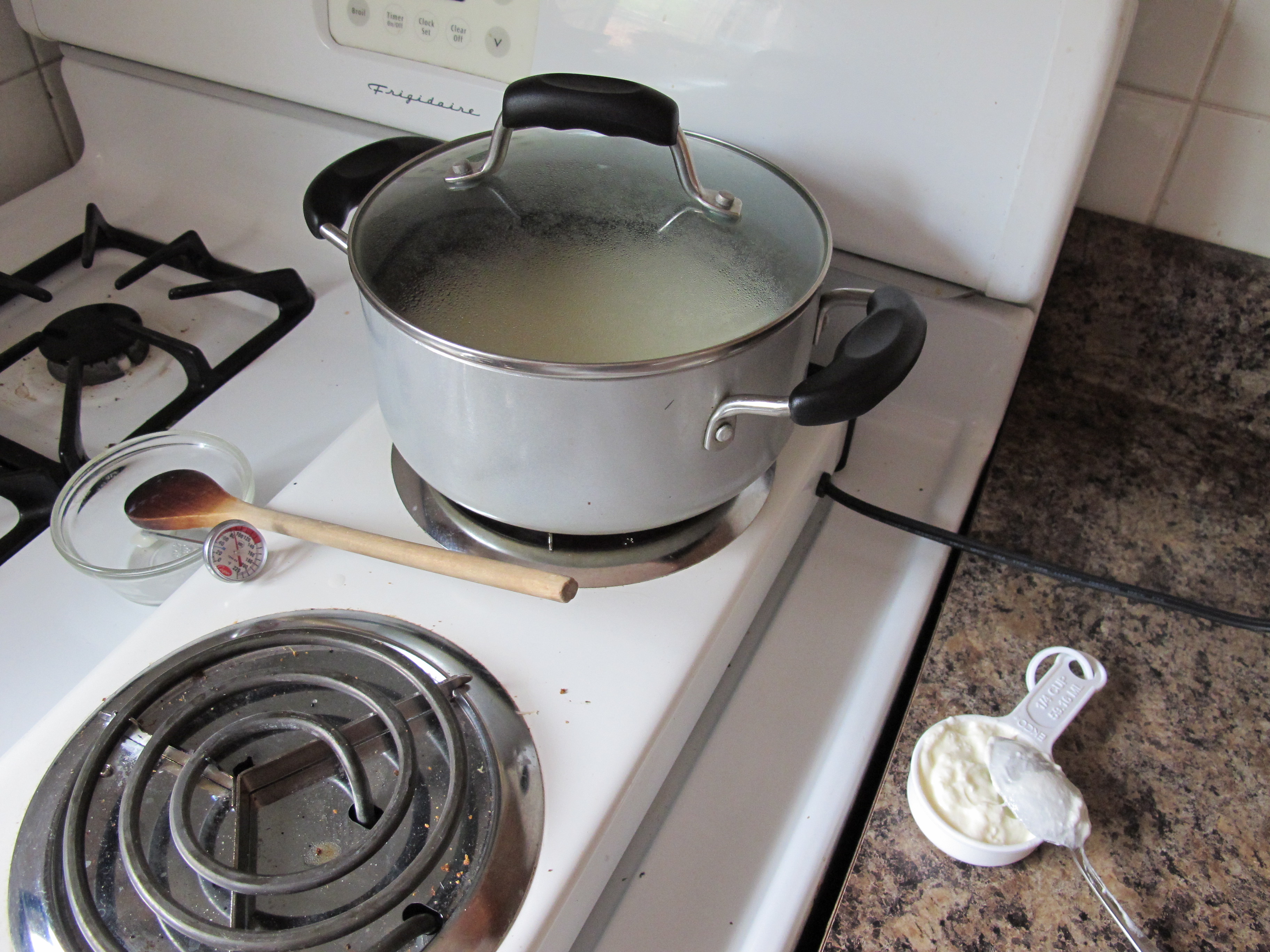
After several edible but imperfect yogurt attempts (flavor not quite right, too thin, strange consistency), I remembered that we had a yogurt maker growing up.  A quick call to my mom confirmed that said yogurt maker still existed, plus two others that my parents acquired at garage sales over the years, all sitting in the basement, quite neglected.  While I certainly was not about to go out and buy a yogurt maker, I happily adopted one of my parents’ trio.

I greeted the new appliance with some suspicion, since it just barely felt warm when I plugged it in to preheat it.  After about seven hours, I very skeptically opened one of the yogurt containers to find . . .  perfect yogurt!

What with the milk, homemade yogurt and ice cream, and local cheese purchases, I somehow find myself eating dairy (often a relatively small amount that wouldn’t count as an official “serving”) at least once a day, if not more.  I’m not sure how I feel about that.

Red, white, and blueberry

For the past couple of summers, we placed our order for blueberries and sour cherries on my MIL’s annual trek to Michigan.  We enjoyed the fruit throughout the year, though with a nagging feeling of unrest, because we knew that the orchard owners sprayed their fruit — not exactly in line with our usual choices.

Berries rank high on the list of produce with high levels of pesticide residue.  While convenient, delicious, and affordable, our purchases were bad for our bodies and the environment.

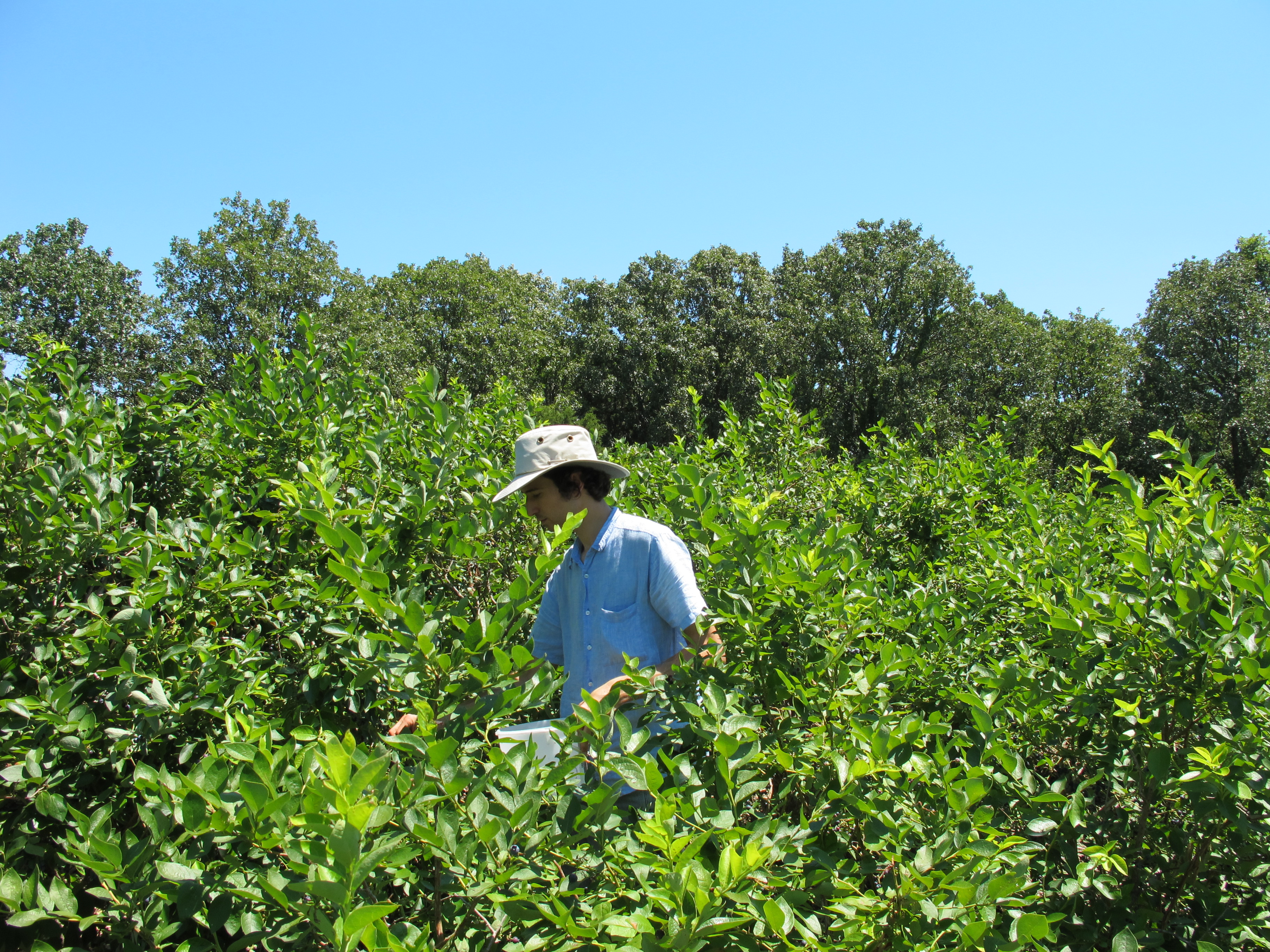
With a little investigative work, we found a no-spray blueberry farm within an hour of St. Louis.  Yesterday, we drove out to Huckleberry Hollow for a pick-your-own adventure.

Some of the blueberry bushes were over six feet tall — I had no idea they could get that big!  We had fun, but we also worked really hard and still fell short of our target quantity for freezing.

Today, I’m suffering the effects of picking 9 gallons of blueberries (2-person effort) over 5.5 hours, only the first few of which exhibited something like pleasant temperatures.

Suddenly, the price of blueberries at the farmers’ market, pre-picked blueberries, seems pretty darn reasonable.  It’s easy to walk through a farmers’ market and turn your nose up at the prices, but when you start getting your hands dirty, those prices make sense.  Growing food in a sustainable manner is hard work!

Happy 4th of July!