Baby prep — Freezer meals

Making freezer meals to have on hand for the postpartum period was one of our homework assignments for Naturally Prepared (our childbirth class).

Ironically, we didn’t get around to any freezer meals until the last night of class, when Matthew started a huge pot of ribollita (i.e., Tuscan bread soup, recipe here) that finished cooking just in time for us to leave for class without getting to eat any.  We ate some for lunch the next day, and froze at least two meals-worth.

Apparently, that jump started things, because two nights later, we made a batch of Snobby Joes for dinner, and froze the leftovers.

Still to Come
Our instructor (who just so happens to be Greek) shared her falafel recipe, which apparently freezes well, so that is on our “to make and freeze” list.  Most veggie burgers also freeze well, and I’ve been scoping out a few new recipes from 101 Cookbooks:

We’ve talked about making spanakopita, which freezes well, but it’s a bit labor and time intensive — we’ll have to see whether or not that happens.  If we make it, I want to try a version with Swiss chard instead of spinach, as we have tons of chard coming in from the garden at the moment.

I’d love more freezer-friendly vegetarian ideas — please share!

Eating for two — A vegetarian pregnancy

Food is one of my favorite topics, and it’s been a bit neglected around here lately, but not for lack of eating, just lack of documentation 😉

Despite the first trimester nausea, I managed to eat fairly healthfully in the beginning of the pregnancy.  Not having to scramble to make dietary changes when I found out I was pregnant was one nice aspect of having a well-established healthy diet, though I was a little worried for the few weeks where pasta and rice noodles made up the bulk of my diet.

I haven’t had any specific food cravings, just a general craving for salt (and diminished interest in sweets).  I’m usually a bit of a salt-o-phobe, but the body needs more salt (to make more blood) during pregnancy, so I didn’t spend too much time worrying over my increasing affinity for salty foods and the salt shaker.  (I am curious about how long it will take to reset my taste buds and adjust to less salt post-pregnancy, though.  Will things that taste good now all-of-the-sudden taste way too salty, or will I have to scale back slowly to readjust???)

During the second trimester, I was pretty much ravenous all the time — packing enough food in the morning for a 9 1/2 hour work day presented a bit of a challenge.  Snacks included extra of a previous day’s leftovers, peanut butter and toast, or cheese and crackers.  Sometimes I just snacked on well-cooked beans with a bit of salt and olive oil.  In general, I picked fairly healthy snacks and tried to balance them with my other eating throughout the day (e.g., if my lunch was fairly cheesy, I would probably not have cheese and crackers as a snack that day).

In addition to needing more salt, the pregnant body also uses more protein.  Depending on weight, activity level, sex, etc., most adults need somewhere in the range of 40-50 grams of protein a day (many people, especially non-vegetarians, regularly eat WAY more than this, which is not necessarily a good thing).  When pregnant, that recommendation increases to 70-80 grams a day (some places recommend up to 100 grams a day, which is excessive).

I was fairly confident my protein consumption was adequate, but my midwives requested I keep track of what I ate on an average day and calculate the protein.  Being somewhat of a nutrition nerd, I complied happily.  Based on the one-day food record, I came in a bit above 70g of protein — right on target, no meat required 🙂

While I have continued to consume a more-or-less regular diet, I have kept an eye on the protein, making sure we’re eating legumes regularly, and perhaps eating a bit more eggs and dairy than usual (less green, I know, but we do our best).

Now that I’m into the third trimester, I notice the decrease in my stomach capacity.  Small, frequent meals/snacks is the name of the game now, which tends to be my preferred style of eating anyway.

By the end of April, I longed for the fresh produce that we’re getting from the garden and farmers’ markets now: lettuce, arugula, Swiss chard, broccoli, asparagus, strawberries — nom, nom, nom!  I’m looking forward to more of spring’s bounty in the coming weeks, as I nourish myself and the ever-growing little one (who is putting on about 1/2 pound a week now!).

Celebrate St. Paddy’s Day with Green Food

Happy St. Patrick’s Day! It’s a great day to have a green blog 😉

Speaking of green, I grew up with my grandma’s St. Patrick’s day meals, where everything was green — literally!  Green butter, green water, green wine & beer, green horseradish — she really went all out.

The St. Patrick’s Day dinners bring back great memories, and I love the spirit and festivity, but these days, the thought of consuming all that green food coloring makes me cringe.

Fortunately, there are a plethora of green foods out there, so you can still have a green meal without artificial dyes.  As an extra bonus, most naturally green foods are pretty good for you.

Green on green

Here are a few ideas:

  • Green cabbage — a very traditional St. Paddy’s Day food, but the traditional cooking method — boiling forever — robs it of most of the green color (and most of the nutritional value).  Try it fresh in a cabbage salad.
  • Spinach — try a simple saute with olive oil and garlic or fresh with your favorite salad toppings.
  • Pesto — the basil gives it a fabulous bright green color.  Serve with your favorite [green] veggies and pasta.
  • Garnish plates or beverages with fresh herbs such as mint, basil, parsley, or cilantro.
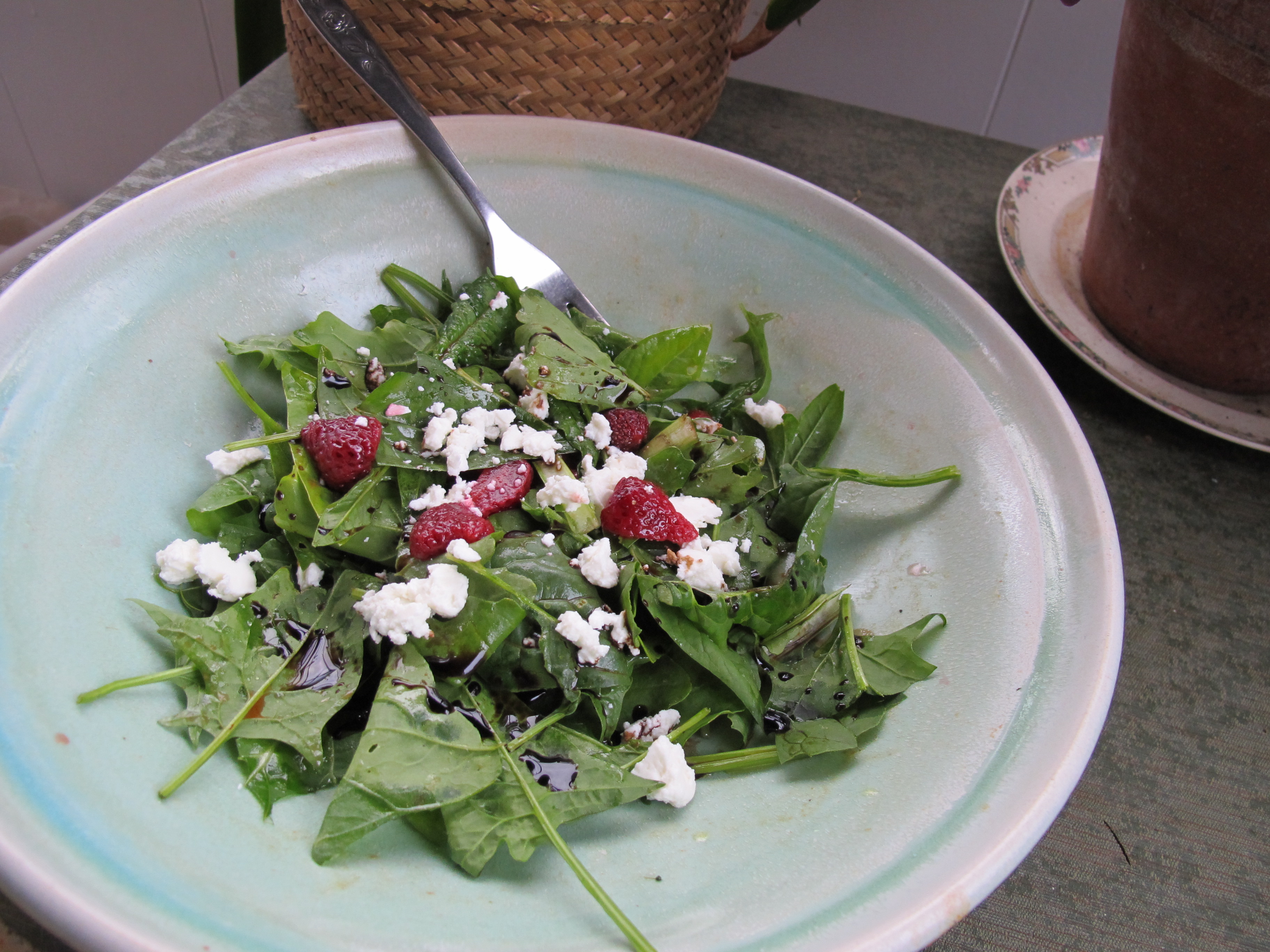
Complete with shamrock plant in the background

There are a bunch of green foods not on my list, so it’s your turn!  What is your favorite naturally green food?

—–

We’ll be keeping things fairly traditional with our reuben sandwiches tonight.  Since we made our sauerkraut with purple cabbage, we’ll have to make sure to have a serving of green on the side 🙂

Easy black bean soup — make it tonight

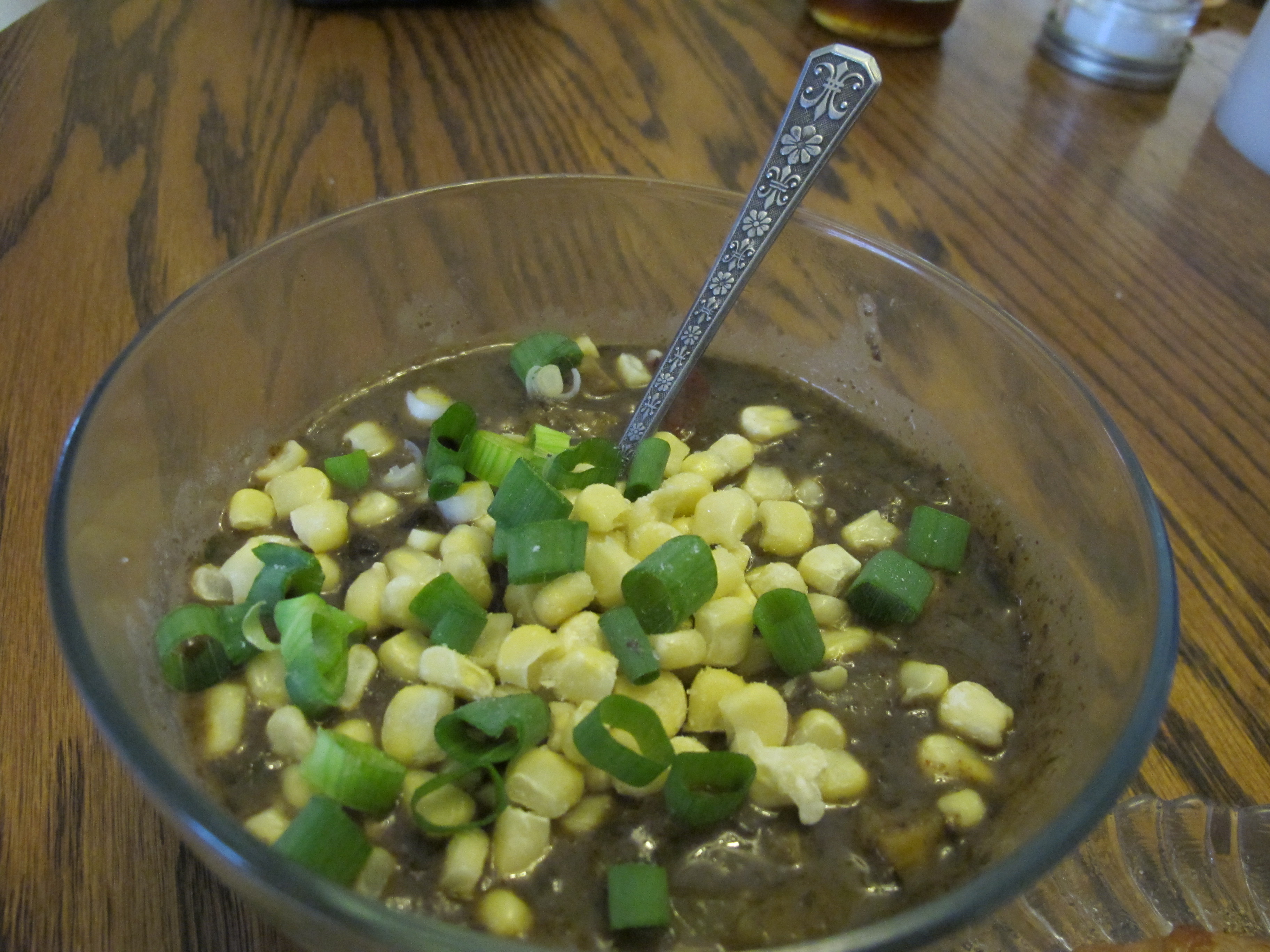
A pot of perfectly cooked black beans served as the base for this delicious soup.

Lacking a go-to black bean soup recipe, I turned to the internet and found a recipe for TGI Friday’s Black Bean Soup.  I’ve never had the soup at the restaurant (I think I’ve eaten there twice in my life), but this soup is quite tasty!

Here is the recipe with my modifications:

  • 2 tablespoons vegetable oil
  • 3/4 cup diced white onion
  • 3/4 cup diced celery
  • 1/2 cup diced carrot
  • 1/4 cup diced red bell pepper (any color would be fine — this is what we had in the freezer)
  • 1/2 bulb of garlic, shopped
  • 6 cups cooked black beans (equivalent to four (15 ounce) cans black beans)
  • 3 cups black bean cooking liquid (could also use veggie broth or water, but I like cooking with my bean juice when possible)
  • 2 tablespoons apple cider vinegar
  • 2 teaspoons chili powder
  • 1/2 teaspoon cayenne pepper
  • 1/2 teaspoon cumin
  • 1/2 teaspoon salt
  • 1/2 t. smoked salt*, plus more to taste
  • 1 t. smoked paprika*

*The original recipe calls for liquid smoke.  I had good intentions of purchasing some recently, but balked when I saw the ingredient list, which included unnecessary color additives.  I used smoked salt and smoked paprika to give the soup that same smokey flavor.

In a large pot, saute the veggies in the oil.  Puree half of the black beans (3 cups, or slightly more for a thicker soup) with the liquid (bean juice, broth or water).  Combine all ingredients in the pot with the sauteed veggies.  Simmer 30-60 minutes (depending on how thick you want it or how impatient you are to eat).

We garnished our soup with chopped green onions and frozen corn.  Shredded cheese or sour cream would also make good toppings.

Two for two

Sauce Magazine, my favorite StL foodie mag, scores high points for the recipes in its February 2011 edition.  On Sunday night, we made Acquacotta, a delicious and hearty soup, though it left us wondering what kind of Italian peasants can afford 10 oz. of dried porcini mushrooms.  We made it with our homegrown celery, herbs, leeks, and tomatoes, plus some local dried mushrooms — though we did not have 10 ounces!

Last night, Matthew made Navratan Korma, an Indian vegetable dish.  We both enjoyed it and think the leftovers will be even better, as the flavors have more time to meld.   Matthew dug into our freezer for garden/local green beans, carrots, yellow squash, and cauliflower, plus potatoes from our crop and our canned tomatoes.

This is the time of year when all the work of chopping, blanching, and canning, plus Matthew’s work in the garden really pays — in delicious dividends!