When the relatives came

I played tourist in my own city over the weekend, hosting relatives from Iowa and Texas. I did not host them in the sense of “all seven people stayed in our one bedroom apartment” (clearly, that would have been a bad idea) but rather as a tour guide and minivan driver extraordinaire. We started the weekend whirlwind on Friday with lunch at Bixby’s inside the Missouri History Museum in Forest Park.

Bixby’s is the relatively new face of the history museum restaurant (the previous incarnation, whatever it was called, left me less than impressed).  With the focus on using local ingredients, Bixby’s hit the spot.  I ordered the vegetable and sausage panini with sausage on the side (for my grandpa).  My uncle ordered the vegetable and sausage panini “all together.”

The day continued with the grand garden tour, complete with samples of sun gold tomatoes. Later, we gathered around the hotel pool and feasted on Pi.  Thanks to my mom’s picnic set, our poolside dinner was largely trash free!

After dinner, fun and games ensued, with the kind of hilarity unique to large family gatherings, when we played an improvised version of the game Balderdash with obscure words from the internet.  We discovered many classic words over the course of the game:

  • dasypygal (def. Having hairy buttocks — yes, that was the real definition) which someone defined as, “What you say when you see a woman win a pie-eating contest — ‘Das a pie gal!'”
  • de aequitate: what happens when you really have to go to the bathroom but don’t make it there on time (not the real definition)
  • and many others that I’m sad to say I can’t remember right now

Saturday, we hit up the Soulard Zoo (AKA Soulard Farmers’ Market), which was every bit the seething mass of humanity I remembered (cringe).  Don’t get me wrong, the produce bargains I found there during grad school provided plenty of fruit and vegetable servings on a tight budget, but my tastes have changed a bit, or perhaps a lot more than a bit, in the direction of local, organically raised foods.

With so many farmers’ markets with just that focus, Soulard no longer does it for me.  Farmers’ markets should have FARMERS, not vendors who scour Produce Row for bargains on food from “49 states and 74 countries” (as stated in this RFT article); Soulard’s few local farmers are vastly outnumbered by such vendors.

We left Soulard and headed to Tower Grove Farmers’ Market, which revived my spirits greatly — a literal AND figurative breath of fresh air.  We returned to the apartment, where we lunched on sandwiches featuring many local ingredients.  The rest of the day included a trip to Home Eco and a lovely dinner at Local Harvest, where my uncle requested the vegan enchiladas “with ground beef in them, please.”  I can’t take him anywhere 😉  My thanks to both establishments for graciously accommodating our boisterous invasion.

Thanks everyone for making the trip!

The least of the three R’s

Recycling resides at the bottom of the three R hierarchy in terms of environmental benefit.  First comes Reduce, then Reuse, and then, finally Recycle.  Recycling is nice, but it means that some object was produced in the first place, often with the intent to be “disposable.”  When, and if, that item makes its way into a recycling plant (after consuming energy to transport it there), it requires inputs of energy, water, and other products to first break it down and then make it into something new.

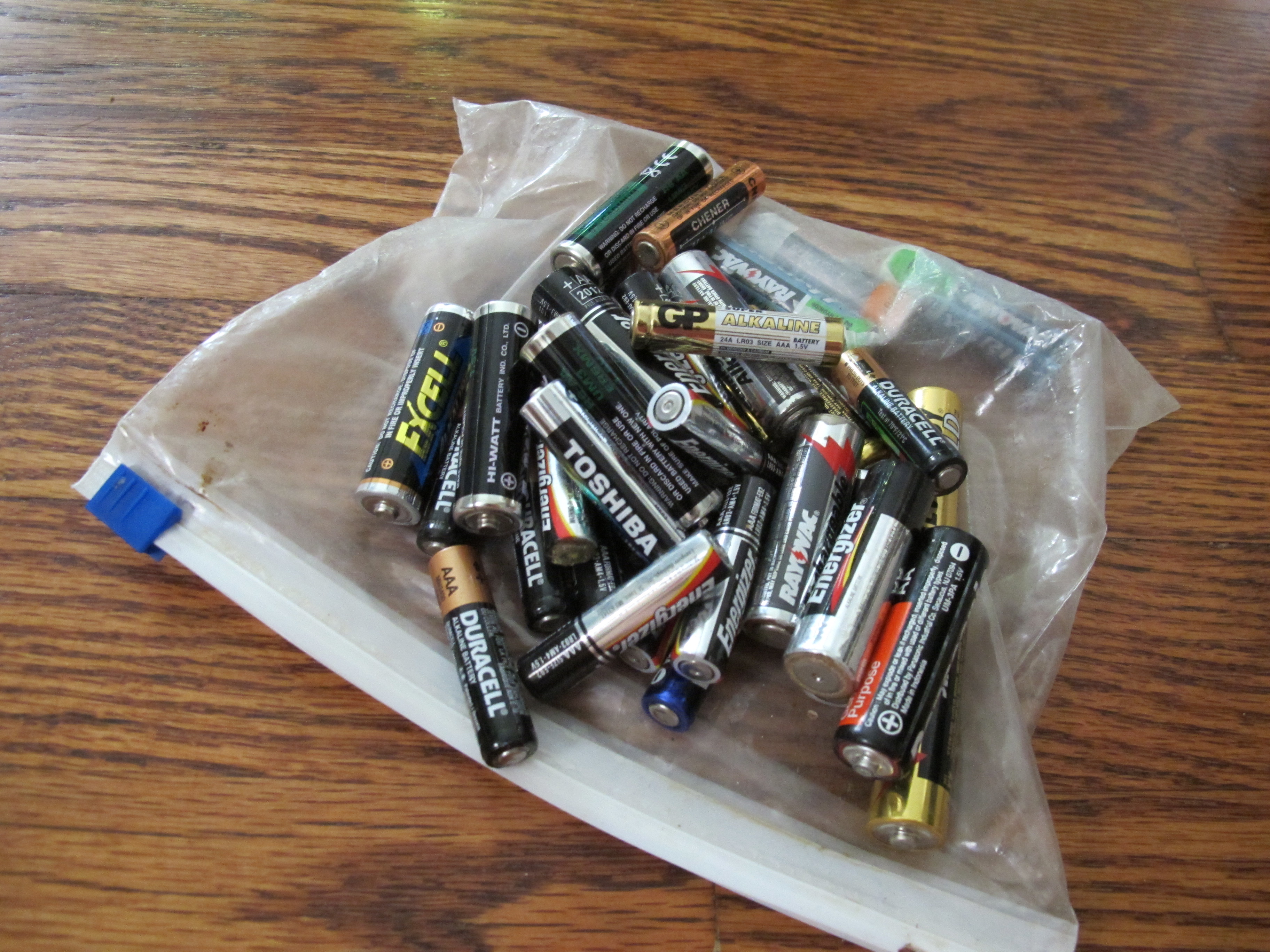
So I’m kind of ashamed to show you this:

I’m not sure how we ended up with this many spent non-rechargeable batteries!  We only buy rechargeables, but products that come with batteries have disposables in the package.  It’s not like we use lots of battery powered “stuff,” but we’ve been saving these for awhile.

My church offered a battery recycling collection box — time for these babies to go!  I balked when I read that each battery had to be in its own plastic bag to reduce risk of fire/explosion.  I resisted my temptation to rebel and just throw the whole bag in there.  A bit more research uncovered an alternative to the individual bagging — simply place tape over the positive terminal of each battery — still some waste involved, but much less.  As an added bonus, I avoided having a burnt down church, or some poor postal worker killed by a battery-induced explosion, on my conscience.

In a bit of a recycling blitz, I also pulled out some old tennis shoes for a shoe recycling collection for the Shoeman Water Project.  Reusing or recycling shoes, and using profits to dig wells in developing counties?  Sounds good to me!

I delivered the batteries and shoes by bicycle, of course.  And now back to reducing and reusing 🙂

Garden to table

The good news: I survived the potato harvest and garden day on Monday.

The bad news: We have A LOT of potatoes in the ground still.

The good news: Those potatoes look much better after Matthew completed some hard core weeding.

I experienced extreme soreness (mostly in my quads, from all the squatting) and serious exhaustion from blueberry picking on Saturday and wasn’t sure that I would make it through the garden blitz on Monday.  Somehow, I did.

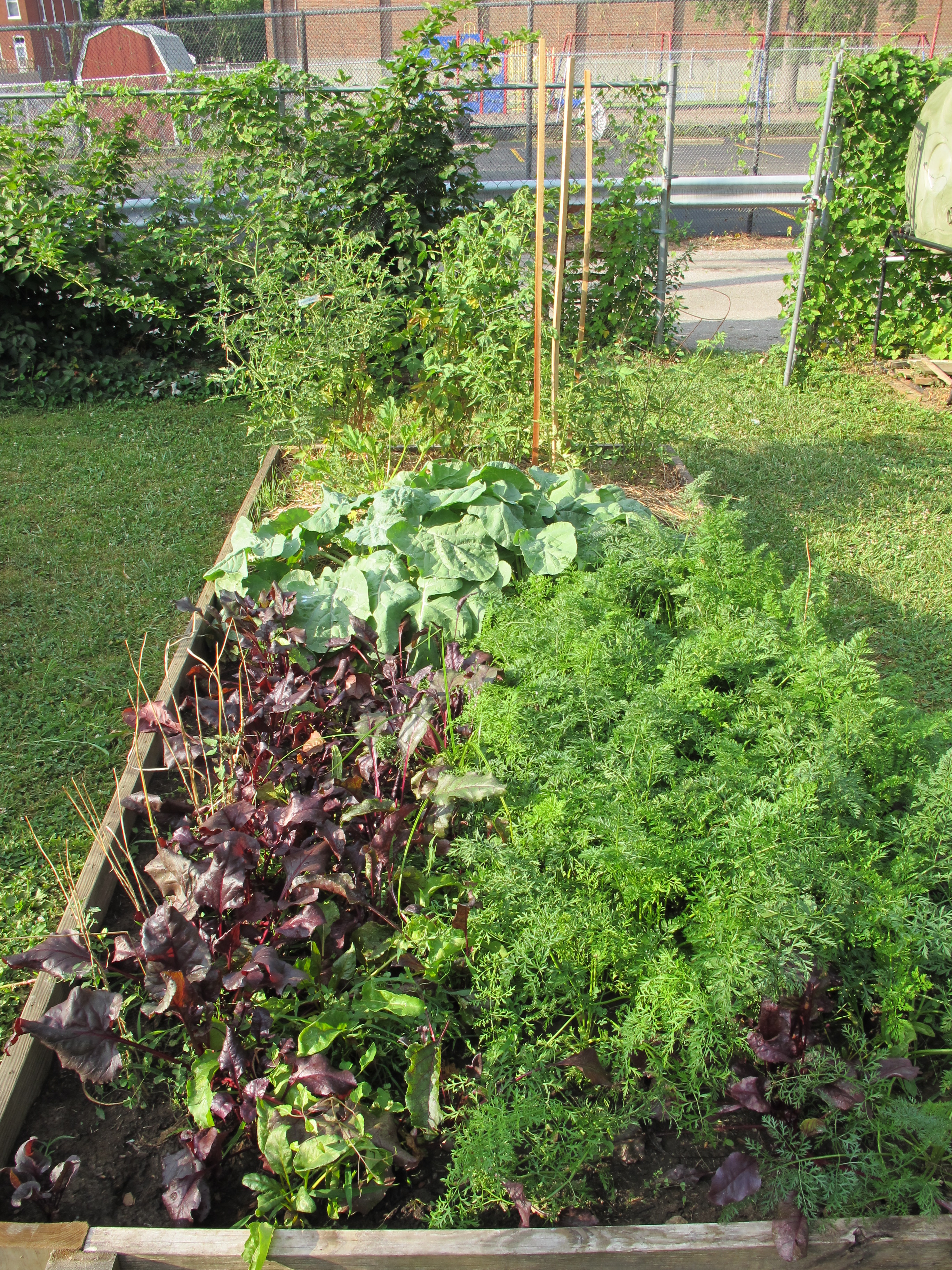
We started the day with a quick stop by the inner garden (AKA our bed at the community garden).

Beets and carrots at our inner garden

Next up, THE garden (AKA the commuter garden in the ‘burbs).  We harvested potatoes from the dead or nearly dead plants and left the rest to grow a bit longer, hoping to increase our yield.  We followed that with some general maintenance, including weeding and mulching.

Left to right: winter squash, peppers (somewhat hidden), tomatoes

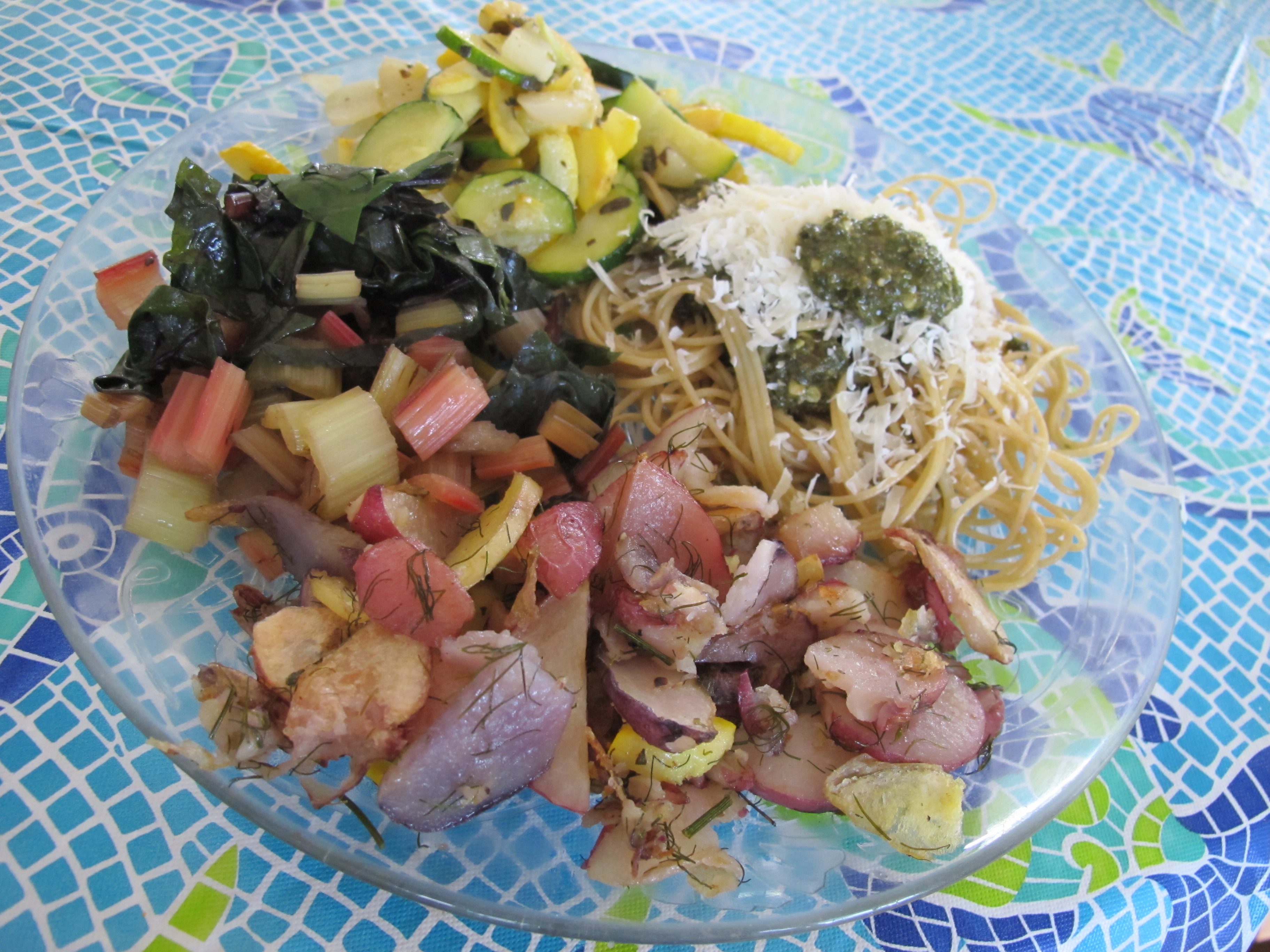
After working all morning, I headed into Pam’s kitchen to make a garden-to-table lunch.

Clockwise from top: Sauteed summer squash with garlic, pasta with basil pesto, roasted tricolor potatoes with dill, steamed Swiss chard with olive oil.  Pretty much everything on the plate came from our garden, most of it picked that morning — good fuel for a day of hard work!

We’re giving a garden tour to some family members this weekend.  Won’t they be surprised when we hand them shovels and pitch forks and point them in the direction of the potato patch!  Hands-on tours are the best kind, right?

Stick with the bar

I heard a short story on NPR this morning about liquid body washes outselling bar soap for the first time.  Liquid body washes are doubly un-green — both more expensive (wastes green from your wallet) and worse for the environment.  On the cost side, liquid body wash is mostly made of water, so you’re paying a premium for water with some added soap.  This also adds to the environmental cost — with all the extra water, the bottles of body wash occupy more cargo space, requiring more trucks on our roads and more burned fuel.

Body wash comes in plastic bottles, creating more waste than bar soap packaging.  At best, people recycle those bottles (using lots of water to rinse them thoroughly), and, at worst, many head straight to our landfills.

Your best bet is bar soap, the more minimal the packaging the better.  Make bar soap greener:

  • Recycle the paper or cardboard packaging.
  • Buy from a local soap maker — some may skip the packaging altogether, especially if you ask!
  • Keep the bar of soap in a dry corner of the shower to minimize waste.
  • Use less soap — you can probably get by with less than you’re using right now.  Your skin will thank you!

Red, white, and blueberry

For the past couple of summers, we placed our order for blueberries and sour cherries on my MIL’s annual trek to Michigan.  We enjoyed the fruit throughout the year, though with a nagging feeling of unrest, because we knew that the orchard owners sprayed their fruit — not exactly in line with our usual choices.

Berries rank high on the list of produce with high levels of pesticide residue.  While convenient, delicious, and affordable, our purchases were bad for our bodies and the environment.

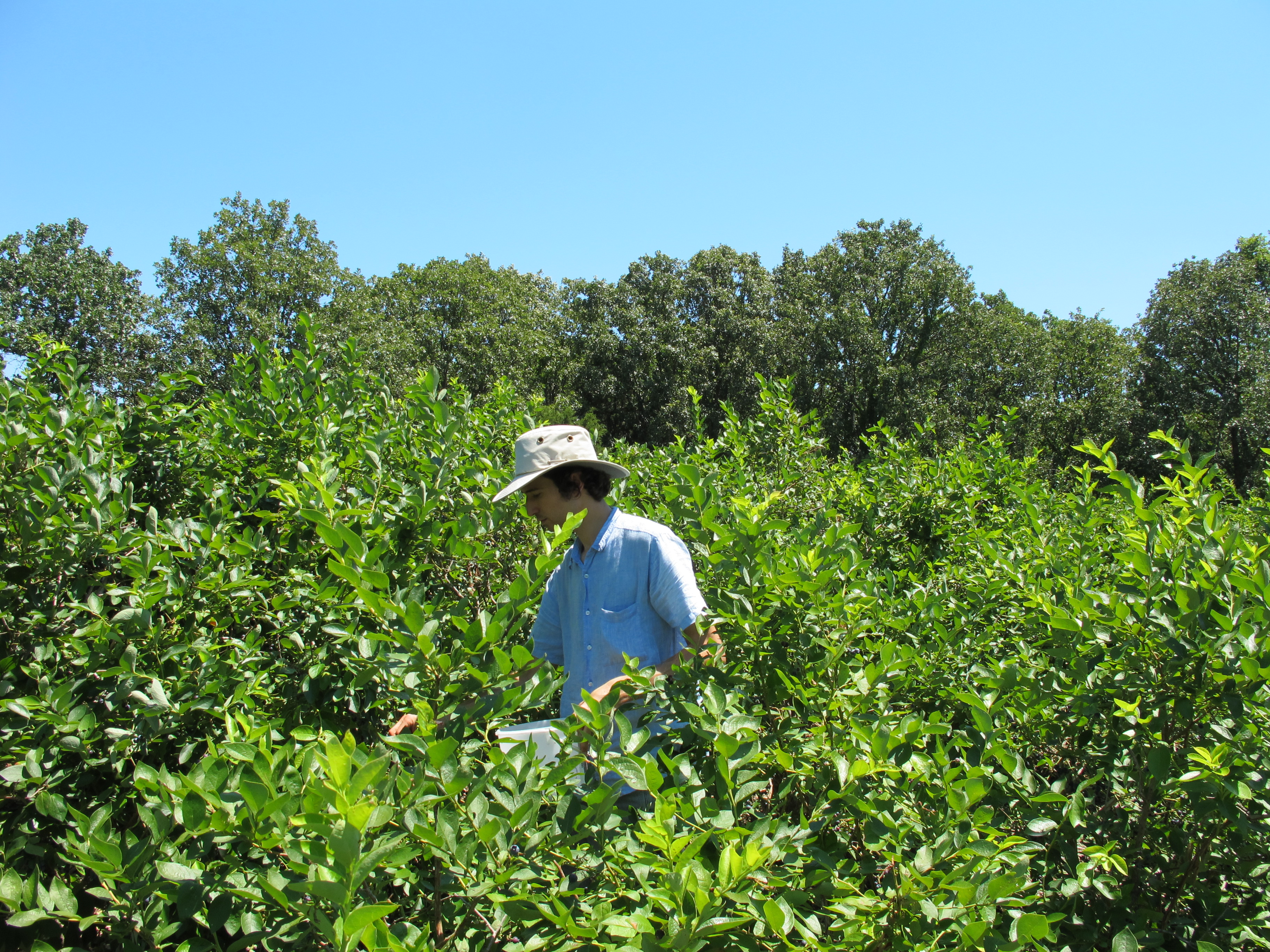
With a little investigative work, we found a no-spray blueberry farm within an hour of St. Louis.  Yesterday, we drove out to Huckleberry Hollow for a pick-your-own adventure.

Some of the blueberry bushes were over six feet tall — I had no idea they could get that big!  We had fun, but we also worked really hard and still fell short of our target quantity for freezing.

Today, I’m suffering the effects of picking 9 gallons of blueberries (2-person effort) over 5.5 hours, only the first few of which exhibited something like pleasant temperatures.

Suddenly, the price of blueberries at the farmers’ market, pre-picked blueberries, seems pretty darn reasonable.  It’s easy to walk through a farmers’ market and turn your nose up at the prices, but when you start getting your hands dirty, those prices make sense.  Growing food in a sustainable manner is hard work!

Happy 4th of July!