Satsumas!

Oh my darling, oh my darling, oh my darling, Satsuma . . .

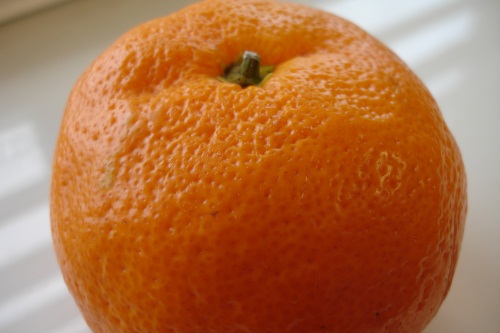
Okay,  “Satsuma” doesn’t have quite the same ring to it as “Clementine,” but we recently received our yearly infusion of satsumas, courtesy of my mother-in-law and her annual Florida panhandle trip.

While not a local food, they almost feel local, since she buys them from a roadside stand somewhere along her normal route, and we enjoy these tasty little gems once a year, during their short season.

It reminds me of the traditional orange in the Christmas stocking, from times when citrus was a real seasonal treat, not shipped from all parts of the world and available constantly (though of varied quality) in grocery stores year-round.

Wonder(ful) bread

We may, on occasion, take things to extremes here in the Green Life household.  On Sunday, I biked to church, and a fellow parishioner commented on my “extreme cycling.”  Perfectly dry pavement, no precipitation on the radar, and almost 32° F?  NOT extreme, especially not with the help of my trusty balaclava and super-warm mittens.  Sometimes one person’s extreme is another person’s normal.

So, bread.  We’ve been making our own bread for quite awhile now, but our neighbors inspired us to branch out a bit.  First, we borrowed their Artisan Bread in Five Minutes a Day cookbook.  Good concept, but lacking our beloved whole grains.  This led us to the follow-up Healthy Bread in Five Minutes a Day, which had a couple of recipes that seemed close, but not quite right, due to the presence of some white flour.  Surely we could make a great, basic whole wheat bread with 100% whole wheat!Continue reading “Wonder(ful) bread”

On again, off again

Dairy has been a food group of much contention in our house over the past year.  First, Matthew tested positive for a dairy allergy (at least according to one type of test) and subsequently went on an elimination diet.  He was part way through the “challenge phase” of the diet, where you add various forms of dairy back into your diet in a specific order (ghee, butter, yogurt, hard cheese, soft cheese, milk), when The Dude came along.

We had agreed ahead of time that it didn’t make sense for him to continue with the elimination diet once the little one arrived (by that time he was up to “hard cheese” anyway), what with the influx of donated meals.  We were already specifying vegetarian meals, and adding “no dairy” on top of that seemed too complicated.

However, after a few weeks of a very fussy baby, MY dairy consumption became the focus of attention.  Certain proteins in the mother’s diet can pass undigested into breast milk and cause problems for the baby, and dairy proteins are a major culprit, although it is relatively rare (estimates from various sources range from 1 in 100 to 5 in 100).  We consumed most of the dairy-containing food in the house, and then I went cold turkey.

Eight weeks of scrupulously avoiding any dairy, including most foods prepared for us by others, restaurant meals, etc.  Eight frustrating weeks where I really wasn’t sure if it was making a difference for Gabriel, or if I was going to a lot of trouble for nothing.  And then a few weeks ago, I started adding dairy back into my diet.  Not in any particular order — just trying to avoid eating “too much” on any given day.

Since then, The Dude’s poops have taken on a strange consistency — very mucous-y, with a few little streaks of blood on occasion — and, in retrospect, he’s had more issues with gas.  At first, I chalked it up to a bit of a stomach bug, but when it continued, I looked it up, and, you guessed it, the stool changes were consistent with a dairy sensitivity.

So it’s out with the dairy once again.  I’m willing to make the sacrifice if it actually helps him, and at least this time, I have something concrete (or not) to monitor for improvement.
Eating in

A year ago yesterday, we donned our wedding attire and headed out to celebrate our anniversary at one of St. Louis’ top-ranked, award-winning restaurants.  A place known for a small, seasonal menu, top quality ingredients, and prices to match.

Sadly, but perhaps not surprisingly, these food snobs connoisseurs found that the dinner did not live up to the hype.  Our meal was good, but nothing to write home about.  We ordered our standard “a few dishes to share,” but Matthew felt the atmosphere and attitude of the staff was not conducive to this, which further downgraded the experience.

Enter last night, and a much better anniversary dinner in our own kitchen, lovingly prepared by chef Matthew: marinated tofu and pear salad, pumpkin lasagna, and apple pie for dessert.*  Complete with candles, wine, and a nice, relaxed atmosphere, we agreed it was a major upgrade from last year.  That type of a dinner for two would easily cost $70+.  We enjoyed a delicious dinner for a fraction of the price, with most of a large pan of lasagna to enjoy later in the week.

While having a baby requires compromises and cutting back in some areas, we’re finding it’s essential to continue some activities from before baby.  For us, growing, cooking, and eating amazing food (okay, mostly Matthew on the “growing” aspect) fall into that category.  Yes, we are both exhausted and time is precious, but for us, this is worth it.  While in some ways it makes life more crazy, in other ways it helps preserve our sanity.

——————————-

*Meal ingredients from the garden: mixed greens for the salad, “pumpkin” puree (technically some variety of winter squash), onions, Swiss chard, and sage.  Other local ingredients: pears and apples.

I’m planning a full recipe post later, but we adapted this recipe to make our pumpkin lasagna, using our homemade pasta for the noodles.

Planting garlic: Excitement and agony

A guest post by Farmer Matt

Who doesn’t get excited by growing gorgeous, flavorful bulbs of garlic with names like Music, Cherokee Red, Broadleaf Czech, Tochliavri, Inchelium Red, and Elephant Garlic?  Some people advocate planting around here in August, others in October after the first frost.  Last year I planted in August with good results, this year, due to the little one, I’m finally got it in on October 8 (no frost here yet), so we’ll see how it does.  For seed stock, I saved garlic from this year’s crop to replant and bought new varieties from Seed  Savers.  Time and conditions permitting, I may buy some Elephant garlic from Whole Foods and try to get that in as well.

Soil Prep
I definitely recommend planting garlic sometime in the fall for harvest early the following summer.  I plant it in well worked soil with good drainage and plant it in beds to avoid compacting the roots; this also makes it easier to apply a heavy layer of mulch.

Planting
Gently separate cloves, leaving as much of the paper wrapper on them as possible; plant 6-8” apart, or 12” apart for Elephant garlic.  Plant cloves pointed-end up, cover with ½-1” of soil, and then mulch with leaves, ideally chopped.

Harvesting
I cut off scapes in the spring when they’re about 12” long, and harvest when the plant’s leaves start to yellow, checking the bulbs for the cloves bulging through the wrappers to confirm that it’s time to harvest by gently digging the plants up from below.

The agonizing part is that with garlic the “seed” is exactly the same clove you want to eat.  Even worse, it’s one of the few plants where planting the largest cloves makes a big difference in the size of the bulb you’ll harvest next year, so you have to plant your most beautiful, gorgeous garlic to keep your quality high.  As I’m working on increasing my planting stock and my harvest, I had to plant most of my garlic.  I planted about 175 cloves, roughtly 30 bulbs.  My mother and my family have eaten maybe 8 bulbs each so far, and we both have 8 bulbs left, so we’ve used 32 of the smallest bulbs, and I’ve replanted half of this year’s harvest.