Green recipe page rollout

Well, I finally kicked my Green Recipes page out of the draft stage and into the spotlight.  Since this is not a food blog, per se, I was surprised by the number of recipes and food posts that I’ve amassed in 20 months of blogging here.  Well, okay, I like to cook and eat — maybe I shouldn’t be THAT surprised 😉

Now you can click on the handy dandy “Green Recipes” tab at the top of the home page anytime to view recipes and get inspiration for your own cooking.

To keep things green, all recipes are vegetarian, and many center around seasonal eating and locally grown food.  I purchase beans, grains, and nuts from bulk food bins to cut down on packaging (I bring my own plastic bags and twist ties to the store and use them over and over again).

Bon appétit!

Asian vegetable dumplings

A recent failed attempt to eat at Selam (an Ethiopian restaurant that we’ve been wanting to try) resulted in a scramble for lunch plan B.  Happily, we landed at Bobo Noodle House, where I discovered their vegetable dumpling pho.

Perfect little flavor-packed dumplings floating in a rich, salty broth along with shitake mushrooms, tofu, and mung bean sprouts.  Mmm, I would happily have a bowl of this daily.  Despite being pretty reasonably priced, I cannot eat lunch at Bobo every day, so I set out to recreate the dish.

I had most everything on hand other than the dumpling wrappers, which required a stop by the freezer case of an international grocer.  I bought the wrappers, despite a couple of somewhat sketchy ingredients, including propylene glycol.  (When I mentioned to Matthew that propylene glycol sounded sketchy as a “food ingredient,” he replied that it’s what they use in antifreeze — yum!)

I based the seasoning for my dumpling filling off of this recipe, which I tossed in the food processor with the following:

  • Most of a block of extra firm tofu
  • Chopped carrots and bok choy, lightly steamed
  • Sauteed mushrooms

Warning: Each dumpling wrapper (mine were round and ~4 inches in diameter) will hold only a TINY amount of filling.  The above recipe will fill about 50 wrappers.  Just saying.

Before assembling my little dumples, I prepared a simple soup with veggie broth, dried shitake mushrooms, soy sauce, and more of the bok choy.  With that simmering on the stove, we worked together to assemble the dumplings.  The dumplings cooked in the soup for 2-3 minutes, and then we sat down to enjoy my creation.

A few notes:

  • The dumplings are best fresh.  We cooked eight for each of us.  I made up the other 30-some dumplings and froze them for later.
  • If you don’t want soup, you can steam the dumplings, or make potstickers.

Already increasing my carbon footprint

I mean that in a very loving and motherly way, of course 🙂

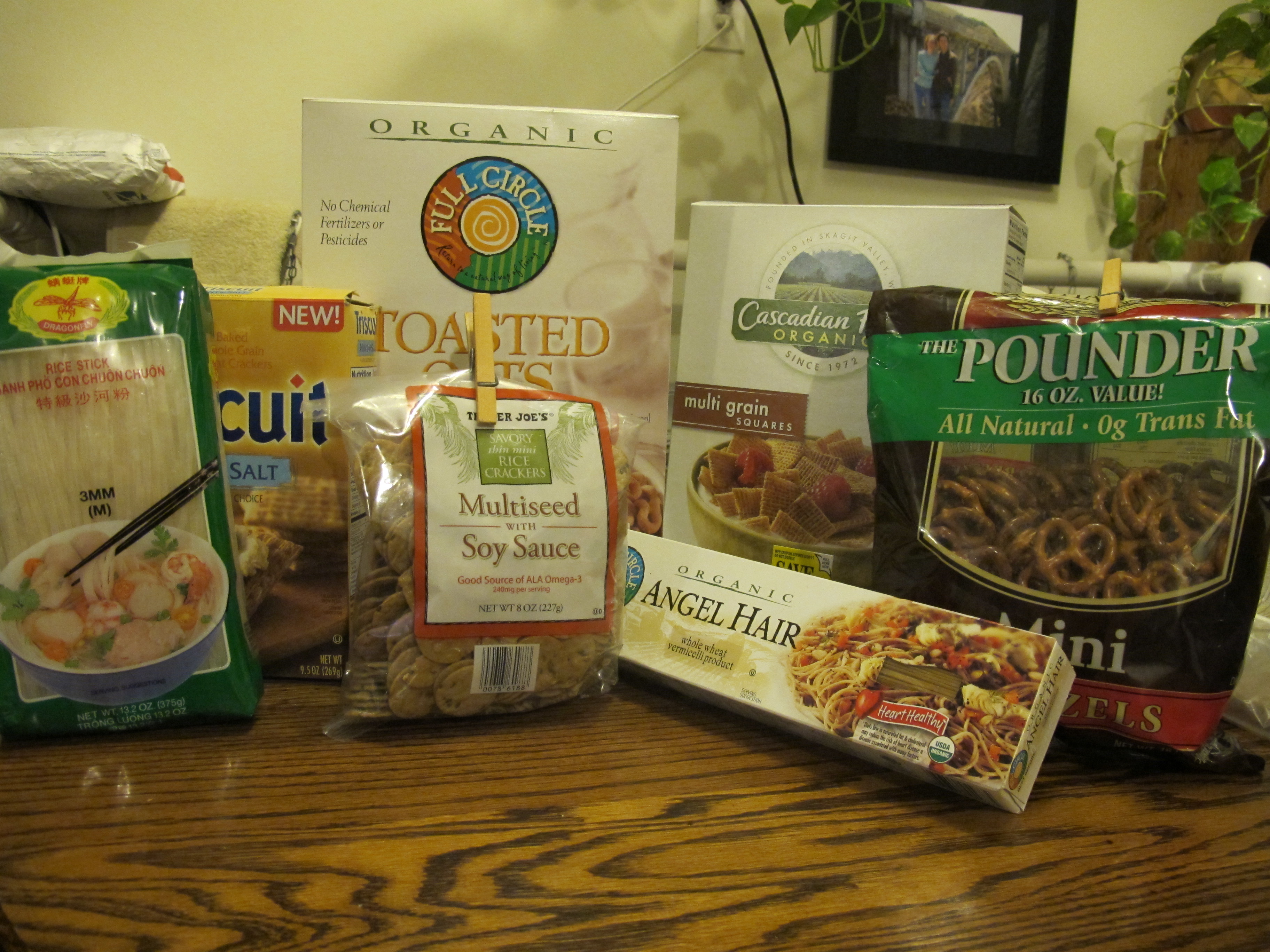
The big changes won’t come for another six months or so, but for two to three weeks in November, my diet consisted almost entirely of the items pictured above.  Items with packaging.

Prior to November, we made it through several months without buying breakfast cereal (we made our own granola instead), and we very rarely buy packaged items like pretzels or anything other than basic crackers to have on hand.  And then the nausea hit, and I just wanted to feel better.

The most atrocious item is not pictured above — a plastic bag of individually plastic-wrapped hard ginger candies.  For better or worse, they weren’t all that helpful, so I won’t be buying more.

On the up side, I’ll be getting prenatal care at a place that’s less than two miles from us — a nice, easy bike ride.  All last week I was anxiously watching the roads, hoping the icy snow pack would melt in time for my first prenatal appointment on Saturday.  Melt it did, which is good, because I was very determined not to drive there!

Anyway, the first trimester nausea came with a general apathy toward many things, including blogging, which explains my scanty posting in November and December.  At this point, I’m pretty much back to posting regularly (if you disregard the last seven days), feeling semi-normal, and eating a healthy, non-packaged foods diet, though I still have a winter squash aversion, which is unfortunate, because we kind of have a lot of squash in the basement (see header photo).

Winter greens

Last night I made our first salad of the winter with some beautiful red leaf lettuce from our low tunnel.  We thought the low tunnel would provide spinach throughout the winter and expected the lettuce to bite the dust during the single digit temps in early December.

As it turns out, the spinach harvest has been pretty minimal (Matthew transplanted the spinach to the tunnel from its previous location in the garden, which may explain its lack of enthusiasm), and the lettuce, which is much less cold-tolerant than spinach, somehow survived.  While the low tunnel keeps things warm enough to prevent freezing, it’s still pretty chilly in there, which means that spinach, lettuce, or anything else, will grow veerrrryyy sllloooowwwlllyy.

Matthew harvested just enough lettuce leaves for a nice salad for two.  I dressed it up with some chopped cauliflower, red onion, toasted sunflower seeds, and this homemade dressing, which features nutritional yeast, and savored every bite of homegrown lettuce in the middle of January.

More pasta, please

I’m happy to announce that our pasta making adventures continue, and I have a recipe for you.  While searching for whole wheat pasta recipes for our first attempt, the mention of using alternative flours*, such as spelt and farro, caught Matthew’s eye.

We bought spelt flour from the bulk bins  of a natural food store, and we were on our way to some delicious pasta.

Recipe

  • 2 1/2 – 3 cups spelt flour (you could substitute whole wheat flour)
  • 3 eggs
  • 2 T. olive oil
  • 1/2 t. salt

Mix flour and salt in a bowl and make a well in the center.  Beat the eggs and oil in a separate bowl, then pour into the well and slowly incorporate the flour.  Add more flour as needed, 1/8 cup at a time, if the dough is too sticky.  Once the dough becomes firm, switch to using your hands (if you weren’t using them already) to knead the dough for 10 minutes.

Cover the bowl, and set the dough aside for at least 30 minutes.  Use this time to prep the rest of your meal!

After the dough rests, cut it into four chunks — you’ll repeat the next steps with each chunk.  We don’t have a pasta maker, so we use a rolling pin and our pastry cloth to roll the dough out as thinly as possible.  Roll it very thin, until it’s almost transparent (I still need some practice on this step, but Matthew’s got it down).

Now it’s time to cut your noodles.  If you used a pastry cloth to roll out the dough, carefully transfer the dough to a cutting board and cut the rolled dough into strips — ours usually end up between 1/8 and 1/4 inch wide.  We just use our pizza slicer for this, but as we continue our pasta making, we may upgrade to something with multiple wheels that would allow us to cut more than one noodle at a time.

Drape the finished noodles over the edge of a colander or large bowl to dry slightly while you work with the rest of the dough.

To cook, bring a large pot of water to a boil.  Depending on the size of your pot, you may want to cook these in two batches.  If you rolled your pasta dough very thinly, the noodles will cook in as little as 2 minutes — you can test at this point and see if they need another minute or two.  Set a timer and don’t go anywhere, or you’ll have a soggy mess!
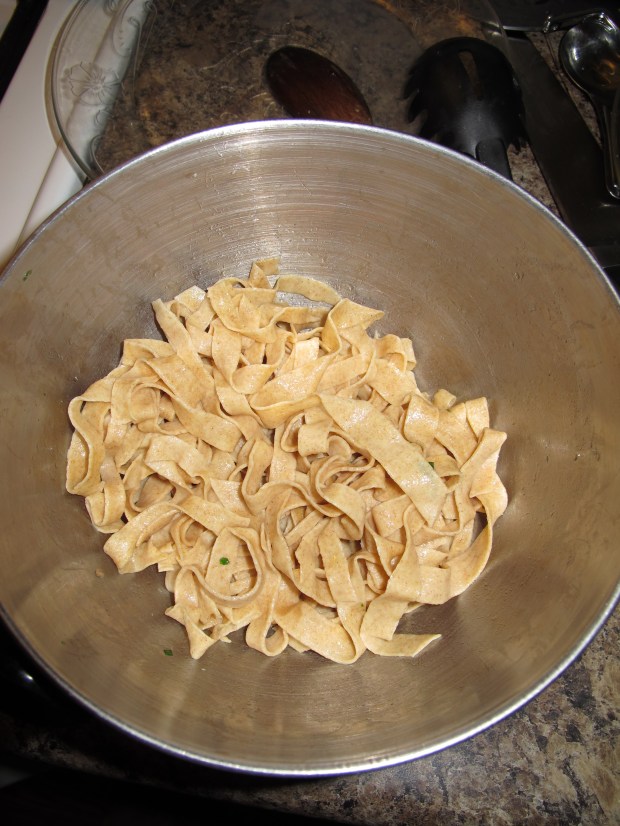
Drain and toss with a bit of olive oil, then top as you wish.

Topping suggestions

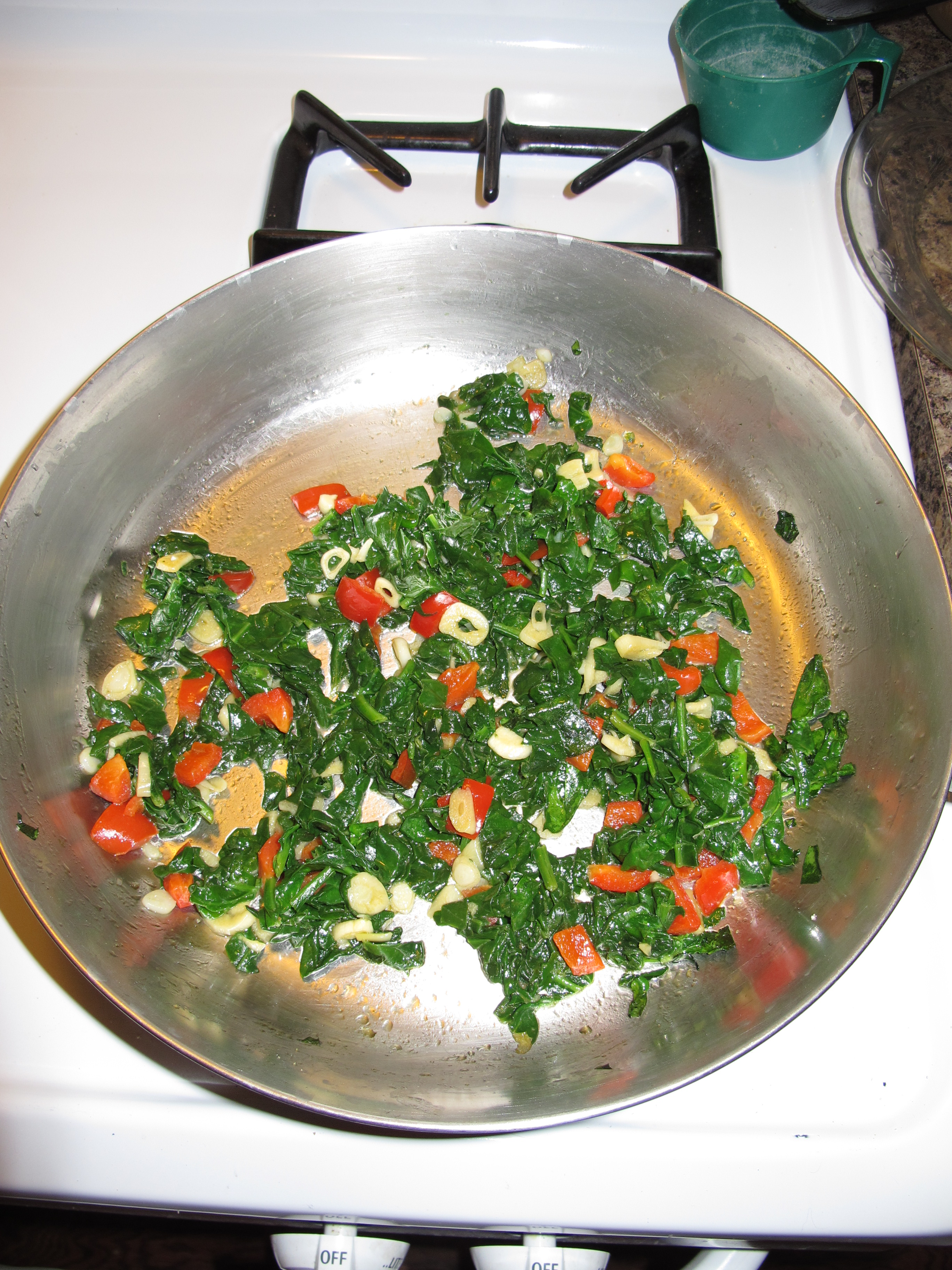
  • Spinach, garlic, and red bell pepper, sauteed in butter and olive oil (pictured below)
  • Sauteed mushrooms and garlic
  • Your favorite red sauce
  • Olive oil and freshly grated Parmesan cheese — simple and delicious!

*Here are some links where you can learn more about spelt and farro, which are ancient forms of wheat.  They contain more nutrients (and flavor!) than our everyday, bred and engineered for maximum output variety of wheat: