Look Ma, no blood

For weeks, I’ve been saying that I’m going to expand our worm composting capacity.  Tuesday, I tentatively dug out the power tools and jumped in to the project!  Given my recent experiences with [non-power] tools, I approached the drill with caution.

Would this work on Hummer tires?

After considering various possibilities, such as buying one big bin and expanding to that, I decided to use an extra not-too-big bin we had sitting around and divide into two bins.
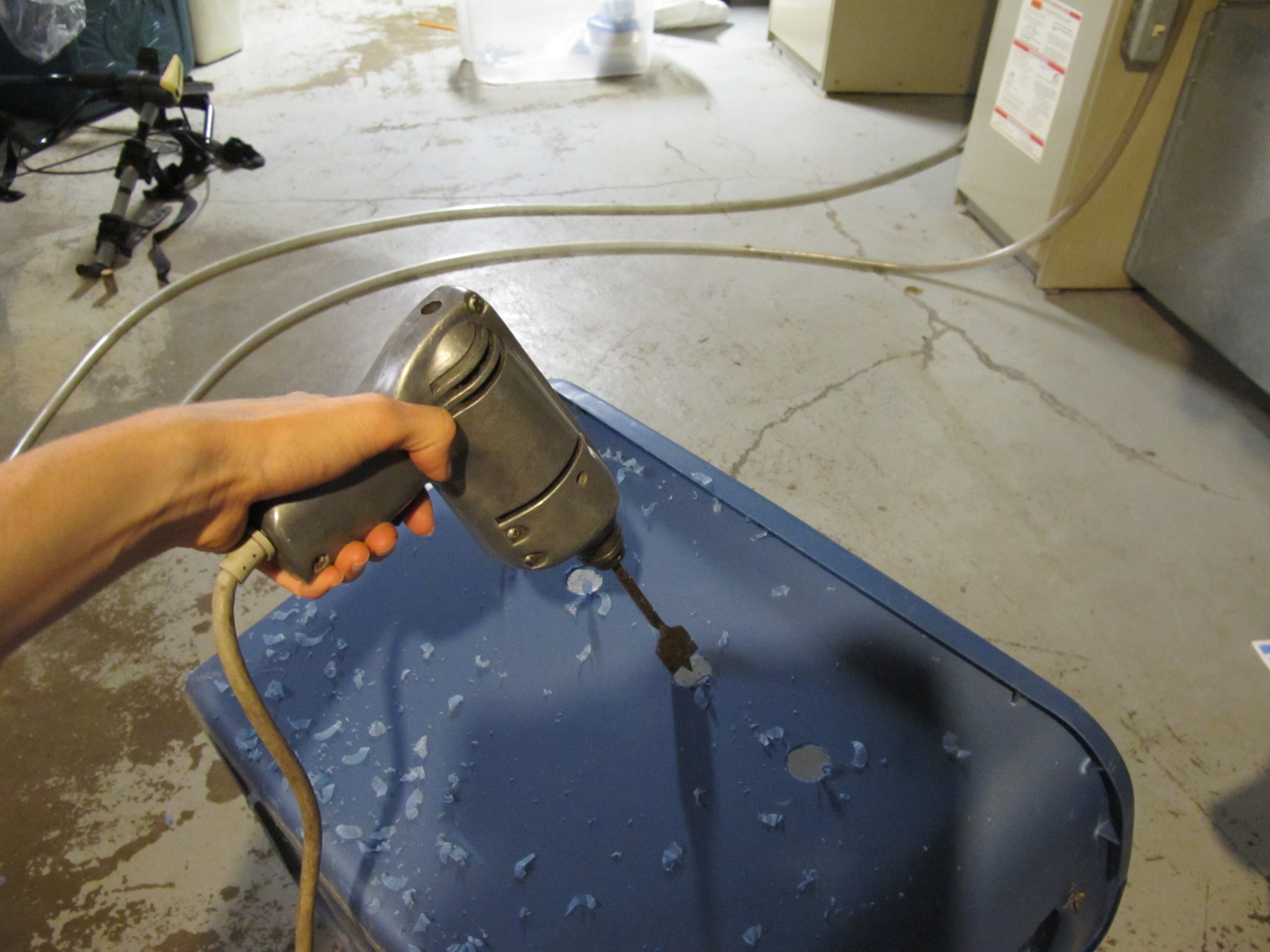
Drill, baby, drill

Horrible caption, no?  Just couldn’t resist.

I filled the new bin (AKA bin #2) with clean bedding (torn strips of black and white newspaper) and harvested worms and compost from bin #1.
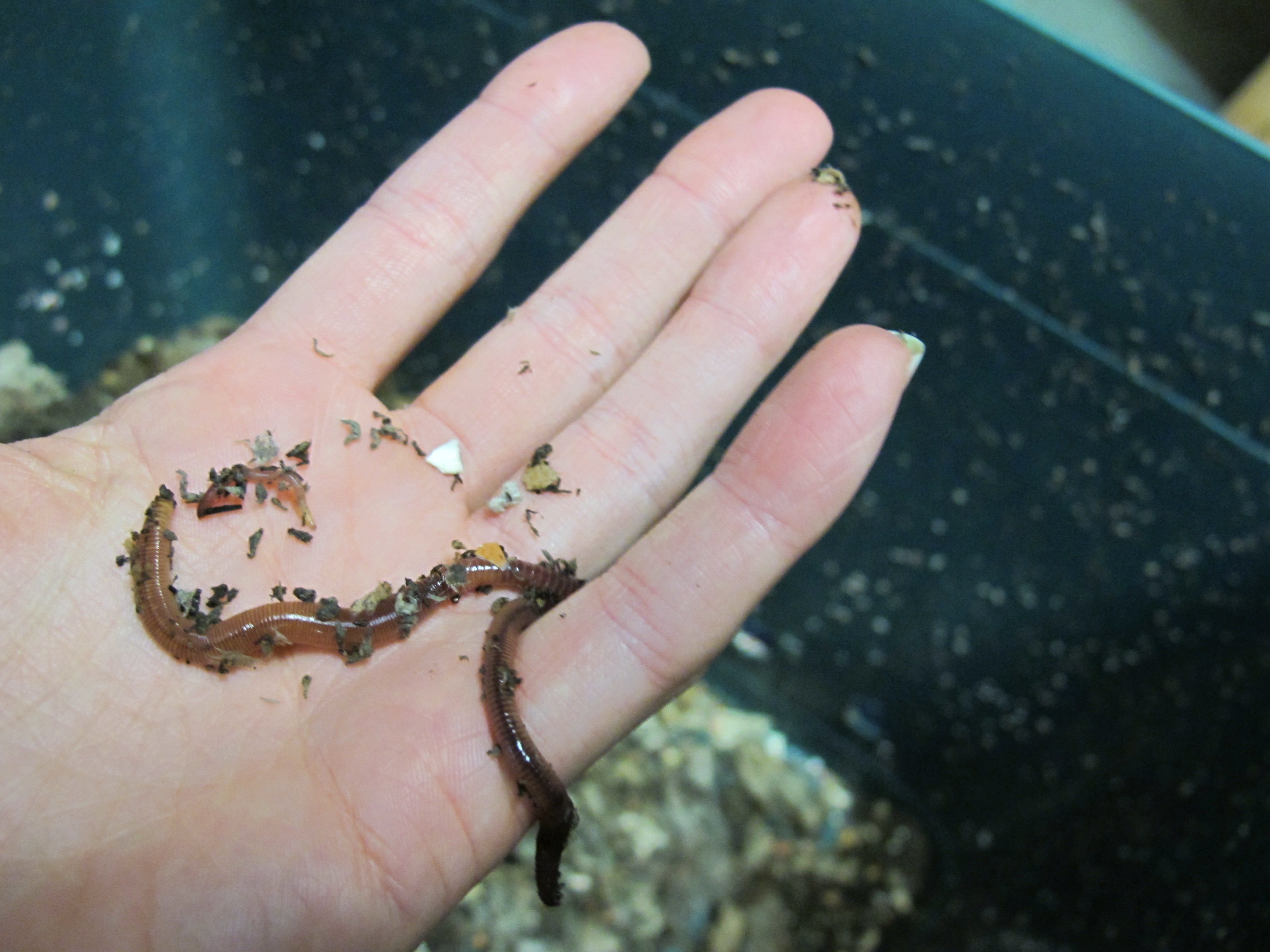
Red wigglers!

See the cute baby worm?  I put most of the worms in bin #2.  Theoretically, the population can double in 2-3 months, but that did not seem to be the case here.  My guess is that the bin was not really big enough to allow the population to increase, although the large number of baby worms proves that they were reproducing.  I hope to increase their numbers now that I doubled the total bin volume.

Bin #2 on the left, bin #1 on the right

In the four months since I started bin #1, my worms produced 7.5 pounds of beautiful, rich vermicompost.  It will be lovely for the garden — just wish we had more of it!  With two bins going, we should be able to divert even more of our vegetable scraps from the regular compost pile into the worm bins.

Bin #1, doing its thing

Tending my pot

Volunteer amaranth took over this pot of celery.

Before

In a relatively short amount of time, I set things straight in the celery pot.  Fortunately, amaranth leaves are edible.  At this young, tender stage, you can eat them raw.  Later, you can cook them like spinach.  If the plants mature, they produce seeds (i.e., amaranth grain) with high nutritional value.

After

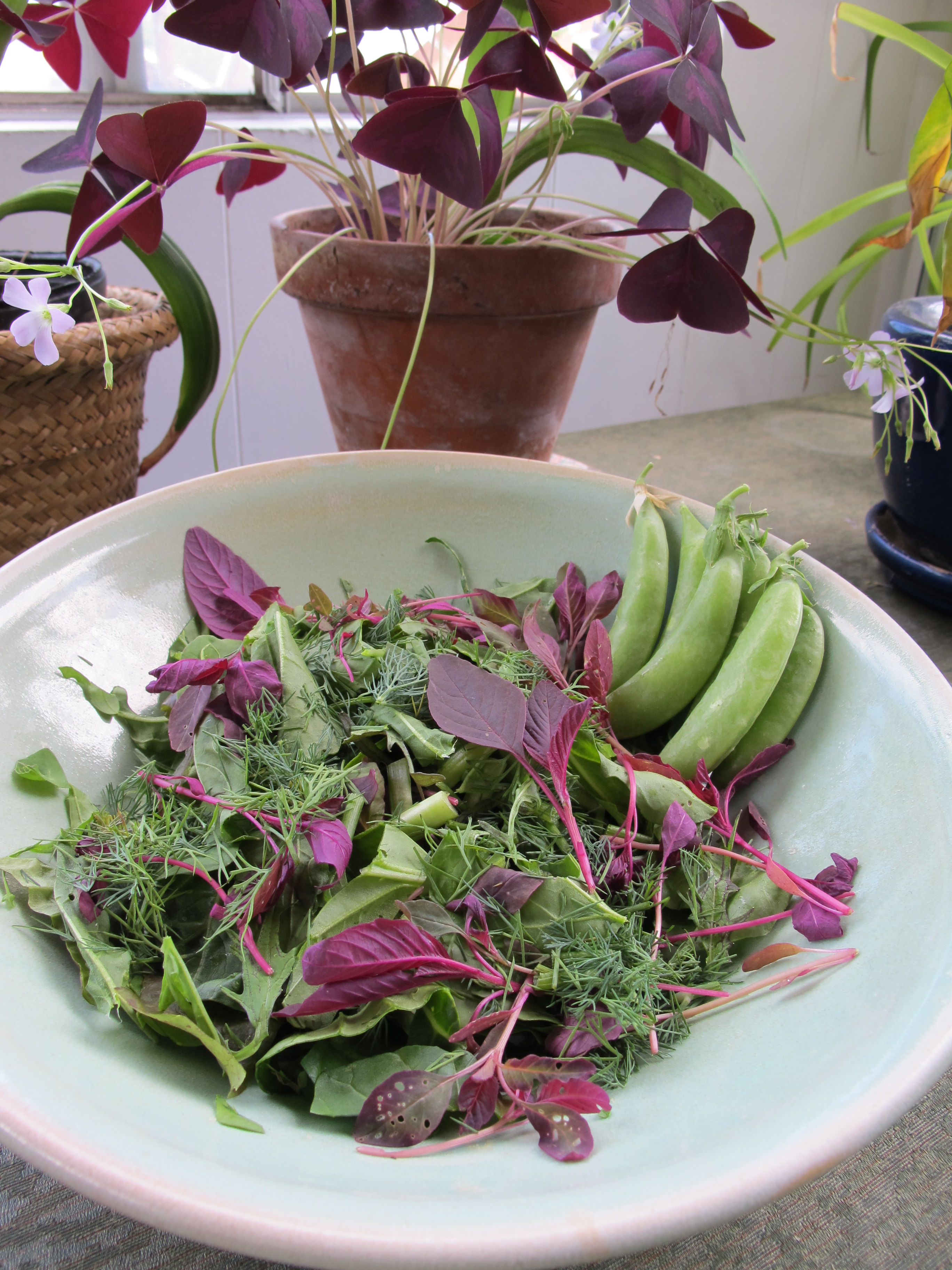
The amaranth leaves add amazing color to this salad (and match the color of the shamrock leaves).  Their flavor is very mild; I added dill and arugula to punch up the flavor, plus sunflower seeds for crunch (and protein).  Served with a side of sugar snap peas.  Dressed with a mixture of seasoned rice vinegar, cider vinegar, olive oil, crushed garlic, and a dash of sesame oil.  (Sorry, I don’t measure on the dressings — drives DH crazy!)

Eating beetles

I love eating beetles!

And by beetles, I mean beets, of course.  I’m not sure why I’ve taken to calling them that, but I find it amusing.

Matthew bought these at the farmers’ market on Saturday — our first of the season.  The beets in our garden aren’t this big yet.

Roasted Beets

Wash beets thoroughly.  If they’re fairly small (and sometimes even if they’re big) you can skip peeling them.  (My sister taught me this.)  Cut them into small chunks.  Toss with a bit of olive oil and salt.  Spread in a single layer on a baking dish.  Roast for 45-60 minutes at 325-400 degrees F, stirring occasionally.

Delicious on salad with poppy seed dressing (recipe here), onions, toasted pecans, and goat cheese.  Other serving suggestions: serve the roasted beets as a side dish or toss with pasta.