Pick up at least one piece of litter on the ground when you are out walking today, and dispose of it properly.
—

 Daily action from http://www.lcwr.org/lcwrsocialjustice/eoclentcalendar2010.pdf
Whole Health Dietitian — Tastefully Fueling Active Transportation
Pick up at least one piece of litter on the ground when you are out walking today, and dispose of it properly.
—
Daily action from http://www.lcwr.org/lcwrsocialjustice/eoclentcalendar2010.pdf
Consider composting your food waste. Put the nutrients from food waste back into the soil, not into a landfill. Learn more about composter options for indoors and outdoors.
This tip comes as I am one week into my vermicompost experiment. So far, so good. My little helpers sustained one casualty so far — a little guy that crawled (or fell) out one of the drainage holes in the bottom and dried to a crisp before I found him (tear). As I’ve mentioned before, if you want to learn about composting with red worms (i.e., vermicomposting), check out the book Worms Eat my Garbage.
While you can just throw everything in a pile outside, there are some simple tricks that can make the composting action in the pile more efficient — specialized container definitely optional! Here are some composting-related links that may be of use:
10 Tips for Making Better Compost
—
Daily action from http://www.lcwr.org/lcwrsocialjustice/eoclentcalendar2010.pdf
Be aware of how much food you discard this week. Look for opportunities to avoid wasting food by planning well and eating leftovers.
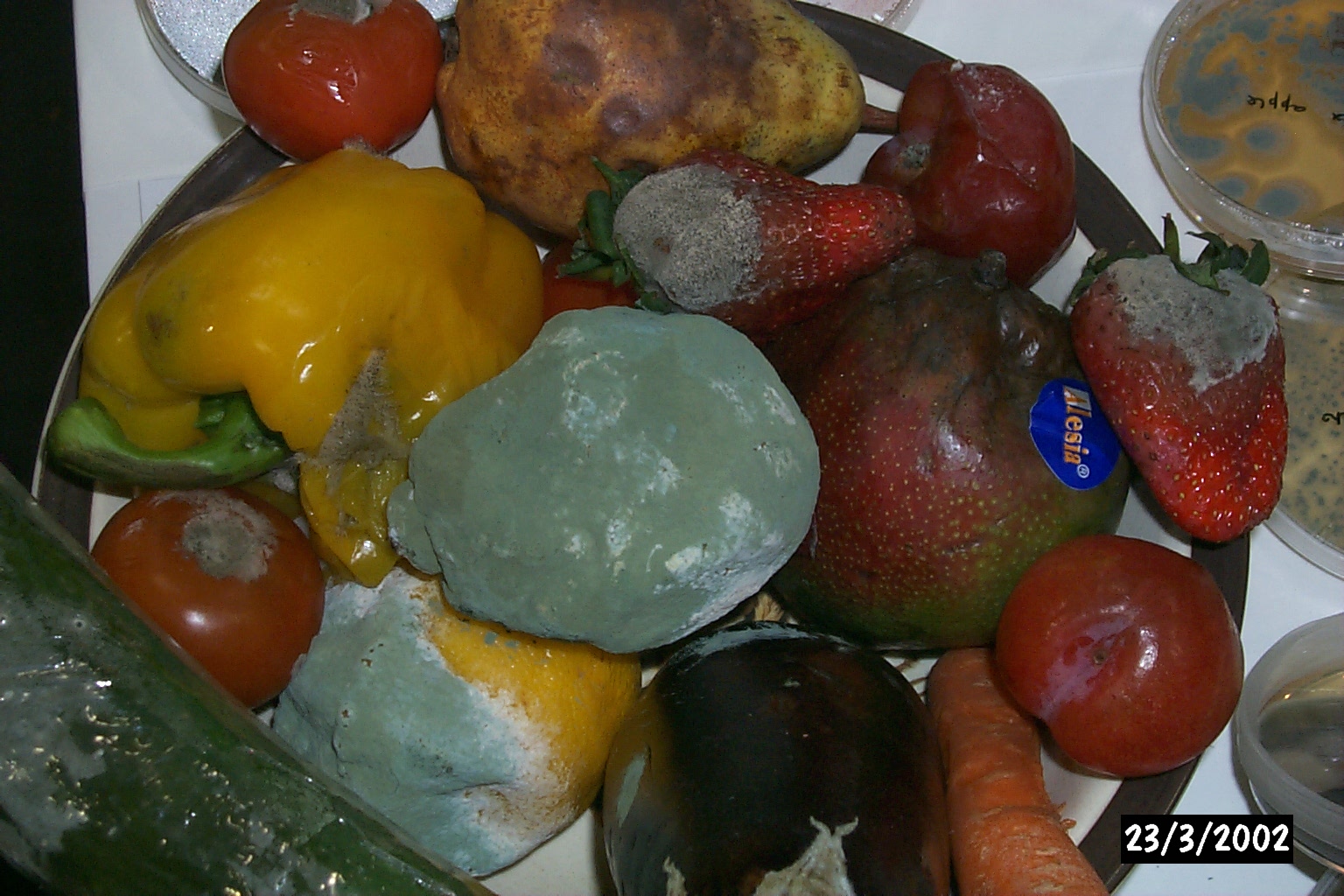
I found these stats on food waste startling:
“The U.S. Department of Agriculture (USDA) estimates that Americans waste 30 percent of all edible food produced, bought, and sold in this country, although it acknowledges that this figure is probably low. Recently, two separate groups of scientists, one at the University of Arizona and another at the National Institutes of Health (NIH), published estimates of 40 percent or more. Add up all the losses that occur throughout the food chain, the NIH researchers say, and Americans, on average, waste 1,400 calories a day per person, or about two full meals.”¹
This article explains why/how this egregious level of waste occurs — it will help you start thinking about food waste and ways to reduce it.
Veggies lost their luster? Cut them up and make a soup or stew. Fruit on its last legs? Toss it into the blender with some milk, juice, or yogurt to make a smoothie.
What are your tips and tricks for avoiding food waste?
—
Daily action from http://www.lcwr.org/lcwrsocialjustice/eoclentcalendar2010.pdf
Image of rotting food from http://www.fungi4schools.org/Documentation/Photo_Gallery.htm
1. Wright, Laura. “How to Wage War on Food Waste.” Available on the web at http://www.onearth.org/article/how-to-wage-war-on-food-waste
Turn off lights you’re not using. Shut off lights as you leave a room.
Enough said.
—
Daily action from http://www.lcwr.org/lcwrsocialjustice/eoclentcalendar2010.pdf
Speak out! Ask our leaders to take action on climate change today (Day Six, 1Sky).
—
Daily action from http://www.lcwr.org/lcwrsocialjustice/eoclentcalendar2010.pdf


 Her Green Life