Wild Fermentation

I finally got my hands on the library’s copy of Wild Fermentation.  In addition to recipes on how to make common ferments, like sourdough and sauerkraut, the book is packed with information about the health benefits* of fermented foods, as well as more exotic recipes, including one for the Ethiopian sponge-bread injera.  (A previous attempt to make injera yielded disappointing results, so we’re looking forward to trying this version, with uses a sourdough starter as the base.)

We were ready to start another batch of sauerkraut anyway, but we adapted our technique from last time based on the book’s instructions for making a somewhat lower-salt kraut.  When we were at Local Harvest Grocery last weekend, I spotted a pint of live-fermented organic purple cabbage sauerkraut (basically exactly what we made last batch), selling for $10 a PINT!  Our current batch of kraut (above, middle) should yield about 2 gallons, i.e., 16 pints, or $160 worth of sauerkraut — now that’s wild!

The quart jar on the right in the above picture contains my attempt at sourdough starter.  I made my starter with 100% whole wheat flour.  After a few days, I saw some good bubbling activity, but that died down, and I’m beginning to think that I’ll have to toss this and start over.

Some places suggest starting with whole wheat flour, but then switching to white flour for feeding.  A white sourdough starter wouldn’t be the end of the world, since sourdough bread recipes consist of some starter and a large amount of flour — we can just use whole wheat flour in the bread recipe for an almost 100% whole wheat bread.

After reading all the details on starting a sourdough starter here, I’m thinking getting an established starter from someone may be the way to go.

*Health Benefits of Fermented Foods¹:

  • Promote digestive health by supporting “good” bacteria in the GI tract
  • Makes many nutrients in foods more digestible
  • Neutralizes  toxic chemicals in foods (e.g., phytic acid in whole grains) that may otherwise impede absorption of nutrients
  • Rids body of heavy metals and radioactive materials — this benefit is specific to live-cultured  miso (a soybean ferment — think miso soup)

1. Wild Fermentation.  Sandor Ellix Katz.  2003, Chelsea Green Pub.

Into the 3rd

Well, here we are at 28.5 weeks!  We got back from our trip almost three weeks ago now, and I realize I’ve written very little about it.  I spent the first two weeks exhausted, fighting the third cold I’ve had this pregnancy (poor little immune system), a Roman superbug, and diving right into a busy time at work.

After the sore throat, runny nose, etc., the superbug announced its presence in my sinuses last Monday with a sudden onset toothache affecting only the teeth on the top right side of my mouth.  For a few hours, I sat at my desk, feeling like my face was going to explode.  The tooth pain abated on its own, but since that time, I’ve upped the neti pot to twice a day, which seems to be working.

I’m actually trying to be good about resting my bum knee, which means almost no biking, because I need it to get me through an entire day in the saddle for the Cycling Savvy training this Saturday, followed by a community bike ride on Sunday.

I’m still keeping active with some walking, upper body weights, and the prenatal yoga class I just started.

I hope to get back on track here soon, with some posts on our time in Italy and green baby prep.  Until then, here’s hoping for sunny skies to dry up the soggy ground and healthy knees for biking!

Edible souvenirs

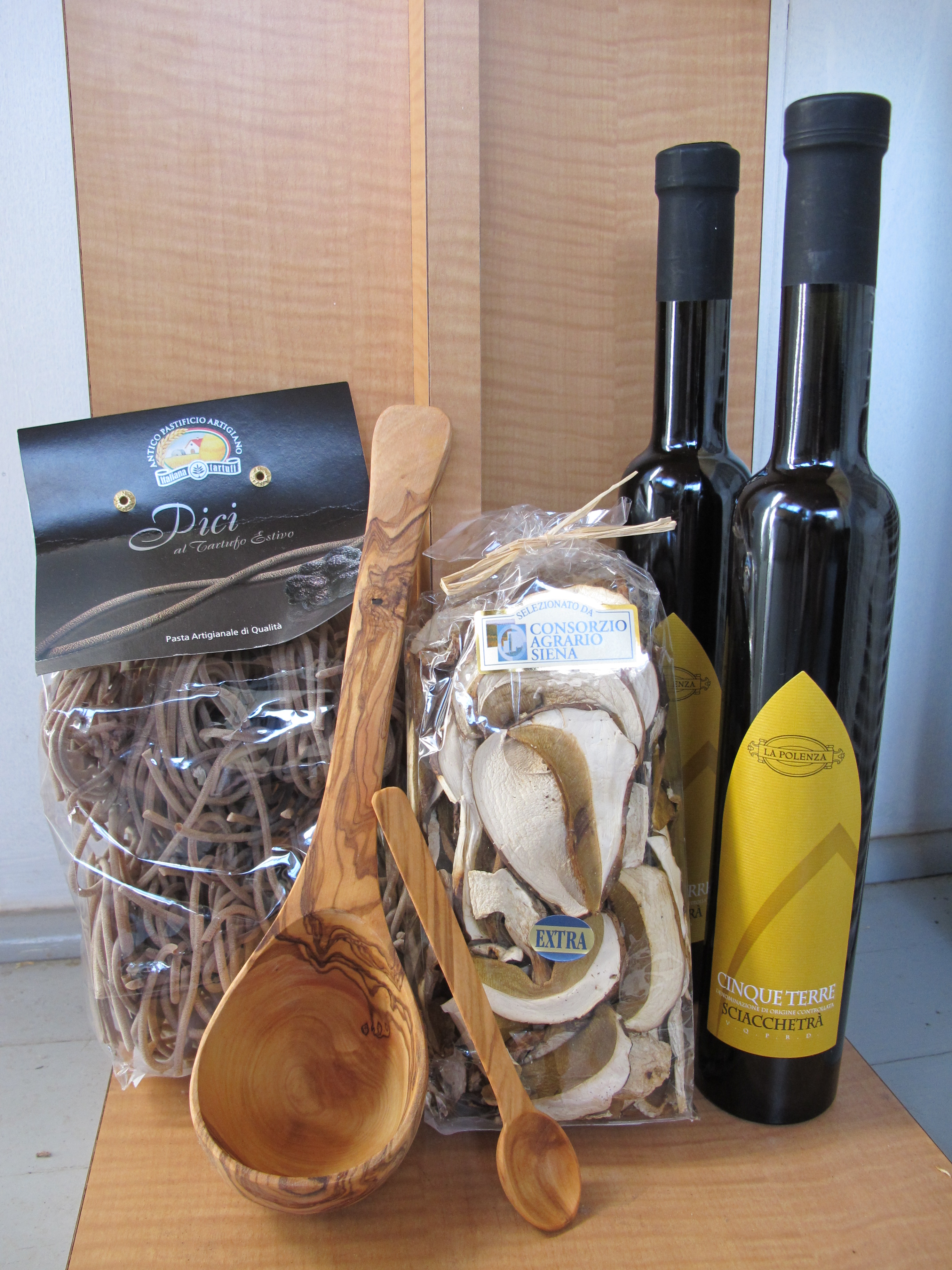
In our quest to not accumulate too much “stuff,” we usually forgo souvenirs when we travel.  If we do buy something, it is often edible.  Here’s our booty from Italy:

  • Truffle-infused pici — a thick noodleto be prepared in a traditional way, simply topped with olive oil, grated cheese, and black pepper)
  • Very high quality dried porcinis — super flavorful and much fresher than any dried porcinis you can buy in the States
  • Sciacchetra — a special dessert wine, product of the Cinque Terre region.  We plan to use a bottle to toast baby’s arrival this summer 🙂
  • Our two non-edible souvenirs are still food -related: a big ladle and a baby spoon, both made locally in Siena from olive wood.

Sure, edible souvenirs don’t last forever, but that’s kind-of the point.  For lasting memories, we have plenty of pictures!

I also have a few trip “souvenirs” that I would like to disappear.  First, there’s the cold that started halfway through the return flight from Rome.  A week later, with lots of hot honeyed tea, water, and regular neti pot usage, I think it’s on it’s way out.

Unfortunately, the knee pain that started in Siena or Rome shows few signs of subsiding.  Regular walking is not too problematic, but going downstairs (or down steep hills), is a different story.  Today I discovered that I can walk downstairs at a slightly faster rate if I go down backwards.

To make matters worse, biking is also painful.  I biked to my dentist appointment last Friday and haven’t been back on since 😦  I’m really itching to get back on the bike, but I also want my knee to heal, so I’m trying to be good.  Will I get desperate enough to go see a doctor?  TBD.

Celebrate St. Paddy’s Day with Green Food

Happy St. Patrick’s Day! It’s a great day to have a green blog 😉

Speaking of green, I grew up with my grandma’s St. Patrick’s day meals, where everything was green — literally!  Green butter, green water, green wine & beer, green horseradish — she really went all out.

The St. Patrick’s Day dinners bring back great memories, and I love the spirit and festivity, but these days, the thought of consuming all that green food coloring makes me cringe.

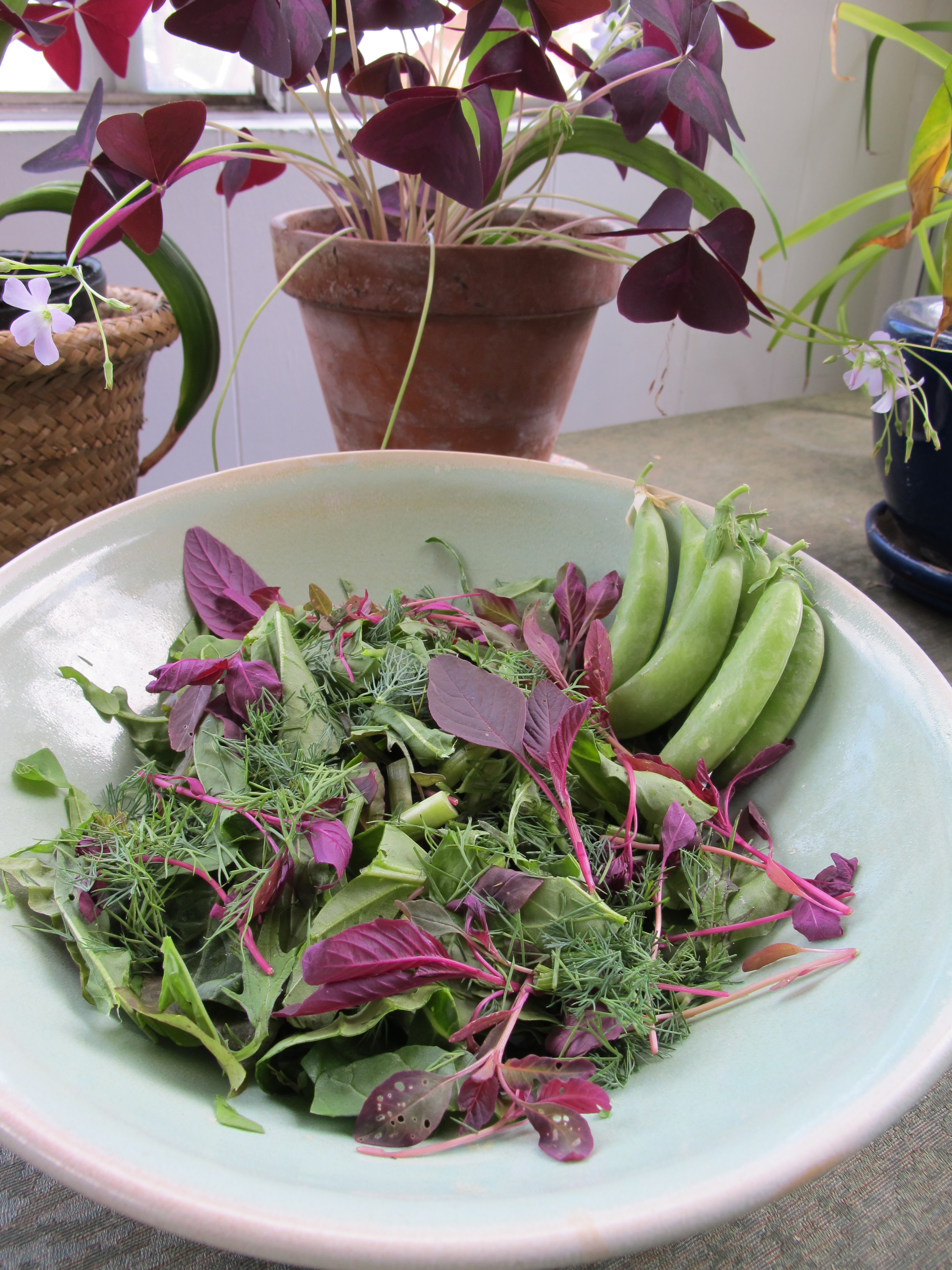
Fortunately, there are a plethora of green foods out there, so you can still have a green meal without artificial dyes.  As an extra bonus, most naturally green foods are pretty good for you.

Green on green

Here are a few ideas:

  • Green cabbage — a very traditional St. Paddy’s Day food, but the traditional cooking method — boiling forever — robs it of most of the green color (and most of the nutritional value).  Try it fresh in a cabbage salad.
  • Spinach — try a simple saute with olive oil and garlic or fresh with your favorite salad toppings.
  • Pesto — the basil gives it a fabulous bright green color.  Serve with your favorite [green] veggies and pasta.
  • Garnish plates or beverages with fresh herbs such as mint, basil, parsley, or cilantro.
Complete with shamrock plant in the background

There are a bunch of green foods not on my list, so it’s your turn!  What is your favorite naturally green food?

—–

We’ll be keeping things fairly traditional with our reuben sandwiches tonight.  Since we made our sauerkraut with purple cabbage, we’ll have to make sure to have a serving of green on the side 🙂

Vegan again?

Although I’ve never officially been vegan, I was pretty darn close for a couple of years, including the time when I met Matthew.  On one of our first dates, we made vegan chocolate chip cookies.  He went out of his way to buy vegan chocolate chips and Earth Balance spread for the the recipe, knowing that I tried to avoid dairy products.

Though he had been vegetarian for much longer than I had, he liked cheese, butter, ice cream, and eggs, and my diet gradually came to incorporate more of those foods.

Over the summer, we started buying local milk regularly (one gallon every two or two-and-a-half weeks), some of which became yogurt and ice cream.  We’ve also been eating a decent bit of cheese, either local or non-local plastic-free.

Everything seemed fine and dandy until I suggested that Matthew visit my homeopathic health care provider (she has a doctorate, but cannot be considered a “doctor” in Missouri) about some ongoing health issues he’d been experiencing since August.  She ordered a simple food allergy blood test, and, lo and behold, the results came back with a Level 3 allergy to dairy.

While it is hard for him (and me too at this point, to be honest) to consider completely eliminating dairy from his diet, that is exactly what he (we?) will be doing for a month.  After his system has a month to recover, he will slowly reintroduce specific dairy products to see if there are some that he can tolerate.

We expect that straight up milk will be out of the picture altogether (which would not be a huge loss) but are hoping that butter, yogurt, ice cream, and cheese might not cause a reaction.

Since he has been eating them for years, this is clearly not a life-threatening allergy, but as the past few months have made clear, the allergy is most likely affecting his health on a day-to-day basis.  This may very well come down to a choice between optimum health and continuing to eat some favorite foods.