Neti pot — A how to

With fall allergies in full swing, along with the start of flu and cold season, allow me to introduce nasal irrigation and my neti pot.
With the exception of a 4-year respite in South Bend, IN, I’ve suffered from general “hay fever” type allergies most of my life.   For me, this generally manifests as congestion leading to sinus headaches.  In high school, I was a Flonase junky (back before there was a generic option).

When I started having problems again after college, I wanted to try something different.

Nasal irrigation cleans out the nasal passages, removing allergens, bacteria, and other irritants.

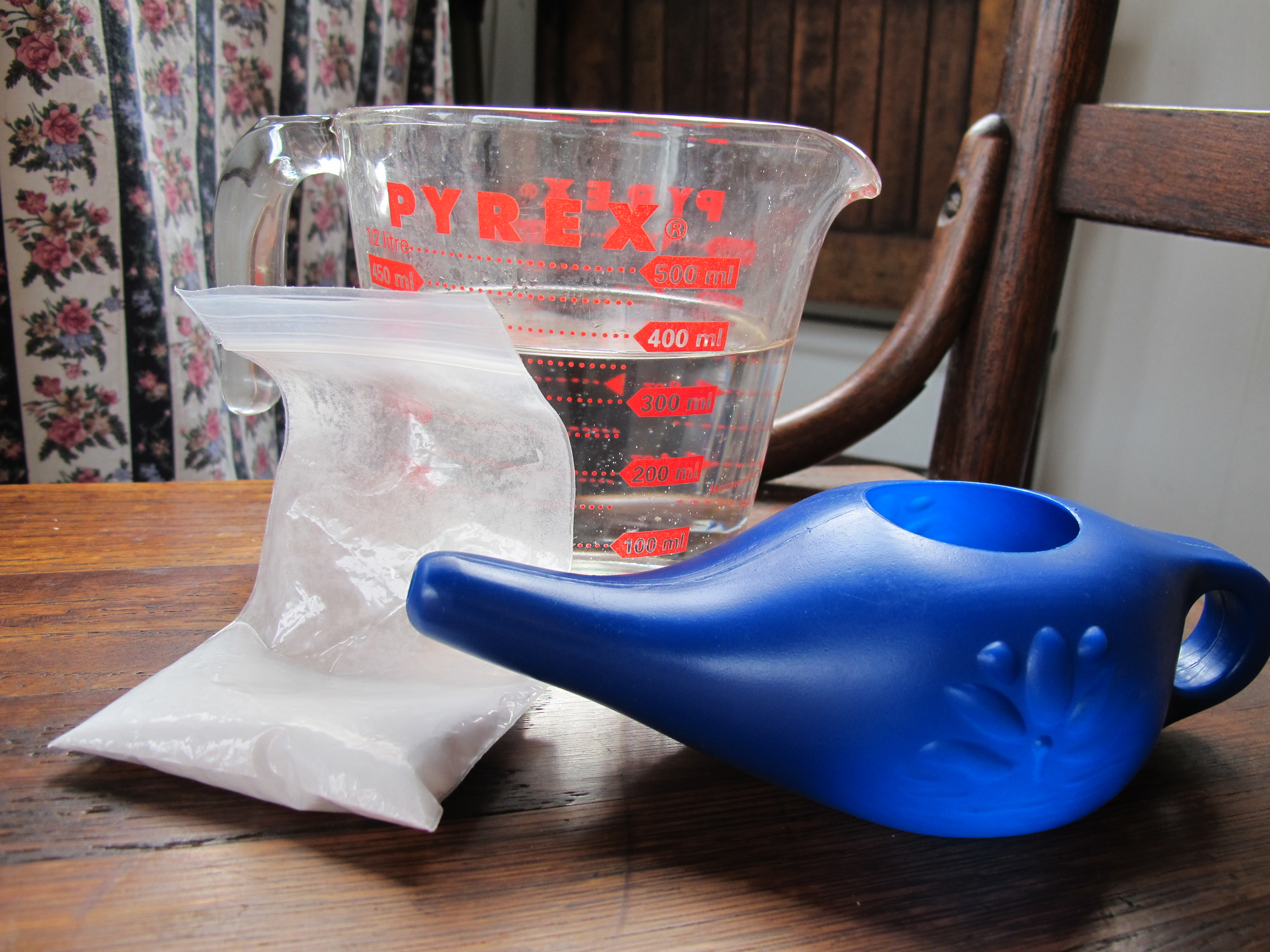
What you need:

  • a neti pot
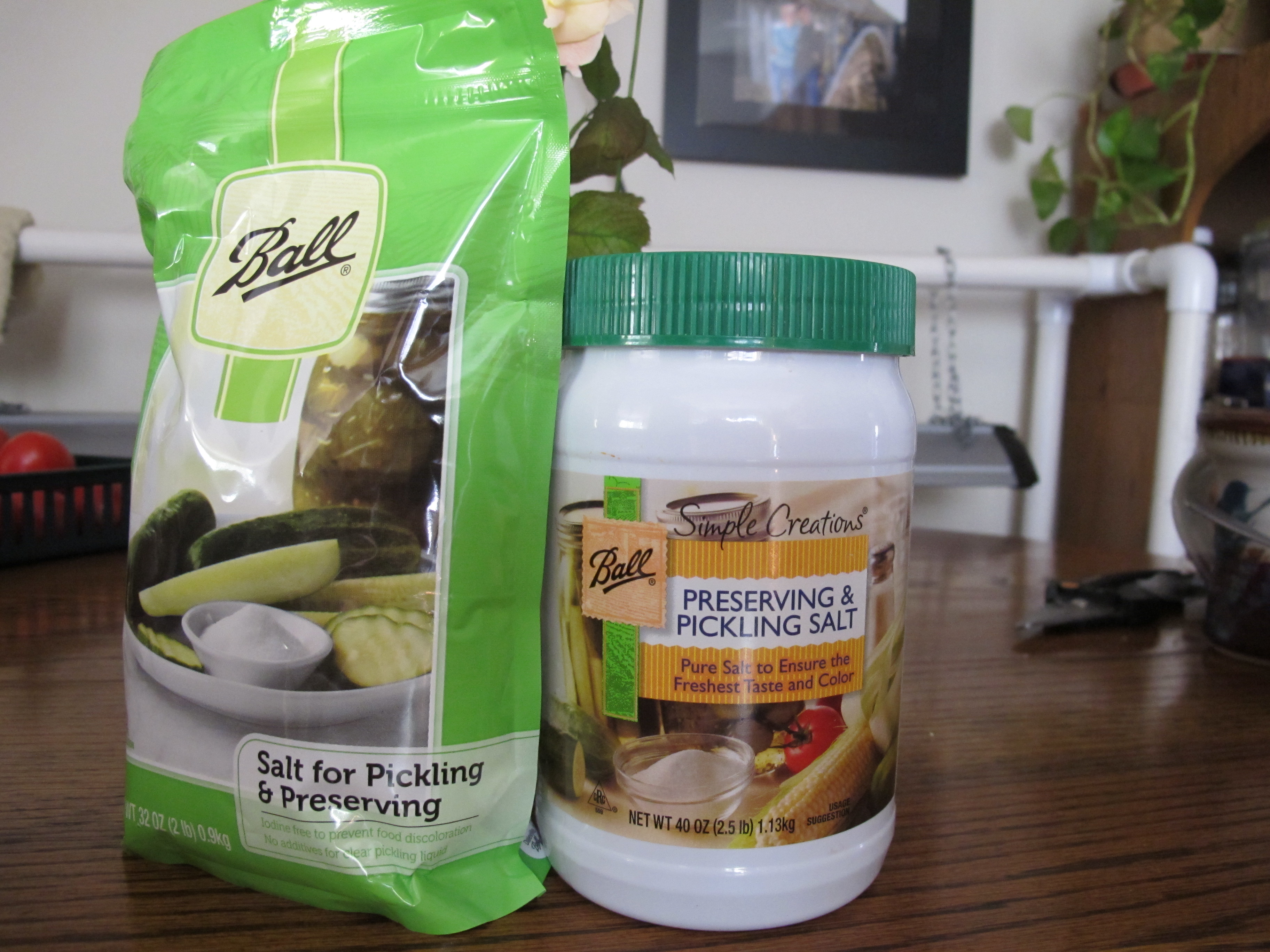
  • pickling salt
  • baking soda
  • dechlorinated water

You can find neti pots at most drug stores and many health food stores.  These places also sell a packaged salt mix, but you don’t need this!  It’s a waste of money and packaging.  You could use table salt, but I highly recommend the pickling salt, which is pure salt, no iodine and no additives, like anti-caking agents, to irritate your delicate little nasal membranes.

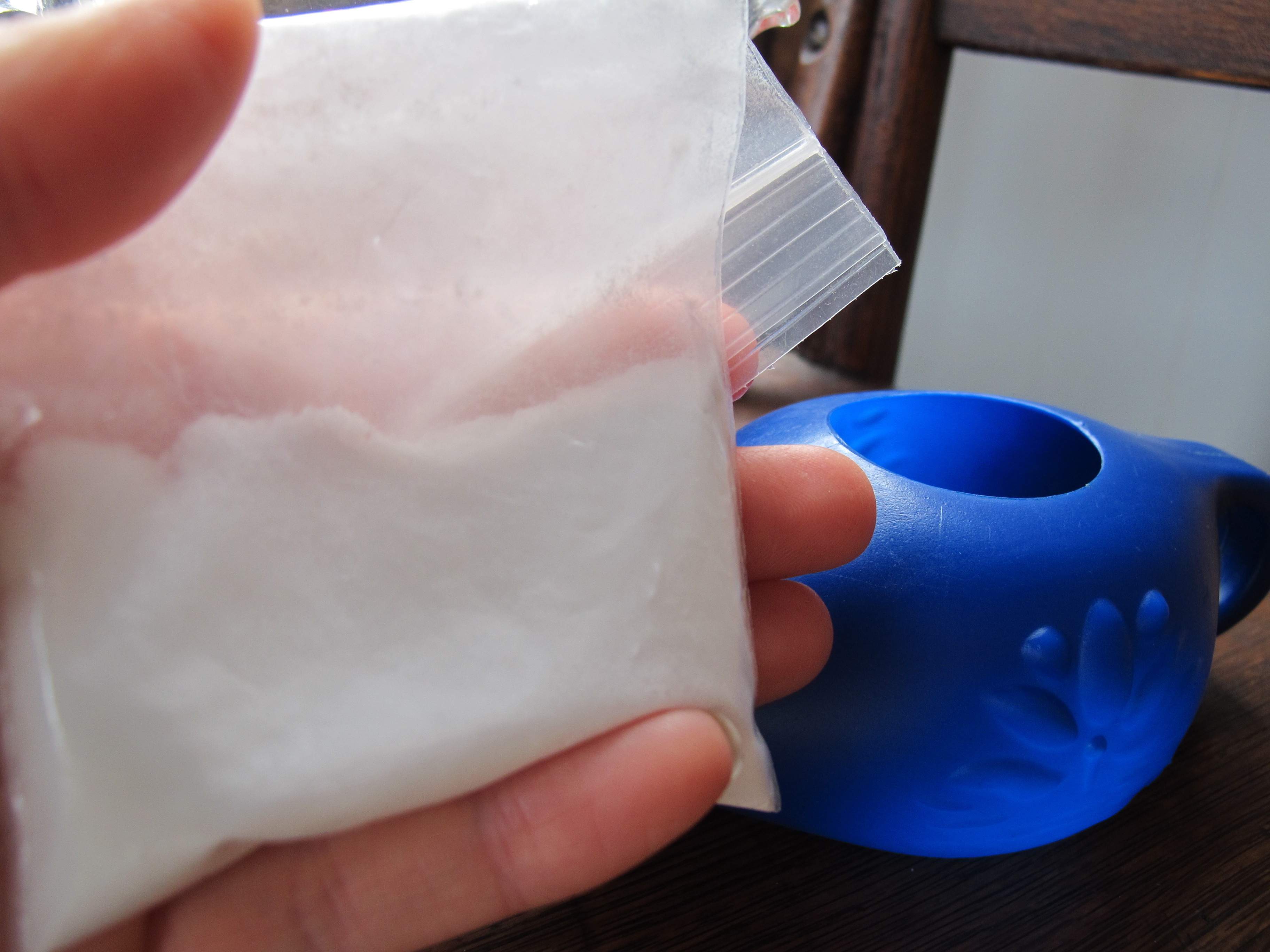
My mix: 1 1/3 c. dechlorinated water (just let let regular tap water sit in an open measuring cup for 24 hours to dechlorinate), generous 1/2 teaspoon pickling salt, 1/8 teaspoon baking powder.  I pour 2/3 c. of the mixture into the neti pot for one nostril, then use the rest for the other.

Here’s a slideshow to walk you through the process.

Does it hurt?  Usually, no.  It’s only painful when I’m REALLY congested, or sometimes when I skip a day.  Lesson here?  For this to work well, you should neti every day.  Once you make it part of your routine, it will only take a few minutes.  I neti in the evening, usually an hour or two before bed.

Using the neti pot every day means traveling with proper supplies.  Come back tomorrow for that tale.


Is your desk job killing you?

For the past couple of months, I head home at the end of the work day with seriously tense, sore upper back and neck muscles.  Most days, I feel it setting in before lunch, and once it’s there, it’s there to stay.

As far as I know, I’m doing a lot of the right things ergonomically: my computer is a laptop, but I have it propped up on a couple of thick phone books so the monitor is at eye level; I use a separate keyboard on one of those keyboard trays that attaches under the desk; I try to be aware of my posture.

All of this pain from spending a huge chunk of my day sitting and working at a computer reminded me of some articles from earlier this year that talk about the dangers of prolonged sitting.  See, some recent studies show that even if you are one of the very few people who get at least 30 minutes of activity a day (heck, even if you get 60 minutes of activity a day), if you spend long periods of time sitting (as many of us do for our jobs), you’re at higher risk for a variety of chronic diseases, including diabetes, heart disease and some cancers.

You can read the articles, which have information on where to find the actual research publications, here and here.  Both articles are worth the read.

Recently, I’ve been trying to break up the sitting at the desk by taking at least one, if not two, short walks during the day.  I’m also experimenting with giving up my 6-year-long practice of sitting on an exercise ball, based on this article.  I’m also looking into small exercises or stretches that I can incorporate into the work day — there are some suggestions here.

What are your tips or tricks for making a desk job more active?  Any suggestions out there for the neck and upper back pain?


Chattanooga, you had me at hello

Market St. bridge across the Tennessee River, taken from the Walnut St. bike/ped bridge

Hello from Pro Walk Pro Bike 2010 in lovely Chattanooga, Tennessee.  Ya’ll (I can say that because I’m in the south now), Chattanooga is a lovely city that has made huge pedestrian and bicycle enhancements in recent years and I’m surrounded by fabulous and inspiring people from across the country (and the globe, in some cases) who are working hard to create safe, viable transportation alternatives.

Art Museum at Bluff View Art District

I packed for the conference after looking at the weather forecast and seeing temps in the high 80s (i.e., almost 90 — ugh, hot) all week instead of the reality that I would spend 8am to 5:30pm in a refrigerator an excessively (and wastefully) over-air-conditioned building.

After hours, I’ve been exploring Chattanooga by bike.  Given the conference hours, this means that I’ve been exploring Chattanooga by bike IN THE DARK, both a.m. and p.m., which wouldn’t be a big deal if I had Baby Jake and my usual riding gear, but it’s a little iffy on the rental with no lights or reflective vest.  Note to self: always travel with reflective vest, you never know when you might want it.

I’m only scratching the surface here, but so far I’ve enjoyed the Walnut Street Bridge, the Tennessee Riverpark (an 8-mile long multi-use greenway), and biking around downtown in general.

Spinach walnut ravioli at 212 Market Restaurant

The food scene (normally, I would consider this the most important part, but I’m so enjoying the biking and the beautiful riverfront):

However, eating out is not nearly as fun without Matthew.  I can try many more things when he’s there to share in the fun and food.  I’ve already informed him that we’re coming back to Chattanooga together 🙂

Obligatory oatmeal post

I eat oats for breakfast pretty much every morning.  On the rare occasion that I don’t, it throws my entire day off-kilter.  I don’t need coffee, I just need my oats!

Oatmeal from rolled oats fills my bowl most mornings.  I used to be a quick oats gal, but I switched to rolled oats because they’re available in bulk (sure, you can recycle the cardboard canisters from non-bulk oats, but reducing > recycling).  The bulk oats also happen to be organic, an added bonus.

For speed and convenience, I cook my oatmeal in the microwave.  I worried that rolled oats would take a lot longer to cook, but they really don’t.

I shuffle into the kitchen first thing in the morning and measure out 1/2 cup rolled oats.  Combine the oats with a generous 1 cup of water and let sit and soak for at least 10 minutes (this is the secret to rolled oats cooking as quickly as quick oats).

After it soaks (longer is fine), pop the bowl into the microwave.  I cook mine for about 2 minutes and 15 seconds (this may vary).  Do NOT start the microwave and walk away, or you might return to an oatmeal explosion (not a fun way to start the day, and yes, I know this from experience).  I keep an eye on the oatmeal, pausing and stirring twice, while I assemble the toppings.

Toppings:

  • Something sweet — I use honey or brown sugar, just a touch, I’m going for breakfast, not dessert here.
  • Fruit — since I stopped buying bananas, my oatmeal fruit staples are chopped apples (when they’re in season), raisins, or dried apples.
  • A sprinkle of cinnamon and nutmeg — these add a lot of flavor
  • A splash (or more) of milk (usually soy milk) — I cook the oats in water, and a touch of milk at the end adds a rich flavor.
  • 1 heaping tablespoon of ground flax
  • 1 T. (?) peanut butter and/or some unsalted, roasted sunflower seeds

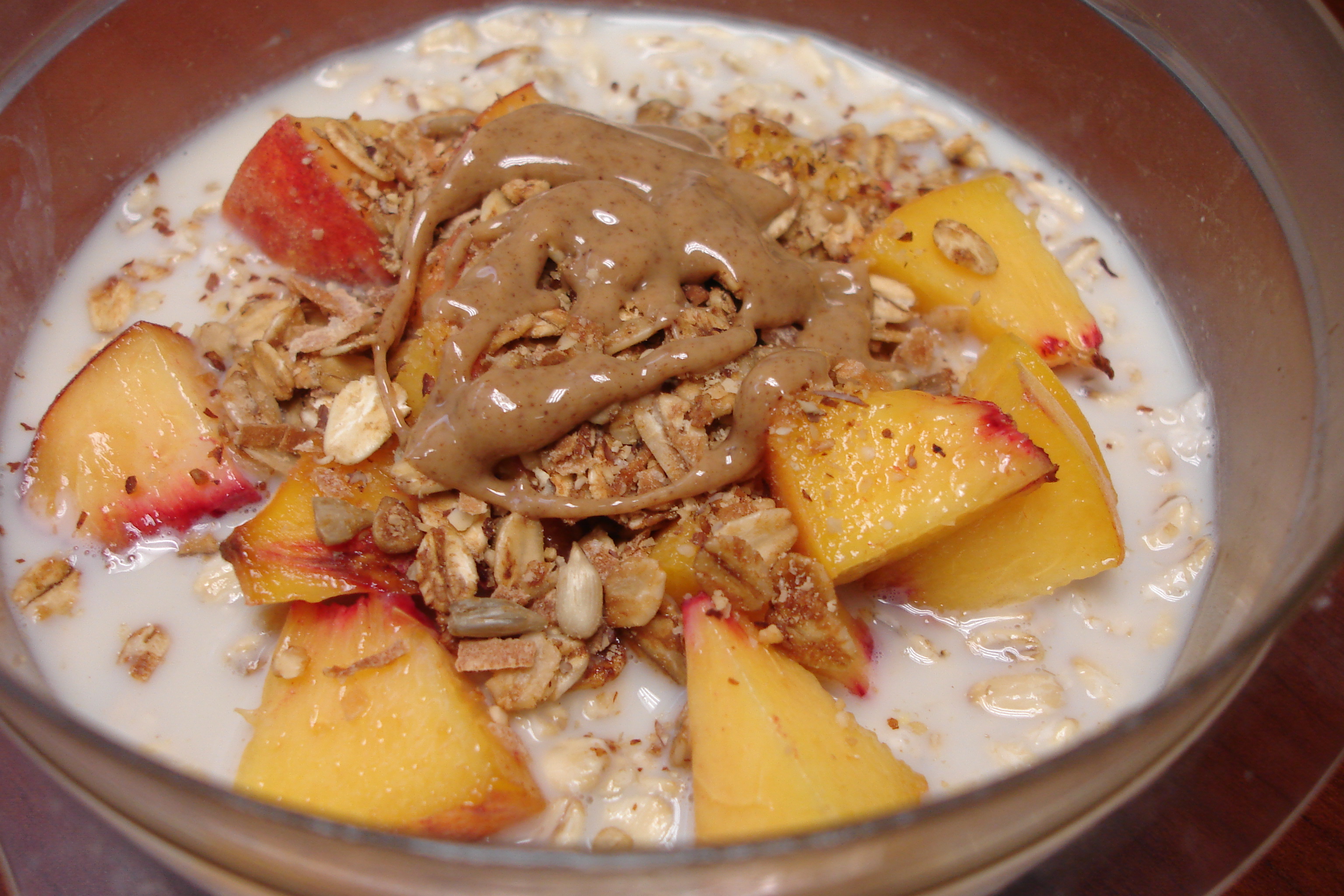
This is NOT my ordinary oatmeal, but a no-cook, to-go version: 1/3 cup rolled oats soaked in soy milk (perhaps a bit too much milk in the photo above) for a couple of hours.  Topped with sliced local peaches, homemade granola, and almond butter.  I added a touch of maple syrup to the last few bites.

Health Notes

Oats make a very healthy breakfast, especially with the addition of cinnamon and nutmeg.  Adding fruit and nuts or nut butter rounds out the meal with extra vitamins, minerals, protein, and fat.

“Oat products have high soluble fiber content, which aids digestion. Oats reduce cholesterol levels, which makes them good for heart health and they are high in protein. To obtain the heart benefits of oats, the product must contain at least three grams of soluble fiber” (1).

“These data indicate that black peppercorn, nutmeg, rosehip, cinnamon and oregano leaf may serve as potential dietary sources of natural antioxidants for improving human nutrition and health” (2), emphasis added.

“. . . antioxidants in cinnamon have been linked to lower inflammation, as well as reductions in blood glucose concentrations in people with diabetes” (3).

—-

1. http://www.extension.org/pages/Oats_are_Economical_and_Good_for_Your_Health

2. Su, L, et al. (2007).  “Total phenolic contents, chelating capacities, and radical-scavenging properties of black peppercorn, nutmeg, rosehip, cinnamon and oregano leaf.”  Food Chemistry, 100 (3).  Abstract here.

3. WebMD.  “Spices and Herbs: Their Health Benefits