Injera stew

One of the many restaurants we tried in Portland was Queen of Sheba, an Ethiopian restaurant.  While we have an Ethiopian restaurant we like quite a lot in St. Louis, Queen of Sheba made the cut for its mushroom dishes and the fact that it was an easy walk for picking up take-out.

Given many of the green efforts I witnessed at various Portland eating establishments, I was disappointed by the plastic take-out containers.  I mean, I knew take-out would generate waste of some form or another, and we were able to recycle the containers, but it was not ideal.

Anyway, the food was quite good, but we were left with our standard Ethiopian meal dilemma — leftover injera.  While the various Ethiopian stews reheat quite nicely, I can’t say the same for injera, the sourdough “pancake” that is both a bed for the stews and the means of scooping up the food.

A couple of searches for uses for leftover injera didn’t turn up much, so I decided to wing it.  I should add here that Matthew was very skeptical of my approach to this dish, which in turn made me a bit nervous, especially since I was cooking for his sister and her boyfriend as well.  However, I continued with my impromptu plan and heard no complaints as we devoured most of the stew in one sitting.

Injera stew

Recipe by Melissa
Serves 4-6

Ingredients
5-6 c. vegetable broth, or water plus vegetable boullian
3/4 c. orange lentils (small and quick cooking)
2-3 c. prepared tomato sauce or tomato puree
4-6 c. veggies, including onions, carrot, garlic, kale or other greens
4-5 cups chopped leftover injera
1 t. cumin

Directions
Place lentils in large pot (we’ll be adding other ingredients to the pot later).  Cover lentils with water and cook until tender.  While the lentils cook, chop and saute the veggies in a mix of butter and olive oil.  The veggies should be tender-crisp, just enough of a saute to pick up some fat and flavor — they’ll cook more in the stew.

Add sauteed veggies, broth, tomato sauce, injera pieces, and cumin to the pan with the cooked lentils.  Stir to combine, cover, and simmer to 20 minutes, or until vegetables reach desired tenderness.  Stir every once and awhile, and add more broth or water if it gets too thick.  Salt and pepper to taste.  Serve hot in large bowls.

Smoked eggplant lasagna

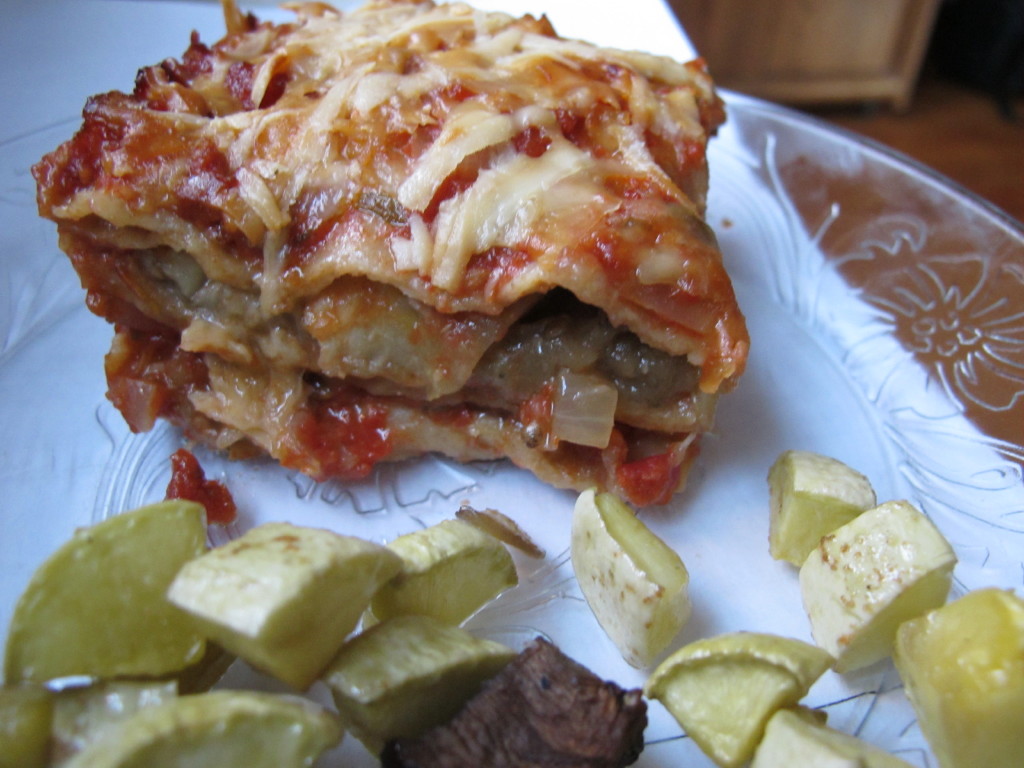
Last week, I created a particularly tasty lasagna using — what else? — eggplant and tomatoes.  This dish (especially the leftovers, which feel like all of the goodness with none of the work) makes me not mind the overabundant harvest quite so much.

Smoked eggplant lasagna

Recipe by Melissa
Makes one 9×13 pan of lasagna

Ingredients
Lasagna noodles to make one 9×13 pan of lasagna
2-3 c. grilled eggplant puree*
1 bulb roasted garlic
1/2 c. extra virgin olive oil
2 medium eggplant, peeled and sliced very thinly
5-6 c. very good tomato sauce (see recipe below for one suggestion)
1 c. grated aged cheese, like Romano or Parm

Directions
If using fresh [homemade] pasta, there is no need to precook the noodles.  If using regular lasagna noodles, boil until al dente, according to package directions.

Mix eggplant puree, roasted garlic, and olive oil to achieve a thick sauce consistency.  Salt to taste.

Spread a small amount of tomato sauce on the bottom of a 9×13 pan.  Then layer as follows: noodles, eggplant puree, thinly sliced eggplant (sprinkle with salt), tomato sauce.  Repeat for a total of two layers.

Add a final layer of noodles (for three layers total).  Top with tomato sauce and grated cheese.  Bake for 50 minutes at 375° F.  Let stand for 10 minutes before cutting.

Tomato sauce

This is a very rough estimation of this batch of tomato sauce.

8 c. diced garden-fresh tomatoes, mix of paste and juicier varieties, do NOT skin or seed
1-2 c. finely diced onion
1 bulb pressed garlic
olive oil for sauteing onion and garlic
fresh (or dried) herbs including rosemary, thyme, and oregano

Cook tomatoes in large pan.  As the tomatoes start to cook down, saute onions and garlic.  Add to tomatoes along with chopped herbs.  Salt to taste, and add 1-2 T. sugar, if desired.

I did a slow cook sauce, letting it simmer for 2-4 hours to thicken.  If you’re in a hurry, you can add a jar of tomato paste instead of the long cook.

*Can also cook eggplant in microwave and add smoked salt

Sun buttered

Do you like sunflower seed butter but not the  price tag?  Or is it hard to find where you live?  If you have sunflower seeds, oil, and a food processor, you can make your own.

A [16 oz. net weight] jar of conventionally grown (i.e., not organic) sunflower seed butter runs about $5-$6.  If you want organic, add a couple of bucks to that figure.  Then compare that price to buying raw, unsalted organic sunflower seeds for $3.50/lb.

I like to roast my sunflower seeds first, which led to a failed attempt a couple of weeks ago when I, um, OVER-toasted (okay, burned) the sunflower seeds.  I deemed them still edible (by me, because I couldn’t bear to throw away what had been perfectly good food) but NOT suitable for sunflower butter.

The burnt seeds took the wind out of my sails, and it took me awhile to get back to this.

Start with one pound (a generous two cups) of raw, unsalted sunflower seeds.

Toasting is optional, but I like the flavor better.  You can use a dry pan on the stove top, the microwave method, or an oven/toaster oven.  Whatever the method, toast them LIGHTLY.  Let cool most of the way before proceeding.

Start blending seeds in food processor.

Keep blending.  It will start to get weird and chunky.  Keep blending.  At some point it will start to look like cookie dough, but not at all like a nice smooth nut butter.  This post has more good pictures.

Gabriel says, “Keep blending.”  Basically, you don’t want to add the extra oil too early, or the sunflower seeds will not release all of their oils, and it won’t come together as well.

Once you have a doughy, thick nut butter consistency, drizzle in some oil while the food processor is running.  I didn’t really measure, but I think I used about two tablespoons.

Nice and smooth.  Add sweetener and a bit of salt to taste.  I added about a tablespoon of honey (yay for someone being old enough to eat things with honey in them now!) and a pinch of salt.

Put the finished product in a jar or other container and enjoy cleaning out the food processor — a tasty job.  Refrigerate the sunbutter and use as you would any nut butter — sandwiches, stirred into oatmeal, on crackers, in cookies . . . .

With organic peanuts and peanut butter selling for $6/lb, homemade sunbutter may be making more frequent appearances in our kitchen.

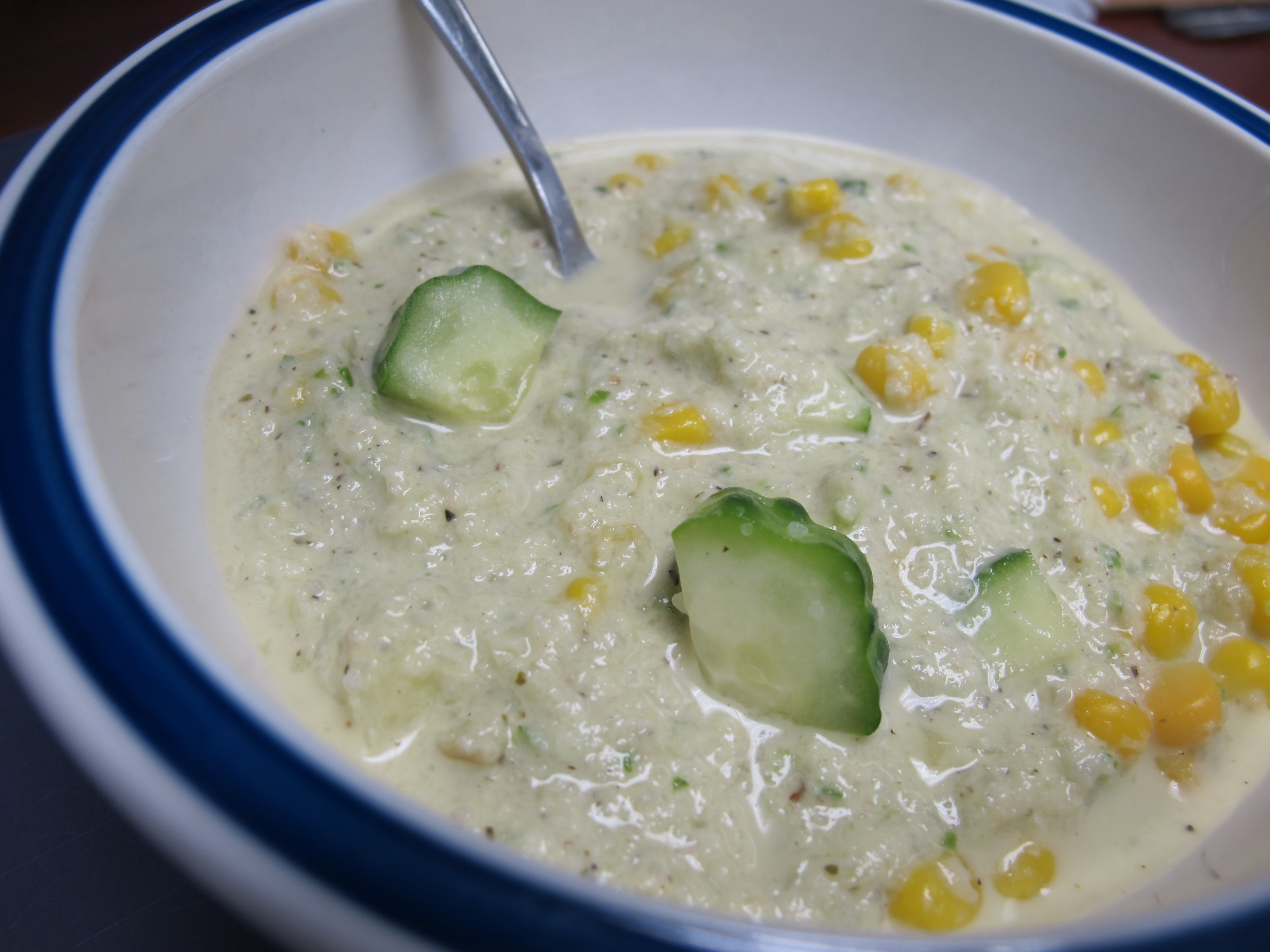
Cucumber soup

Until we have a garden in our backyard, growing our food is mostly Matthew’s domain, and these days, I rarely venture out to our commuter garden.  However, before we left for our trip a couple of weeks ago, I headed out for one final picking.

I harvested a boatload of cucumbers and hatched a half-baked plan to take the cukes to Iowa with us and make refrigerator dills for my family.  We nixed that plan, and the cukes sat in our dying fridge for a week.

We returned to a fridge full of still okay cukes.  After staring them down for a few days, I decided the best way to use a large number of cucumbers was some kind of chilled soup.

Some searching yielded a variety of recipes, many that only used one cucumber (that would never do!).  The most promising involved cucumbers and avocado, but, while I want to give that a try someday, I was determined to work with ingredients I had on hand, so avocado was out.

I needed something in place of the avocado to make the soup thick and rich, since cucumbers are mostly water.  The secret ingredients?  Rice and tahini.

Chilled cucumber soup

Recipe by Melissa
Serves 4-6

Ingredients
3-4 pounds cucumbers
1 cup cooked brown rice
1/3 cup good olive oil
1/2 t. salt
1/4 t. freshly ground black pepper
1-2 T. tahini
2 t. Greek spice mix (or blend of other fresh and/or dried herbs)
1-2 cloves garlic, crushed
1/3 c. chopped onion
1 c. corn (optional)

Directions
Trim and discard the ends of the cucumbers.  If using larger cukes with a lot of seeds, cut in half longways and scoop out and discard the seeds.  Dice the cucumbers.  Set aside 2 cups of diced cucumbers.

In batches, puree all ingredients, except for the reserved diced cukes and the corn, in a blender or food processor.

Try a sample, and add more salt, pepper, or herbs to taste.  Mix in the diced cucumbers and garnish with corn.  Serve chilled.

The first tomato and some ‘chokes

I’ve seen tomatoes at the farmers’ market for almost two months now, and I’ve avoided them like the plague (if only I were so good at avoiding the regular daycare plagues courtesy of Sir).  Sure, they’re locally grown, but most of the very early ones grew in tunnels or hothouses, and they lack that perfectly ripe, hot summer weather tomato taste that makes a REAL tomato.

My waiting paid off last week when my MIL presented our first garden tomato of 2012.  In our eagerness to dig in, I neglected to take a picture before slicing it, but rest assured that it was big and beautiful.

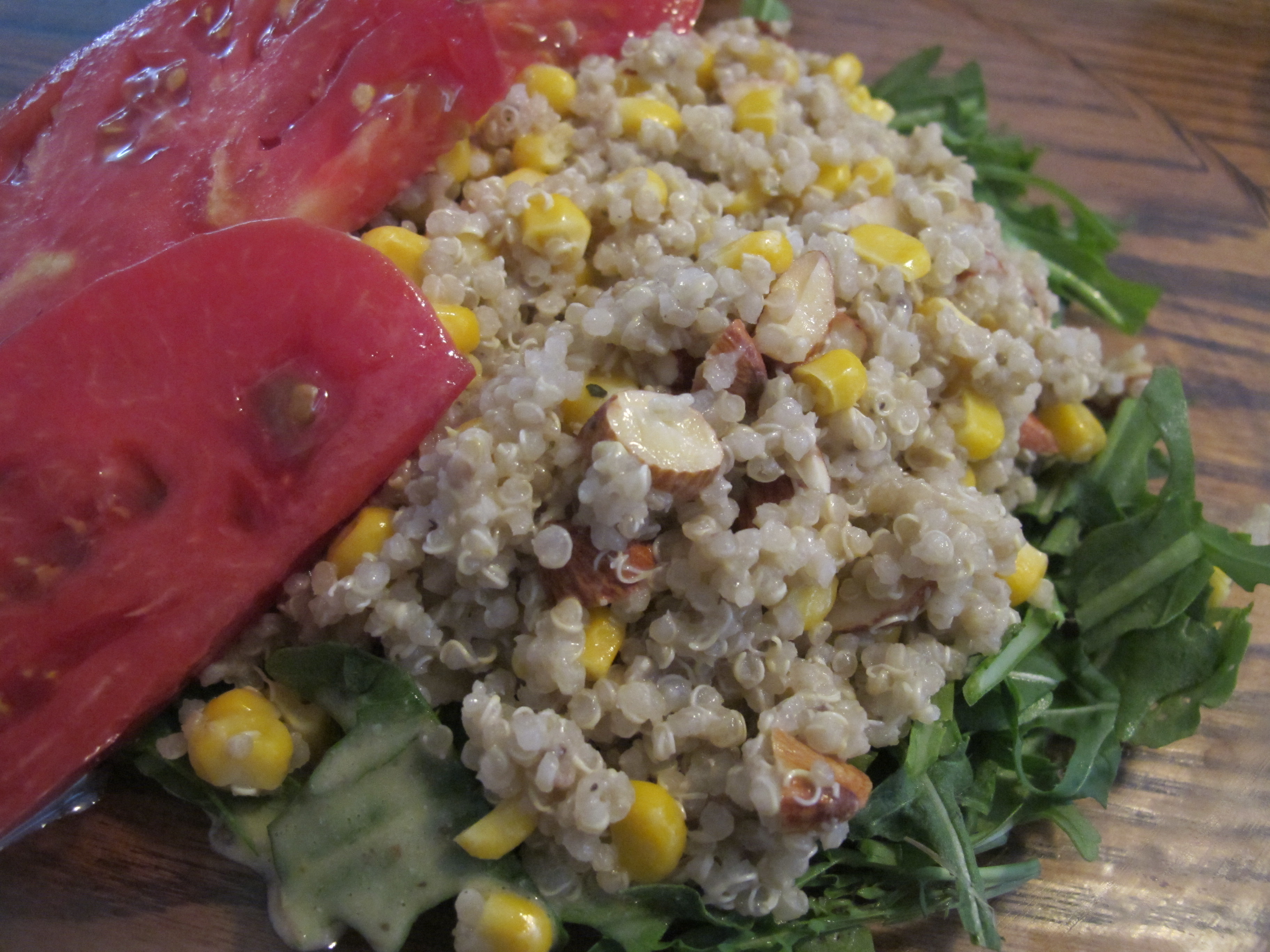
We enjoyed it pure and simple, with some salt and a drizzle of olive oil.  It served as the perfect addition to our meal of quinoa salad and . . .

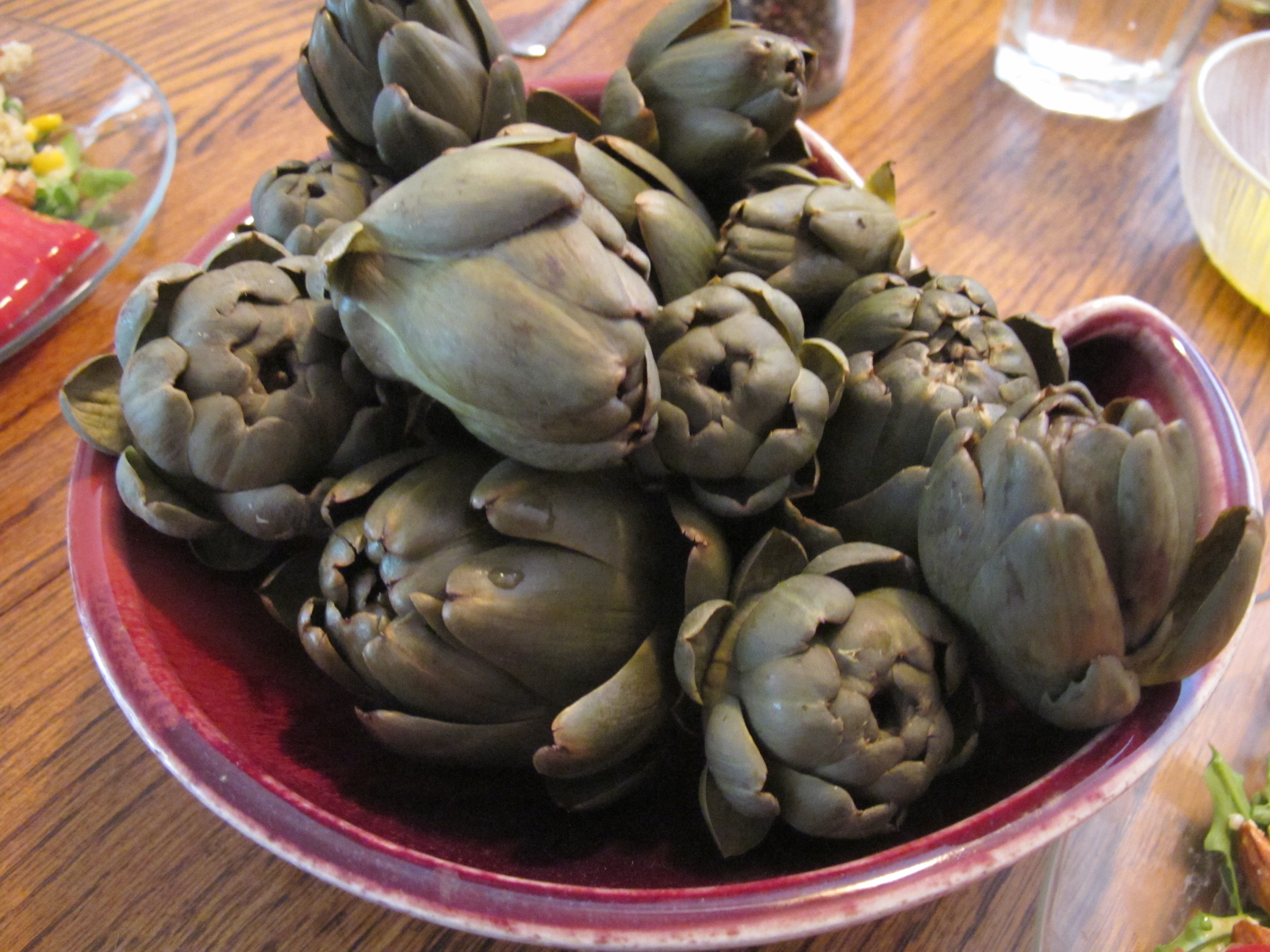
. . . garden-grown artichokes!

Growing artichokes in our zone requires some special tricks, but Matthew managed for the second year in a row.  I didn’t write much about them last year because most of the harvest came in right around the time Gabriel arrived.

We enjoy them steamed and dipped in a olive oil and butter sauce.

Artichokes with dipping sauce

Recipe by Melissa

Ingredients
Whole, fresh artichokes
1 T. olive oil
1 T. butter
1/2 t. lemon juice
salt to taste

Directions
Cut stems off of artichokes (if not already removed) to leave a flat base.  Place artichokes on the bottom of a pot, standing upright.  It helps to choose a pot where you can pack the ‘chokes tightly so they stay upright.

Add water to cover the bottom of the pan, place a lid on the pan, and steam the artichokes until tender, 15-30 minutes, depending on size and freshness.  They are ready to eat when you can easily pull out on of the leaves and/or when you can easily insert a fork in the base.

While they steam, melt the butter and combine with olive oil, lemon juice and salt to make a dipping sauce.

Serve  artichokes whole with dipping sauce.  To eat, pull off outer leaves, dip in sauce, and then scrape the flesh at the inner base of the leaf with your teeth.  As you get closer to the heart, there will be more tender, edible flesh on the leaves.

Once near the heart, use scissors to snip off the top, pointed portion of the remaining leaves.  Dip and enjoy!