Easy black bean soup — make it tonight

A pot of perfectly cooked black beans served as the base for this delicious soup.

Lacking a go-to black bean soup recipe, I turned to the internet and found a recipe for TGI Friday’s Black Bean Soup.  I’ve never had the soup at the restaurant (I think I’ve eaten there twice in my life), but this soup is quite tasty!

Here is the recipe with my modifications:

  • 2 tablespoons vegetable oil
  • 3/4 cup diced white onion
  • 3/4 cup diced celery
  • 1/2 cup diced carrot
  • 1/4 cup diced red bell pepper (any color would be fine — this is what we had in the freezer)
  • 1/2 bulb of garlic, shopped
  • 6 cups cooked black beans (equivalent to four (15 ounce) cans black beans)
  • 3 cups black bean cooking liquid (could also use veggie broth or water, but I like cooking with my bean juice when possible)
  • 2 tablespoons apple cider vinegar
  • 2 teaspoons chili powder
  • 1/2 teaspoon cayenne pepper
  • 1/2 teaspoon cumin
  • 1/2 teaspoon salt
  • 1/2 t. smoked salt*, plus more to taste
  • 1 t. smoked paprika*

*The original recipe calls for liquid smoke.  I had good intentions of purchasing some recently, but balked when I saw the ingredient list, which included unnecessary color additives.  I used smoked salt and smoked paprika to give the soup that same smokey flavor.

In a large pot, saute the veggies in the oil.  Puree half of the black beans (3 cups, or slightly more for a thicker soup) with the liquid (bean juice, broth or water).  Combine all ingredients in the pot with the sauteed veggies.  Simmer 30-60 minutes (depending on how thick you want it or how impatient you are to eat).

We garnished our soup with chopped green onions and frozen corn.  Shredded cheese or sour cream would also make good toppings.

Weekend bicycling whirlwind

The weekend’s bike trips (and restaurant visits — three in one weekend!!!):

Friday

  • South Grand — Lunch at Basil Spice, a Thai restaurant, with Matthew and my FIL.  We dined while watching construction work on the South Grand Great Streets project.  Pad See-iew for him, Pad Thai for her, both with tofu, both off of the $6.95 lunch menu.  We shared our dishes.   Both were good, though we really enjoyed the Pad See-iew.  I came prepared with my own take out containers and was disappointed with the clean plates that resulted from the smaller lunch portions 😦
  • The Hill — Errands at the Italian shops.  Purchases included olive oil, dried porcini mushrooms, farro (an Italian grain that I’ve been wanting to try), and Swiss cheese so we can make more reubens.  Unfortunately, our source for affordable dry active yeast has dried up, though I did see a mobster in the bakery, so the stop there wasn’t a total waste.
  • The CWE — Dinner at Terrene.  Terrene, with a focus on local food and sustainability, has been on our radar for some time, but until January, it was on the “allows smoking — do not patronize” list.  (Yes, two restaurants in one day — crazy for us, but we had a Groupon-type thing that needed to be used.)  I’m still a bit hesitant to whip out the camera in restaurants, so no food pics.  We ordered the flatbread, half veg sausage, half mushroom; the gnocchi, and the vegetarian meatloaf with mushroom gravy.  We enjoyed the first two items, but the veg meatloaf was missing something.  I realized later that the only trace of the gravy was three small oyster mushrooms — wish I’d realized that earlier and asked for more gravy.

Saturday

  • Tower Grove South — Winter farmers’ market.  With the beautiful weather, two vendors set up outside the church.  We purchased spinach, a HUGE head of bok choy, green onions, and carrots.
  • Tower Grove South — Trip #2 to the neighborhood for my prenatal appointment at River City Birth, followed by a stop at the new-and-improved Local Harvest Grocery, featuring a nice, spacious bathroom — the highlight of the visit for my poor, cramped bladder 😉  We also bought some bulk dry goods and a local Colby cheese.
  • After this trip, we returned home, where I proceeded to take a 2-hour nap 🙂  And then there was a car trip 😦 to Young Ethicals game night for good snacks, games, and fun times.

Sunday

  • The Grove — Church at St. Cronan’s.
  • South Grand — Lunch at Pho Grand with Matthew and my MIL.  We split a vegetarian special and a special curry, though there was some contention about the way they were split — the hungry, hungry hippo pregnant lady may be taking more than her share 😉
  • Interlude to make lemon squares (from our lemons — frozen juice and zest) and do laundry.
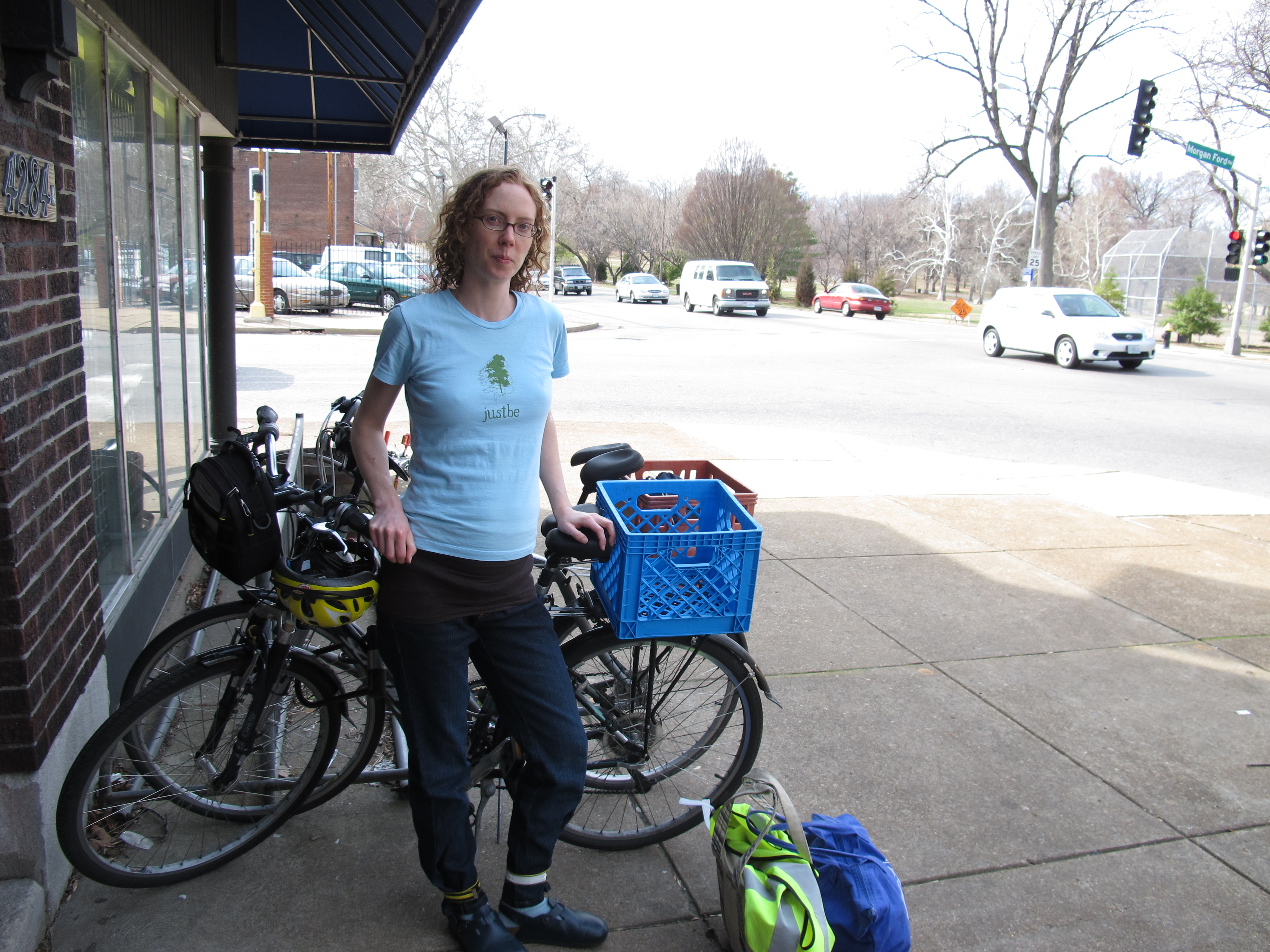
  • The Y — if my bike isn’t already out, I usually just walk to the Y, since it’s less than a mile away.  If I’m out and about, and know I might be biking again that day, I lock my bike up outside to save lugging it down and up the basement stairs an extra time.
  • Aaannnddd, another nap — the active transportation takes a lot out of me these days!

Brine your beans

A couple years ago, I switched from canned beans to dried beans.

Advantages of dried over canned:

  • Cheaper — plain a simple.
  • Avoids BPA exposure from canned beans.
  • Avoids excess sodium in canned beans.
  • Less packaging waste.  I buy most of my beans from the bulk bins, reusing plastic bags.  Even if you buy prepackaged dry beans, it involves much less packaging per amount of beans.
  • Dry beans require less energy to transport because they lack the liquid weight.

While I was happy enough with my bean-cooking method (quick soak or an overnight soak, drain and rinse, boil for about an hour), we recently discovered a new method that yields delicious, lightly salted cooked beans, reminiscent of the canned variety in a good way.

We happened across the idea of brining beans while flipping through an old edition of America’s Test Kitchen.  Basically, it’s a modified version of the quick soak, with salt added to the cooking water.

I initially reacted with skepticism, since the number one rule of cooking dried beans is “don’t add salt until the beans are fully cooked — it will make the beans tough and increase the cooking time.”  However, something about this method totally works.

How to brine beans

  1. Put desired quantity of dried beans in a pan.
  2. Add water to cover the beans, plus 1/2 to 1 inch on top — keep track of how much water you add.
  3. For every quart of water, add 2 generous teaspoons of salt.
  4. Cover and bring to a boil.
  5. Boil 3-5 minutes, then remove from heat.
  6. Let stand at least one hour (I’ve let mine stand for up to 8 hours — time over one hour neither helps nor hurts).
  7. Drain and rinse beans.
  8. Return to pot and cover with fresh water.
  9. Bring to a boil and cook 40 minutes to an hour, or until beans reach desired tenderness.
  10. Alternate cooking method: place in crock pot with enough water to cover.  Turn to low, and cook for 8-10 hours.

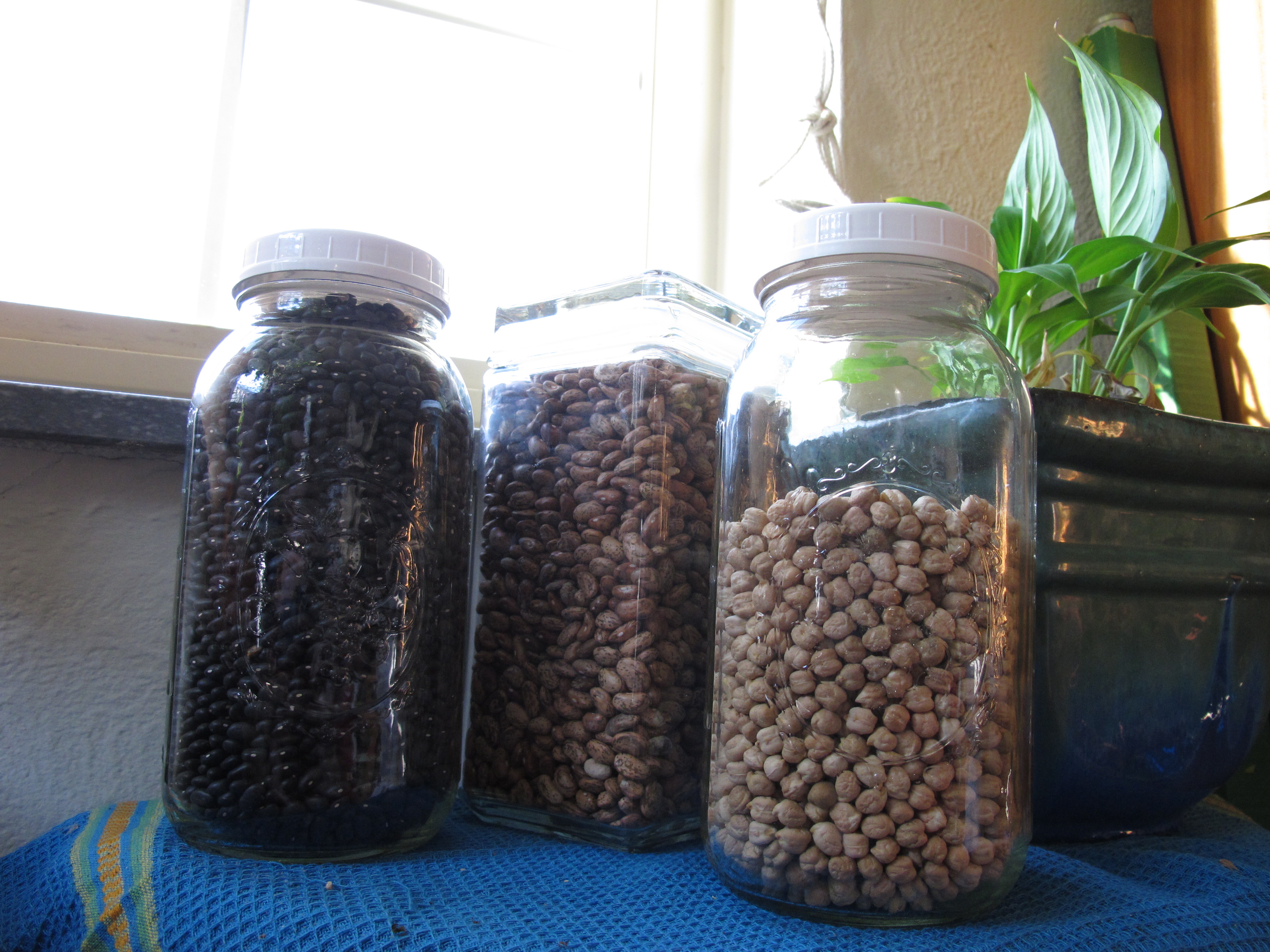
I’ve used this method successfully with black beans, pinto beans, and garbanzo beans thus far.  It should work for almost any kind of dried bean.

For ultimate convenience, follow the brining steps in the evening, letting the beans soak overnight, rinse them in the morning, and place in a crock pot to cook while you’re gone during the day.  You’ll return home to fabulous beans just waiting to be incorporated in your dinner — almost as convenient as the canned variety!

Vegan again?

Although I’ve never officially been vegan, I was pretty darn close for a couple of years, including the time when I met Matthew.  On one of our first dates, we made vegan chocolate chip cookies.  He went out of his way to buy vegan chocolate chips and Earth Balance spread for the the recipe, knowing that I tried to avoid dairy products.

Though he had been vegetarian for much longer than I had, he liked cheese, butter, ice cream, and eggs, and my diet gradually came to incorporate more of those foods.

Over the summer, we started buying local milk regularly (one gallon every two or two-and-a-half weeks), some of which became yogurt and ice cream.  We’ve also been eating a decent bit of cheese, either local or non-local plastic-free.

Everything seemed fine and dandy until I suggested that Matthew visit my homeopathic health care provider (she has a doctorate, but cannot be considered a “doctor” in Missouri) about some ongoing health issues he’d been experiencing since August.  She ordered a simple food allergy blood test, and, lo and behold, the results came back with a Level 3 allergy to dairy.

While it is hard for him (and me too at this point, to be honest) to consider completely eliminating dairy from his diet, that is exactly what he (we?) will be doing for a month.  After his system has a month to recover, he will slowly reintroduce specific dairy products to see if there are some that he can tolerate.

We expect that straight up milk will be out of the picture altogether (which would not be a huge loss) but are hoping that butter, yogurt, ice cream, and cheese might not cause a reaction.

Since he has been eating them for years, this is clearly not a life-threatening allergy, but as the past few months have made clear, the allergy is most likely affecting his health on a day-to-day basis.  This may very well come down to a choice between optimum health and continuing to eat some favorite foods.