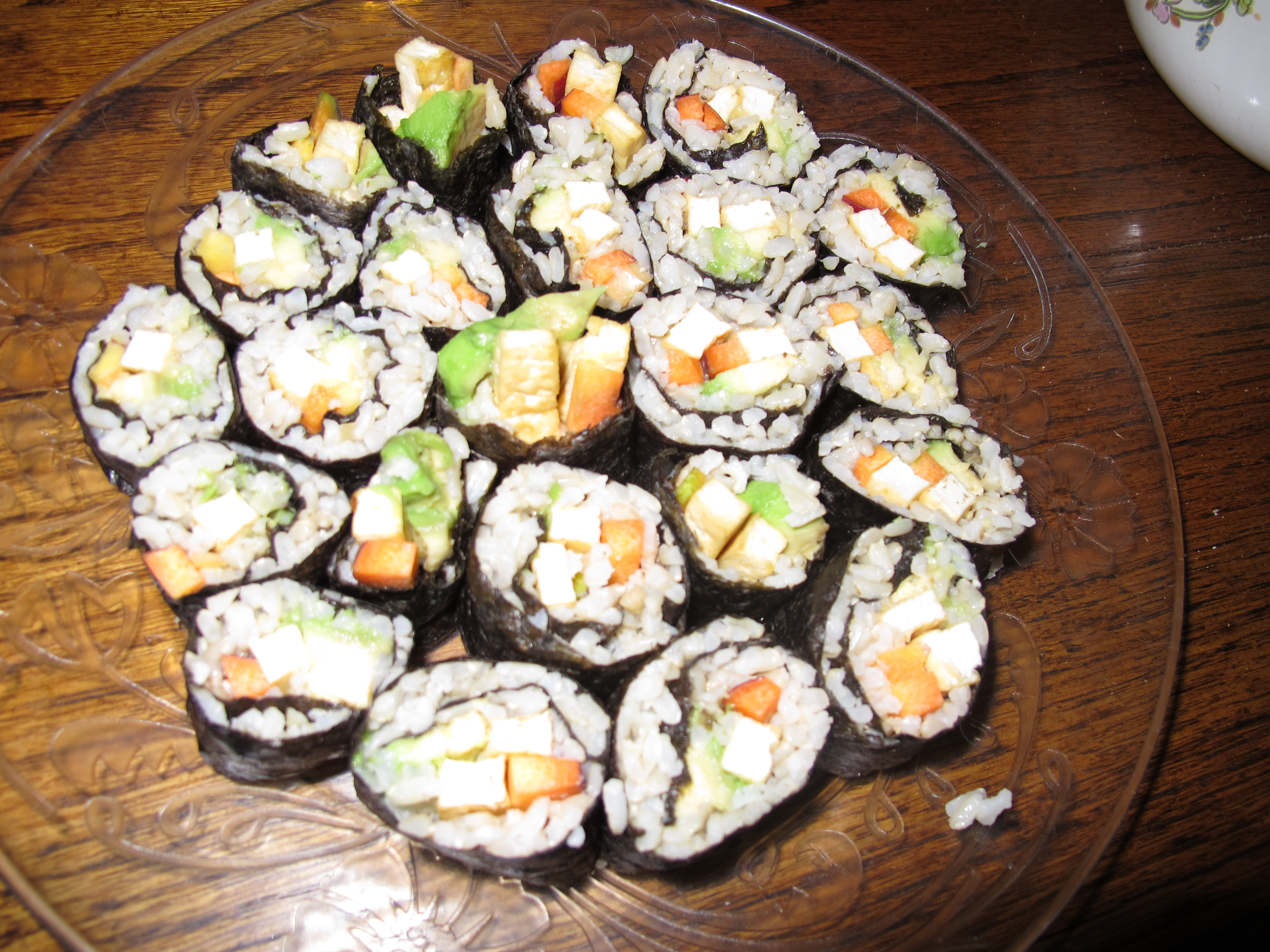
 I enjoy sushi, and since we don’t go out to eat all that much, it’s something that I’d like to make more at home. My first attempt awhile back involved buying and cooking the special sushi rice, only to read in the instructions that the sushi rice, once cooked, cannot really be saved for another day — it becomes hard and inedible if refrigerated for any length of time.
Now, if I’d read this instruction ahead of time, I would have simply prepared less rice, and it wouldn’t have been a big deal. With the rice already prepared, however, we over-stuffed ourselves with sushi to avoid wasting any.
The other day, I was flipping through a cookbook, looking for something else, when I spotted a sushi recipe that used brown rice. Not only is brown rice healthier than sushi rice (which is white rice), it’s something we often have on hand, already cooked. No special rice to mess with? Sounds good to me!
Easy Vegetarian Sushi
- nori seaweed sheets
- rice vinegar
- seasoned rice vinegar
- cooked brown rice
- avocado
- carrots, cut into matchstick-sized pieces
- tofu, cut into small strips and lightly browned on stove-top
- soy sauce and wasabi for dipping
Start by mixing the cooked brown rice with some seasoned rice vinegar. If you don’t have seasoned rice vinegar, make your own by adding some sugar and salt to regular rice vinegar. Set aside, and prepare carrots, avocado, and tofu.
Lay out a nori sheet, shiny side down. If you have a sushi mat, you can use it here, but it’s not essential. Cover most of the nori with a thin layer of the seasoned brown rice, leaving a one inch gap at the top. Place the other fillings in a line across the sheet, an inch or two from the bottom of the sheet. (I didn’t take a photo at this stage, so instead you can enjoy my awesome drawing.)
 Make a mixture of [unseasoned] rice vinegar and water in a small bowl and dip your fingers before rolling the sushi. Roll the sushi, starting from the bottom of the sheet — moisten your fingers in the vinegar and water as necessary.
Let the rolls rest, covered on a plate, for 10-15 minutes before cutting them. To cut, dip a sharp knife in the water and vinegar mixture and cut to desired size.
Dip sushi pieces in soy sauce spiced with wasabi. I made this sushi to go with the Asian dumpling soup last week.

Notes:
- You can use almost anything you want to fill the rolls, just don’t try to stuff too much in there, or they won’t stay together well.
- Many wasabi pastes have scary ingredient lists, including unnecessary food dyes. I found powdered wasabi with a simple ingredient list: horseradish plus tumeric and spirulina for natural coloring. Just mix a bit of the powder with a bit of water to reach desired consistency.









 Her Green Life