No cook couscous

I’m melting!  Or at least wilting — I do not like this heat one bit!  With almost a month until summer officially starts, we broke down and turned on the A/C before bed two nights ago (not green, but the reality of living in a brick oven).   GRRR!
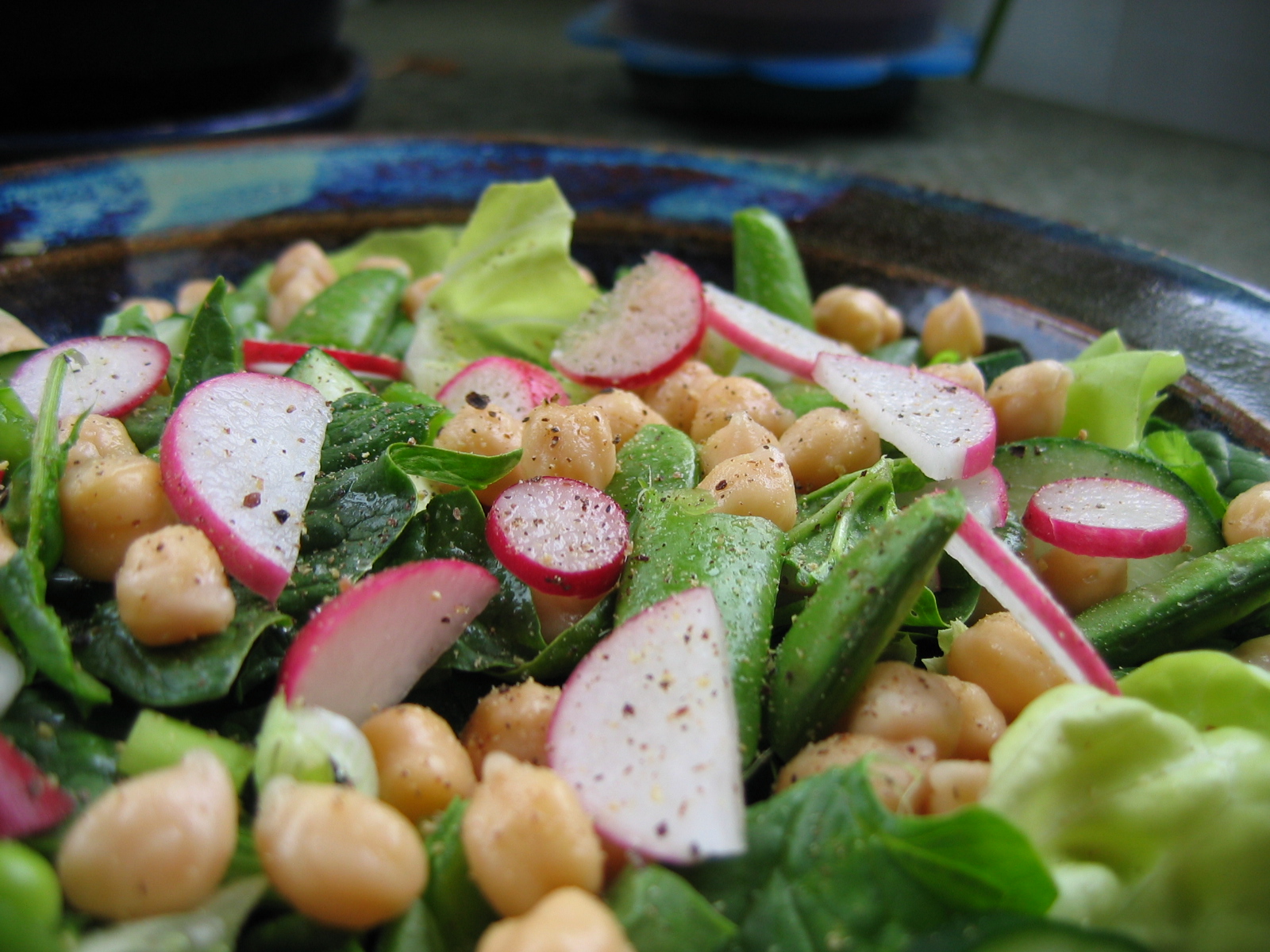
Mixed greens with radishes, sugar snap peas, garbanzo beans, onions, cucumbers, homemade vinaigrette, and sunflower seeds

With all this heat, ’tis the season for low- or no-cook meals.  Great big garden-fresh salads rounded out with a side of no cook couscous.  Couscous is technically a pasta, wheat-based and cut into tiny pieces.  Because the pieces are so small, you can “cook” couscous by simply adding the appropriate amount of water and waiting for it to absorb.  The golden ratio for couscous is 1 cup of grain to 1 1/2 cups of water.  I prepared a single serving: 1/4 cup dry grain + 3/8 cup water.  The couscous absorbed the water in about 15 minutes.  When the water was absorbed, I simply added a bit of olive oil and salt — one side of couscous, ready to go!

Notes:

  • Look for whole wheat couscous in bulk bins.
  • Couscous tastes great simply prepared, as suggested above.  Try adding chopped fresh herbs (parsley comes to mind) to spice it up a bit.
  • Couscous also works well as a grain base for vegetable stir fries.
  • I would never prepare a single serving of a grain that requires boiling (as most do), because it is much more efficient to cook multiple portions at once.  However, with the no-cook method, it doesn’t really matter, since it requires no energy.

Eating beetles

I love eating beetles!

And by beetles, I mean beets, of course.  I’m not sure why I’ve taken to calling them that, but I find it amusing.

Matthew bought these at the farmers’ market on Saturday — our first of the season.  The beets in our garden aren’t this big yet.

Roasted Beets

Wash beets thoroughly.  If they’re fairly small (and sometimes even if they’re big) you can skip peeling them.  (My sister taught me this.)  Cut them into small chunks.  Toss with a bit of olive oil and salt.  Spread in a single layer on a baking dish.  Roast for 45-60 minutes at 325-400 degrees F, stirring occasionally.

Delicious on salad with poppy seed dressing (recipe here), onions, toasted pecans, and goat cheese.  Other serving suggestions: serve the roasted beets as a side dish or toss with pasta.

Black-eyed peas

So, back on the first of the year, I wrote a post about a new soup I planned to make.  I said I would post the recipe here if it turned out well, and, nudged by the fact that I made it again last night, I’m finally getting around to it.   Black-eyed peas and kale form the base for this simple, delicious, and healthy soup.

Click here for the recipe for “Southern New Year’s Day Soup” from Vegetarian Times.  A few notes on my adaptations:

  • I used onions instead of leeks both times.  I’m sure leeks would be good, but they’re not something we keep around.
  • I used a liberal amount of garlic (shocker, I know!).
  • The recipe calls for dried black-eyed peas and never tells you to cook them.  If you start with dry peas, you need to soak and cook them just like you would any dried bean (although I think they cook faster than other types of dried beans).  Otherwise, if you can find them, you can start with canned black-eyed peas.
  • I used water and the cooking liquid from the peas, along with a bit of extra poultry seasoning, instead of the quart of vegetable broth.
  • The soup is good both with or without the pasta.  If you add pasta, cook it separately and add it to just the portion that you will be eating at that meal, otherwise it will get soggy.
  • As before, both the peas and the kale were locally grown 🙂

The first and the last

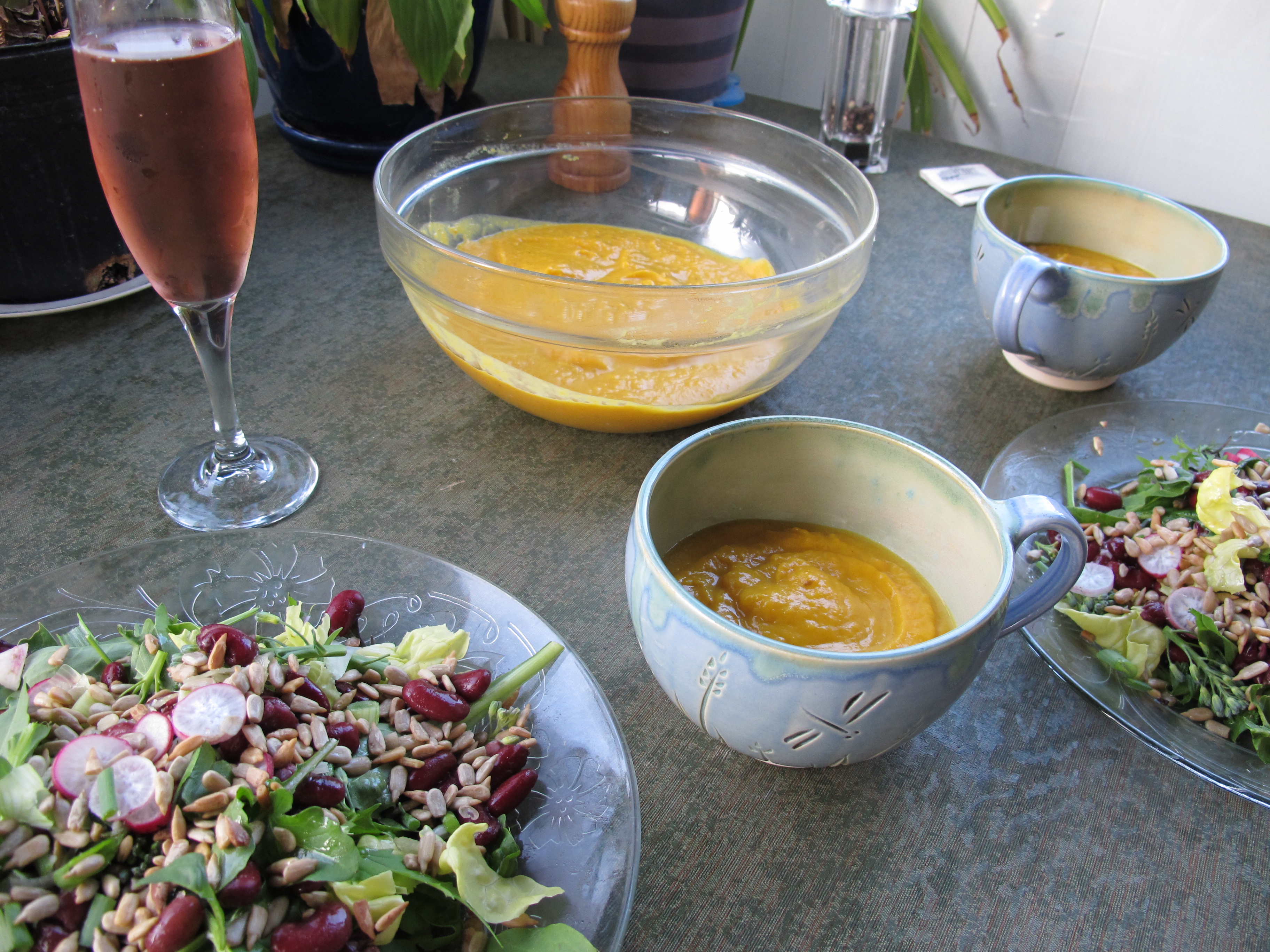
I love it when we sit down to a meal and realize it’s almost all local food!  We made this salad with our first garden harvest of greens (although we’ve been buying local lettuce for a few weeks now), radishes, green onion, and locally grown kidney beans.  The sunflower seeds and dressing (homemade with a base of olive oil, vinegar, and minced garlic) prevent this salad from being 100% local.

Second component of the meal: butternut squash soup.  We bought 15 butternut squash in the fall; for this meal, we ate the last squash.  They kept beautifully for over six months with minimal effort.  We put them in mesh bags (the bags that onion come in, for example) and hung the bags from nails in our basement.  Simple!

For this soup, we roasted the whole squash, then added sauteed onions, butter, milk, cumin, turmeric, and salt.  I blended it all with my stick blender for easy clean-up.

It all came together for a simple, delicious, local dinner.

Carrot rack

Room for one

I stopped in to Local Harvest Grocery yesterday, where I snagged the coveted carrot rack parking spot.  A couple of weeks ago, I discovered that they carry bulk (organic) rolled oats.  I eat oatmeal for breakfast pretty much every day.  I recently switched from quick oats to rolled oats — I now strongly prefer the texture and taste of rolled oats.  As part of the switch, I buy the rolled oats from bulk containers (compared to buying the quick oats in the cardboard canisters), so I reap the added benefit of less waste!