Fast food, green and healthy style

Sometimes you just need an easy-ish meal.  The delicious fresh produce available at this times of year helps in this quest.  The other night, we assembled our delicious beet salad (recipe here) and some dressed-up grilled cheese sammies.

Roasting the beets takes a bit of time, but it’s worth it — chop the beets* and get them roasting first, then work on the rest of the meal while they roast.

The co-chef made the grilled cheese sandwiches, with local cheese and our homemade whole wheat bread, dressed-up with sauteed spinach* and fresh green onions*, while I worked on the salad.  He added a fried egg to his sandwich for a twist.  Good fast food requires a bit more time and effort than traditional fast food, but the result is delicious and nutritious!

* From our garden, as were the greens for the salad.

Tending my pot

Volunteer amaranth took over this pot of celery.

Before

In a relatively short amount of time, I set things straight in the celery pot.  Fortunately, amaranth leaves are edible.  At this young, tender stage, you can eat them raw.  Later, you can cook them like spinach.  If the plants mature, they produce seeds (i.e., amaranth grain) with high nutritional value.

After

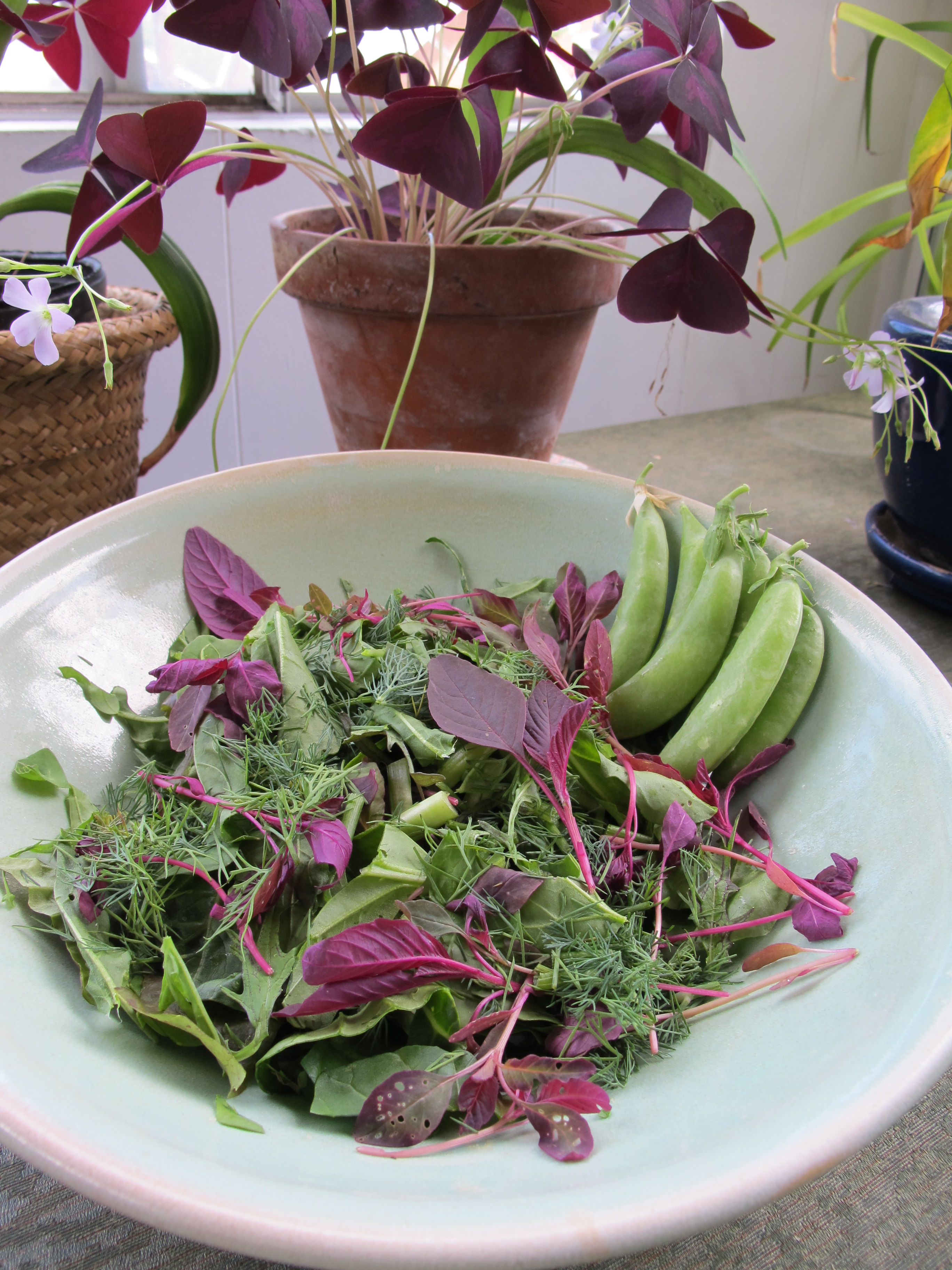
The amaranth leaves add amazing color to this salad (and match the color of the shamrock leaves).  Their flavor is very mild; I added dill and arugula to punch up the flavor, plus sunflower seeds for crunch (and protein).  Served with a side of sugar snap peas.  Dressed with a mixture of seasoned rice vinegar, cider vinegar, olive oil, crushed garlic, and a dash of sesame oil.  (Sorry, I don’t measure on the dressings — drives DH crazy!)

Eat food

Gardens and farmers’ markets are in full swing, and, oh, the fabulous food we eat!

Some recent combos:

Stir fry with basic homemade teriyaki sauce (used fresh ginger and garlic instead of powdered) with snow peas*, broccoli*, black beans**, and edamame.  Minimal cooking keeps the snow peas nice and crunchy!

Mixed green salad* (arugula, spinach, tatsoi, red leaf lettuce) with radish*, hard boiled egg**, green onions**, and sunflower seeds.

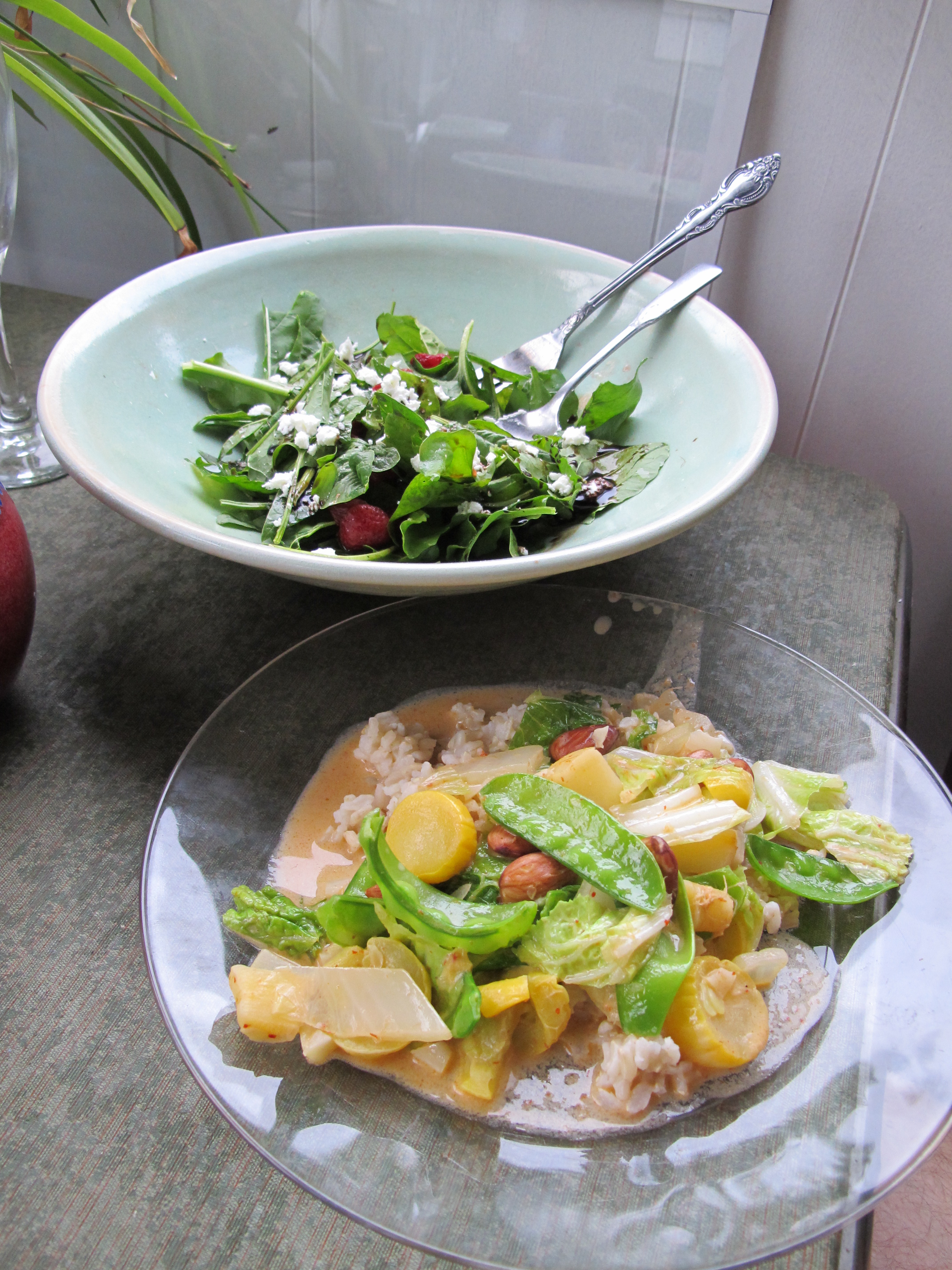
Curry with napa cabbage**, snow peas*, rutabaga*, and yellow squash*.

We used coconut milk and red curry paste (both NOT local!) for the curry.  The chef tossed some onion and garlic in there, too.

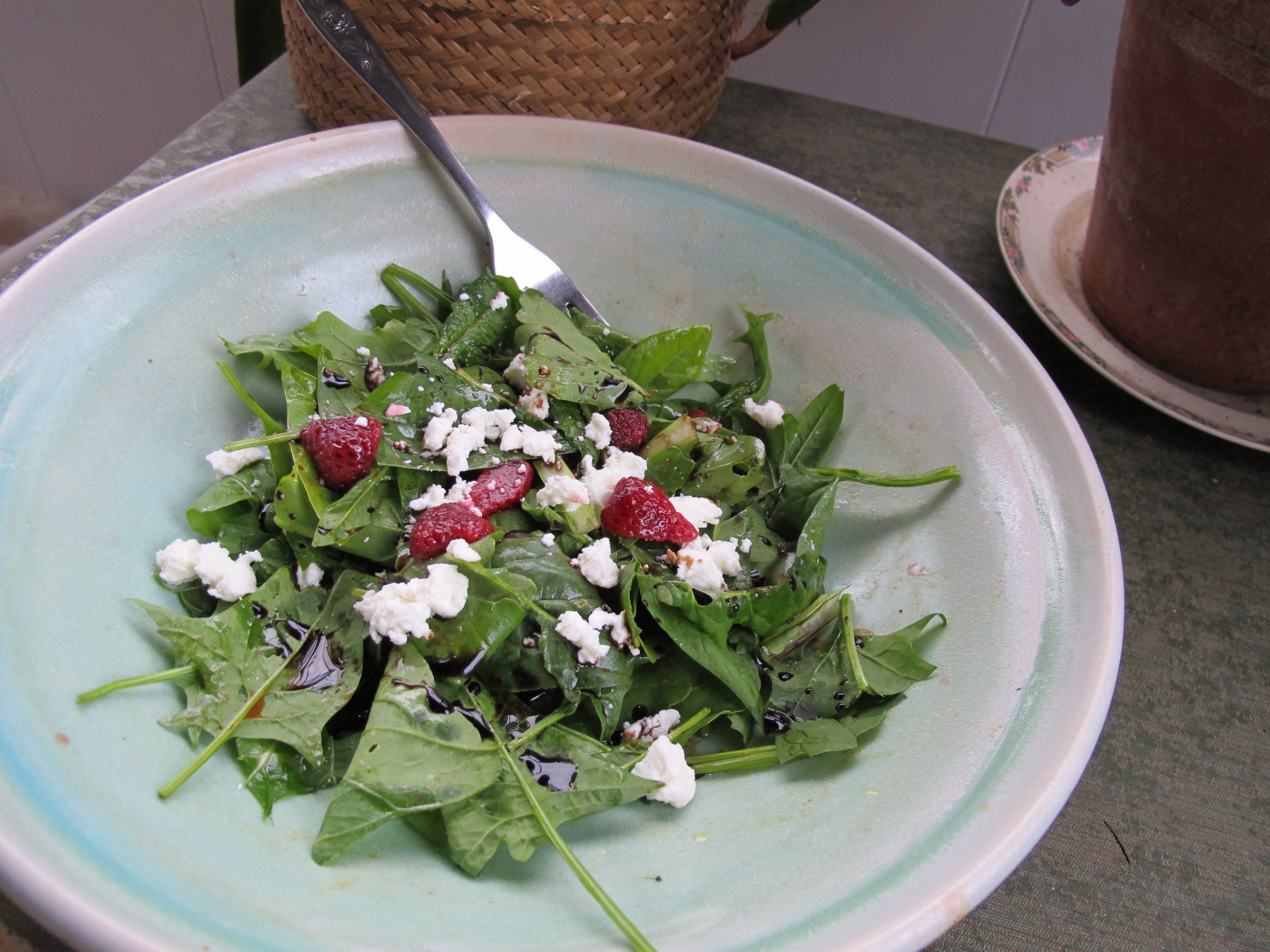
Strawberry salad

Mixed greens*, sliced strawberries**, goat cheese**, olive oil, and our special balsamic vinegar.  Simple and delicious — good balsamic is the key!

*From the garden.

** Locally grown/raised.

No cook couscous

I’m melting!  Or at least wilting — I do not like this heat one bit!  With almost a month until summer officially starts, we broke down and turned on the A/C before bed two nights ago (not green, but the reality of living in a brick oven).   GRRR!

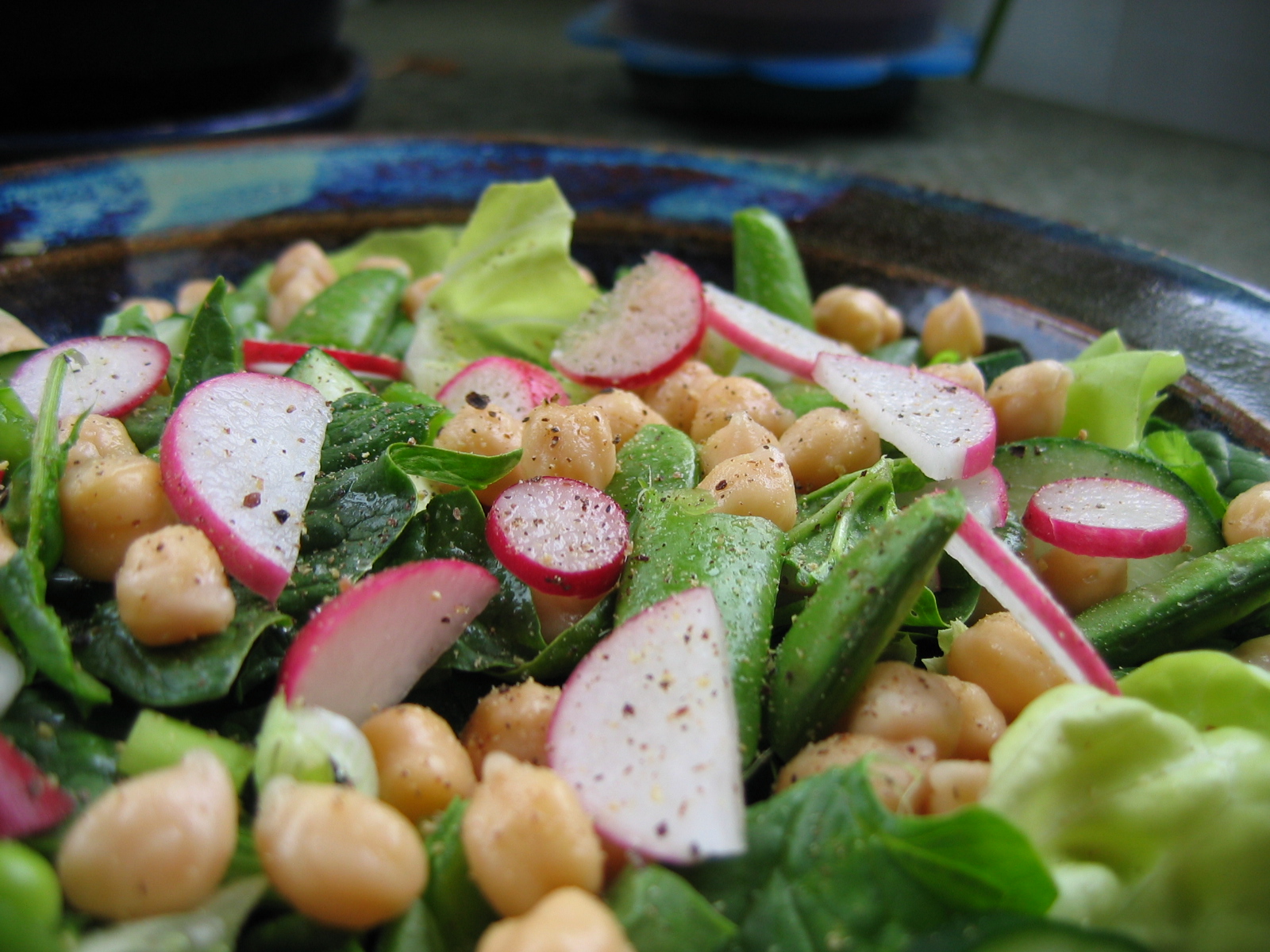
Mixed greens with radishes, sugar snap peas, garbanzo beans, onions, cucumbers, homemade vinaigrette, and sunflower seeds

With all this heat, ’tis the season for low- or no-cook meals.  Great big garden-fresh salads rounded out with a side of no cook couscous.  Couscous is technically a pasta, wheat-based and cut into tiny pieces.  Because the pieces are so small, you can “cook” couscous by simply adding the appropriate amount of water and waiting for it to absorb.  The golden ratio for couscous is 1 cup of grain to 1 1/2 cups of water.  I prepared a single serving: 1/4 cup dry grain + 3/8 cup water.  The couscous absorbed the water in about 15 minutes.  When the water was absorbed, I simply added a bit of olive oil and salt — one side of couscous, ready to go!

Notes:

  • Look for whole wheat couscous in bulk bins.
  • Couscous tastes great simply prepared, as suggested above.  Try adding chopped fresh herbs (parsley comes to mind) to spice it up a bit.
  • Couscous also works well as a grain base for vegetable stir fries.
  • I would never prepare a single serving of a grain that requires boiling (as most do), because it is much more efficient to cook multiple portions at once.  However, with the no-cook method, it doesn’t really matter, since it requires no energy.

Eating beetles

I love eating beetles!

And by beetles, I mean beets, of course.  I’m not sure why I’ve taken to calling them that, but I find it amusing.

Matthew bought these at the farmers’ market on Saturday — our first of the season.  The beets in our garden aren’t this big yet.

Roasted Beets

Wash beets thoroughly.  If they’re fairly small (and sometimes even if they’re big) you can skip peeling them.  (My sister taught me this.)  Cut them into small chunks.  Toss with a bit of olive oil and salt.  Spread in a single layer on a baking dish.  Roast for 45-60 minutes at 325-400 degrees F, stirring occasionally.

Delicious on salad with poppy seed dressing (recipe here), onions, toasted pecans, and goat cheese.  Other serving suggestions: serve the roasted beets as a side dish or toss with pasta.