Sowing garlic or warding off vampires?

As Matthew noted in a previous guest post on growing garlic, recommendations for planting next year’s garlic crop in our region range from August through October (i.e., plant in fall of 2012 for June 2013 harvest).   October feels appropriate, with vampires on the prowl for Halloween.

He planted this past Saturday (October 13th), just a few days after last year’s planting date.  The previous weekend, he prepared the soil and set up a twine grid as a guide — neat and precise.
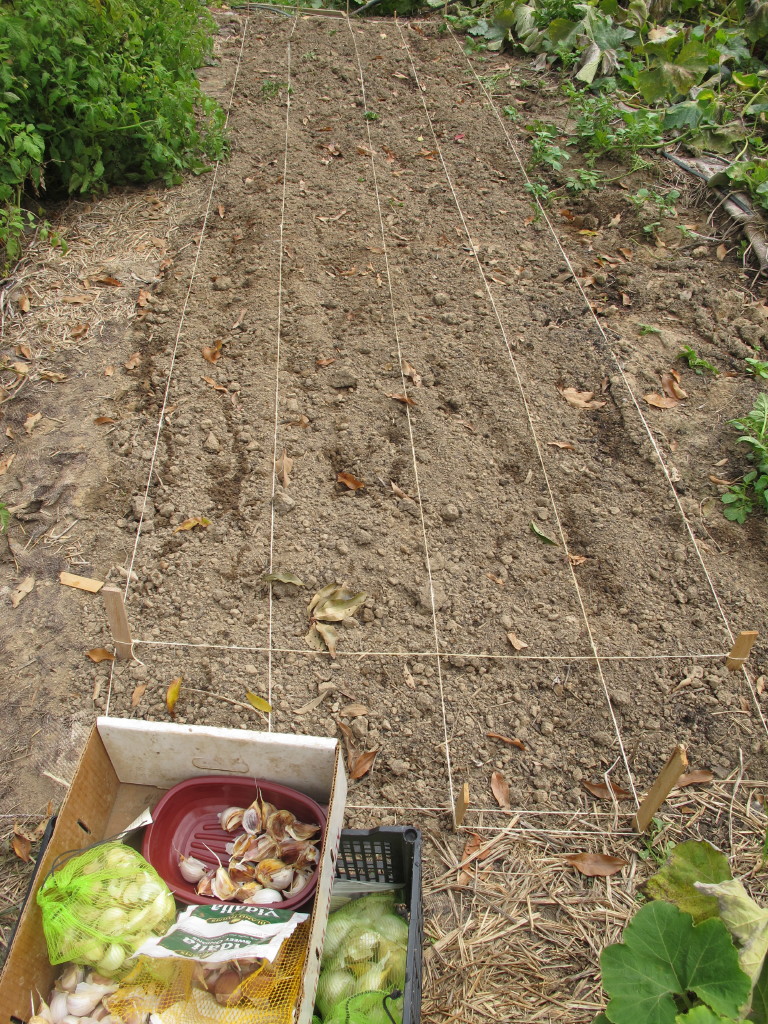
He saved the biggest cloves from the biggest, healthiest bulbs (we eat the “rejects”).  These, in turn, should generate mores bulbs with large cloves, so that eventually all the garlic we grow will have nice, big cloves.
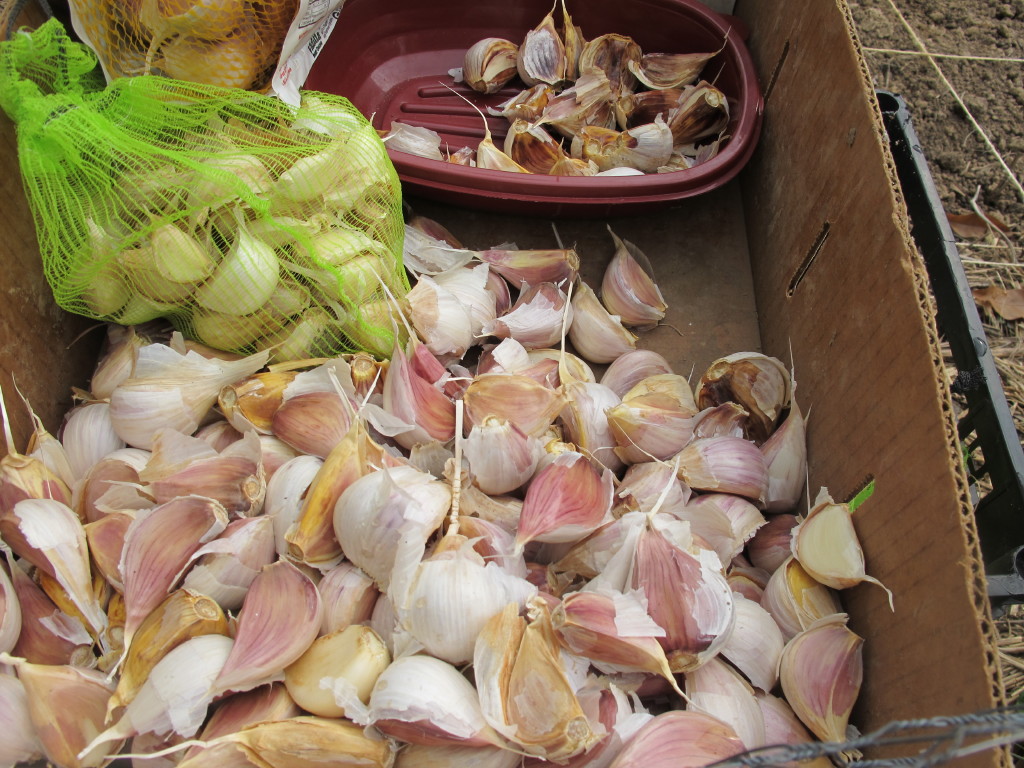
I peeled the very outer layer of papery skin off of the bulbs and gently separated the cloves.  Matthew and his mom planted over 100 cloves of garlic (which means we should harvest more than 100 bulbs come June), and we still have a nice amount for eating, though I imagine we’ll run out before we harvest the 2013 crop.
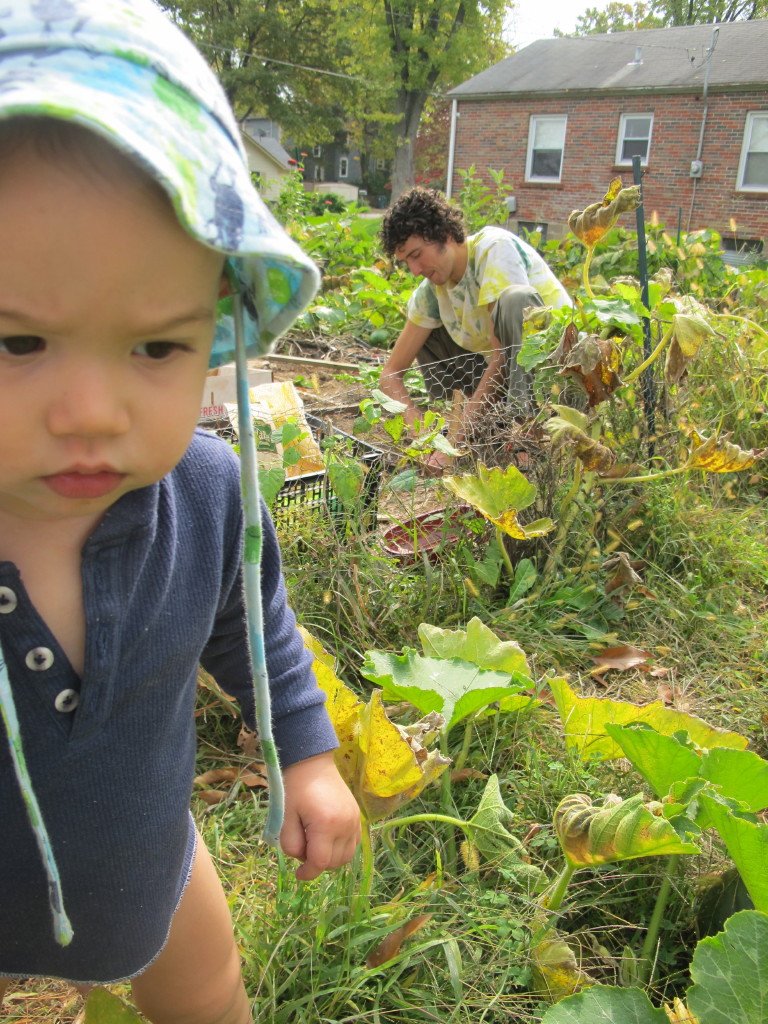
The little gardener came out (sans pants) after his nap to make sure they followed proper planting protocol, and he declared the garden a vampire-free zone, adding that we could leave the biting and sucking to him.

Mouth on fire

Guest garden post from Farmer Brown . . .

Observation: Some varieties of peppers get hotter when bitten into and then sit in the fridge for a few days.

We’ve noticed this a few times this summer.  I grew a number of peppers that can range in heat levels (variety of heat levels from peppers on a single plant), so I started tasting a pepper from each plant as I picked, and sorting them into bags for hot and sweet (not hot).  But some of the peppers I’d tasted wound up being very hot, even though they were in the sweet bag.*

We decided that maybe since I was tasting the tips, it was that some of the tips were mild even though the tops were hot, so I started tasting both places, and I caught more, but still we’d get hot peppers in our sweet bag.

I then tried tasting all of the peppers at a picking, but still some wound up hot in the sweet bag.

I have a hypothesis that some of the peppers (that have potential to get hot) release more capsaicin (what makes them hot) when they’ve been bitten into.  This would make sense if capsaicin is a defense against being eaten (by mammals).

Has anyone else noticed this?  I keep meaning to get around to somewhat more formal experimenting, but I haven’t yet.  I’ll write more if/when I do.

*Melissa’s note: Since I’ve been doing most of the cooking lately, I’ve usually been the “lucky” one to encounter the surprise peppers in what should have been the sweet and mild bag.  I’ve had a enough unpleasant experiences — burning lips, mouth, and a random place on my face that I touched after handling a pepper — that I’m quite wary now.

Little gardener

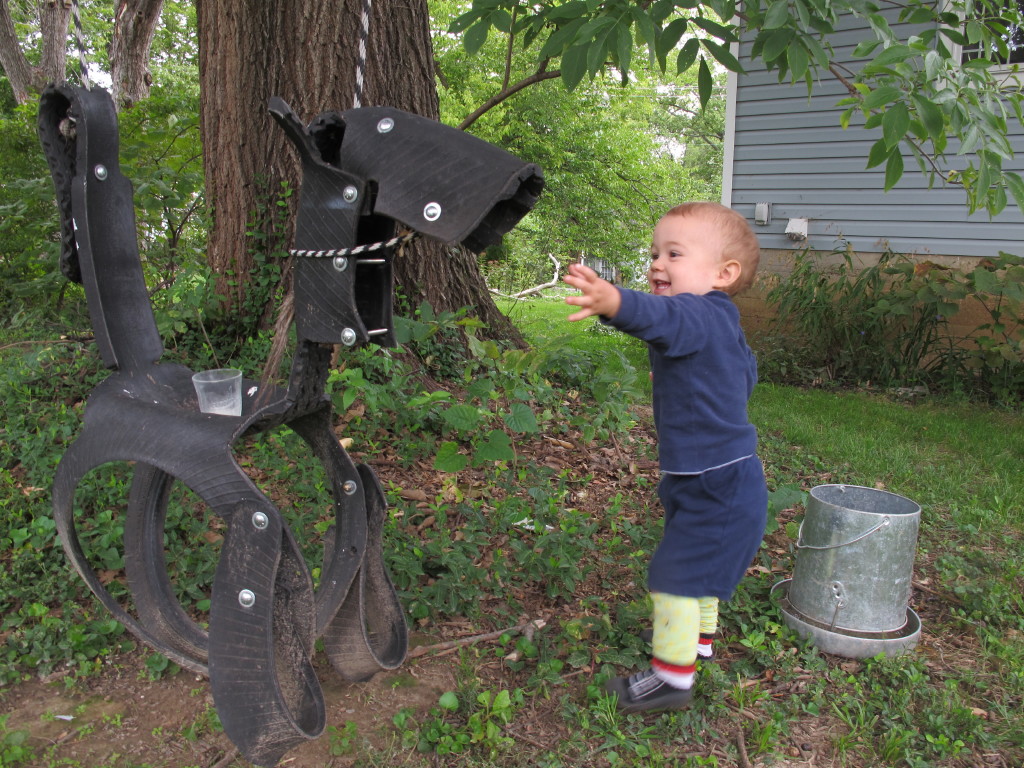
Now that Gabriel’s walking, he’s ready to take a more active role in the garden.  I’ll let him take over the narration.  First, there’s horseback riding.

The best way to the garden is on horseback.  After that, the real work begins.  I oversee the gardening crew — they work hard, but sometimes need a little direction.

The amaranth looks good, but those fingerling potatoes aren’t going to dig themselves, Dada.  And what about the eggplant?  Your water break is over!

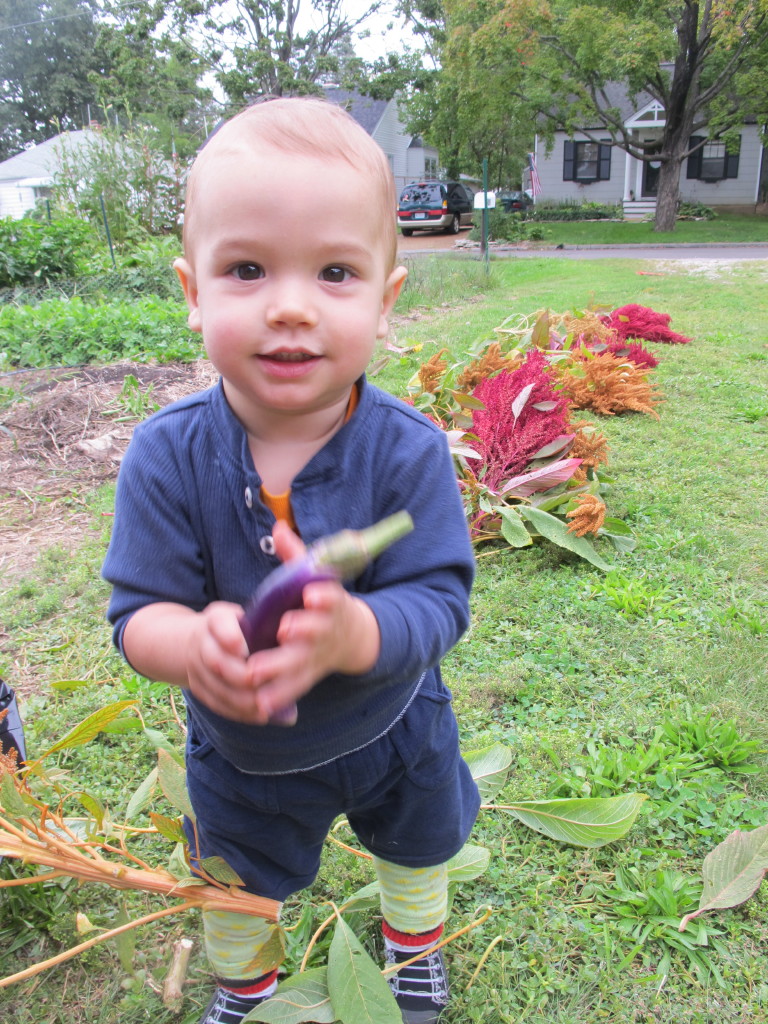
Mmm, this eggplant is just my size.

Oh no, looks like the bugs were getting to this one.

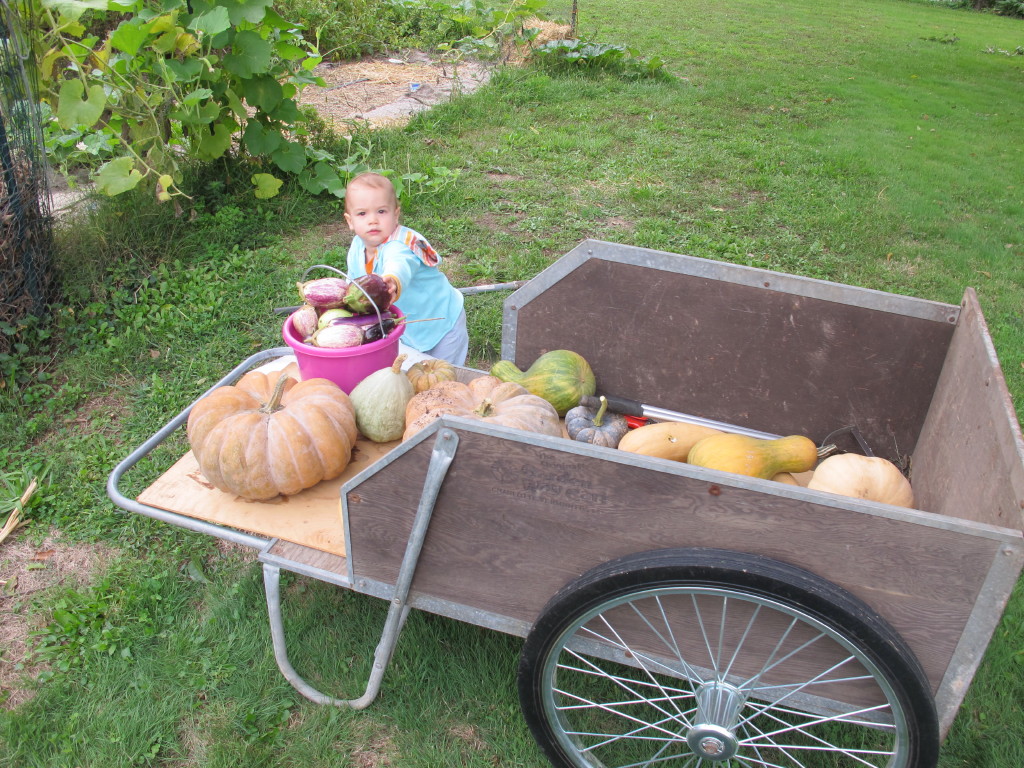
A little help over here, guys?  Some of these squash weigh more than me — this cart isn’t going to move itself!

Simply food

I started this blog as a place to write, and I rarely used pictures in my early posts.  In general, I try to avoid photo-heavy posts, but these days, my opportunities to actually get to the computer and write are limited.  Most of the following photos have stories that could (and perhaps still will) be posts unto themselves, but for now, the pictures will do most of the talking.

Ground cherries (AKA husk cherries):  related to a tomatillo (same papery husk), but smaller and sweeter.

We had a decent harvest this summer, and Gabriel was especially fond of them.  They’re good but nothing particularly amazing in my book, so I was shocked to see them selling for $9/pint — definitely wouldn’t pay that.

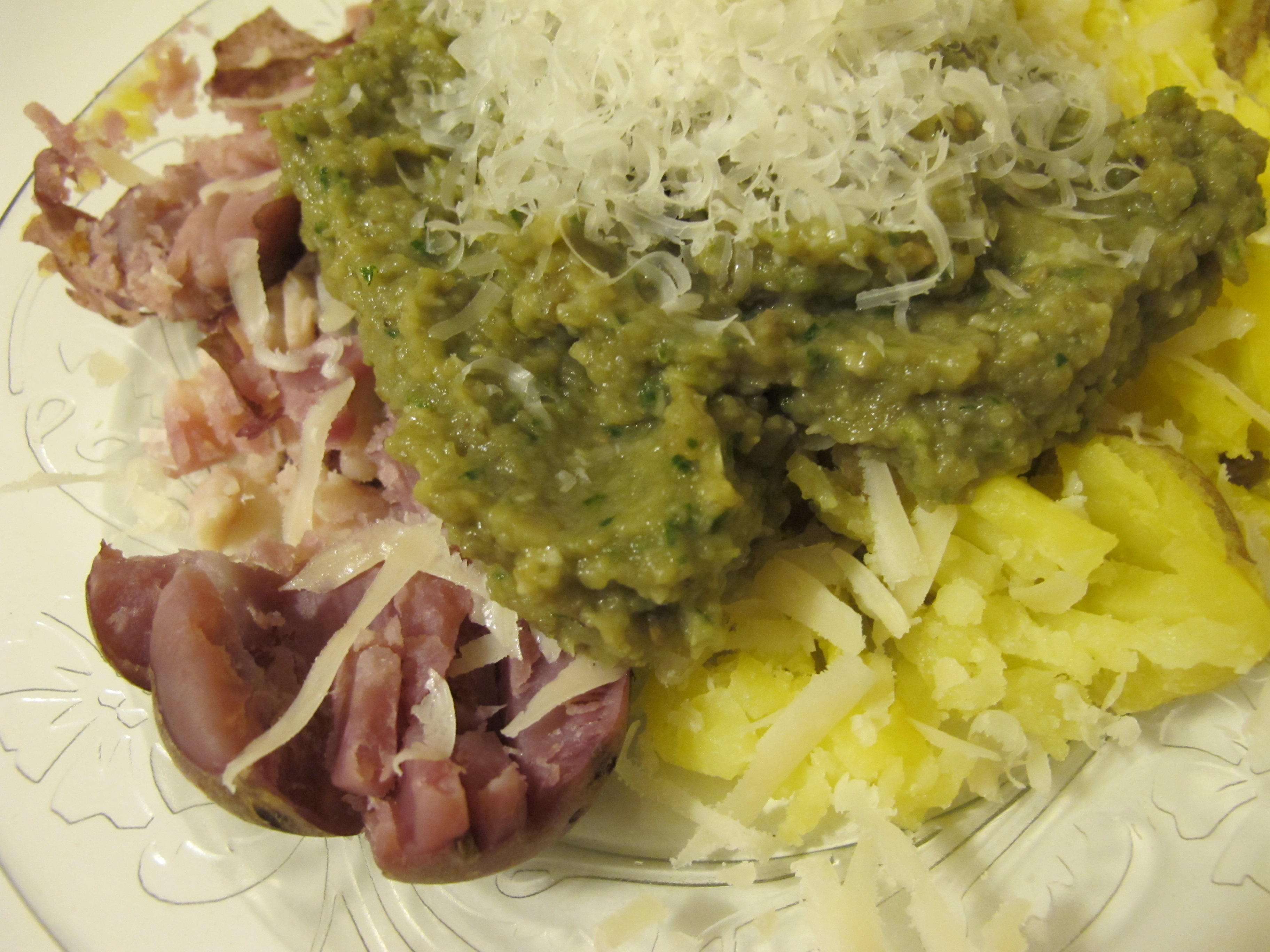
A rainbow of potatoes, boiled whole, and smashed . . .

. . . then topped with a thick, rich eggplant sauce.

Buckets o’ basil — I froze seven bags (each with four packed cups of basil) for pesto and other cooking throughout the winter.

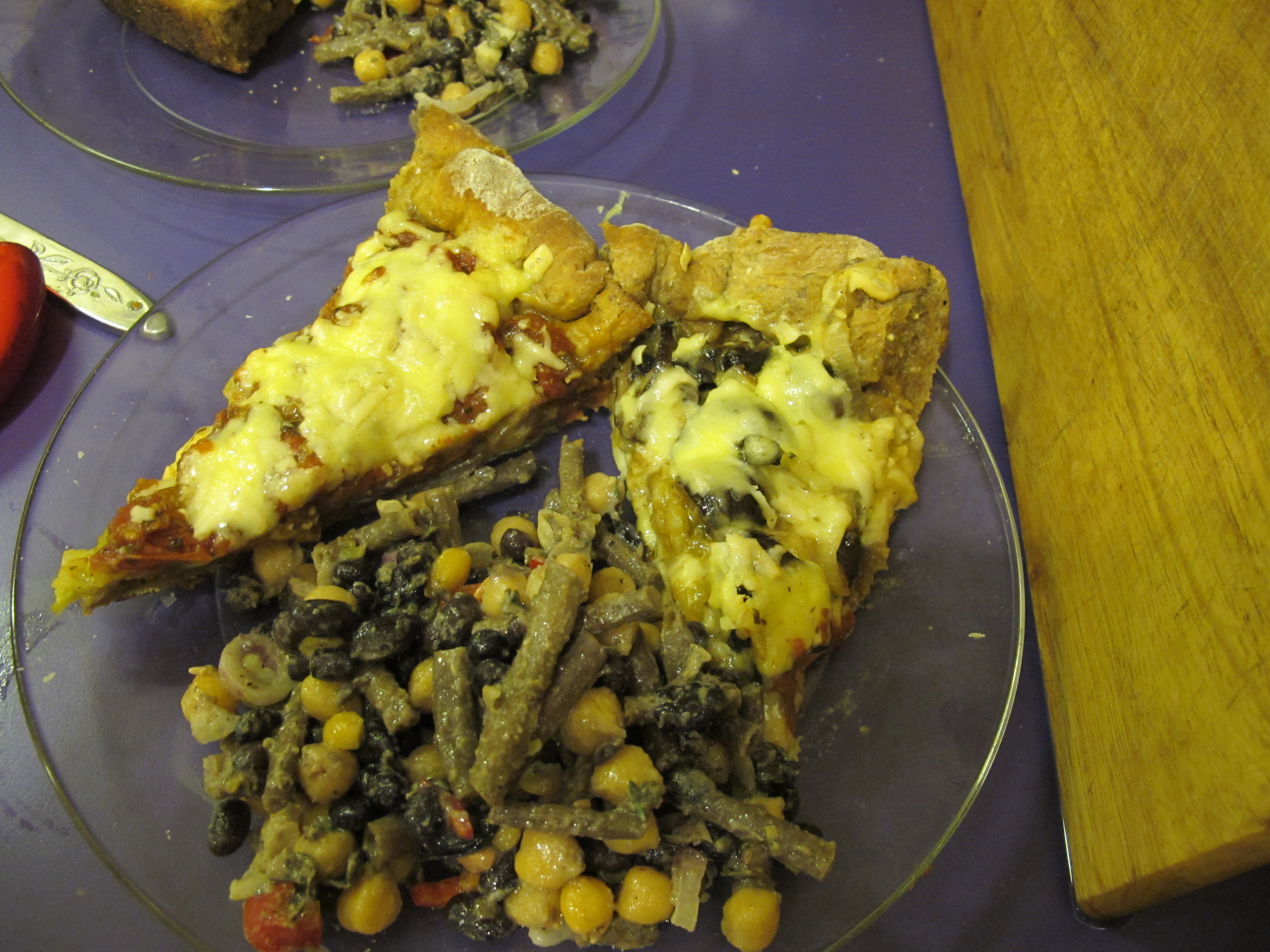
Deep dish cast iron pizza goodness . . .

. . . served with a three-bean salad.  And that’s a wrap!

Food, swapped

I couldn’t help but be excited last week when Nupur over at One Hot Stove responded to my “too many veggies” post with an offer to trade her homemade Indian food for our produce.  Um, yes!

We met up on Monday and swapped food, but even better, Gabriel and I had a nice visit with Nupur and her little Lila.

That evening, Matthew and I thoroughly enjoyed the idlis, lentil sambar, and beet salad.  Given his usual adventurous tastes, I was surprised that Gabriel was not into the sambar (and he was suspicious of the idlis because the initial bites I offered him were dipped in the sambar), but he did enjoy the flavorful beets, and his lack of interest in the sambar meant more for us.

The swap also prompted me to pull out my South Indian cookbook and browse for new recipe ideas.  I made a Tomato Vegetable Rasam last night, which I served with more of the idlis.  Nupur also suggested this use for leftover idlis, which I plan to try tomorrow.

Here’s to good food and new friends!