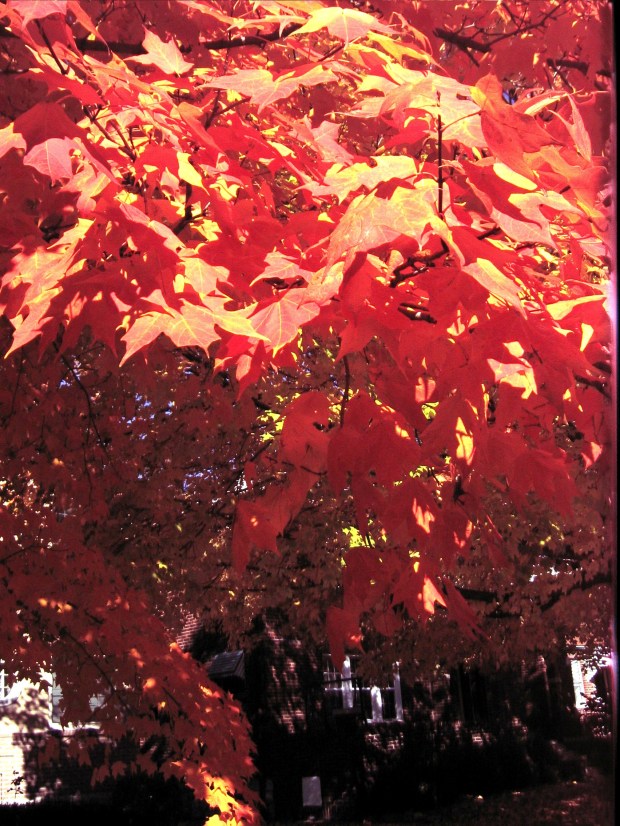
Today, I biked past a park employee cleaning a path with a leaf blower. Leaf blowers top my list of unnecessary “stuff” and blatant wastes of energy. Bleh!
Whole Health Dietitian — Tastefully Fueling Active Transportation
Today, I biked past a park employee cleaning a path with a leaf blower. Leaf blowers top my list of unnecessary “stuff” and blatant wastes of energy. Bleh!
Our local green general store carries a couple of “good for the environment” products that confuse me. I’m sure they’re made with materials and/or processes that are better, but really, could they not make a few simple changes?
1. Dental floss that comes in the standard plastic dispenser that could hold 200-250 yards of dental floss, but instead only comes with 50 yards of floss. How is that green? In general, I am perplexed by the fact that dental floss refills for the plastic dispensers are not readily available. The one refill I found online actually costs more than buying the entire new thing of dental floss in the store, dispenser and all. Something’s fishy there. Perhaps I have discovered a product gap. Sadly, I doubt I could make a living selling dental floss refills.
2. Razor blade cartridges that come in the plastic holder with spots for six cartridges, but contain only four cartridges. The other two spots are just a waste of plastic. Either sell me six cartridges or make a plastic holder with the correct number of spots.
Newsweek recently published this list, giving an environmental ranking to America’s 500 largest companies. I was most interested in the bottom of the ladder, which had few surprises.
#485 Monsanto: Makers of herbicides and genetically modified crops that can withstand the herbicide application (e.g., Round-up Ready Seeds), among other lovely things.
#493 Bunge: “The shortest distance from harvest to market.” (Coughbullshitcough).
#500 Peabody Energy: Huge stake in coal and major pusher for “clean” coal technology. Too bad there is no such thing as “clean” coal.
As a rather recent, somewhat dedicated NPR listener, I naively thought that companies advertising on NPR must be “good” companies. I became rather skeptical when I heard Bunge’s ad: “. . . producing food ingredients for food manufacturers.” Could they sound any shadier? Although I am not familiar with all of the factors that went into Newsweek’s list, I am not at all surprised that Bunge ended up in the bottom ten.
Read Affluenza: The All-Consuming Epidemic* and find out. This book contains some pretty amazing and sobering statistics and stories that call our priorities into question:
“. . . we have more than twice as many shopping centers as high schools.”
I will not go into too many details about the book here, because I don’t want to give anything away. I like to think I have, at worst, a very mild case of affluenza. Even so, this book was helpful as push back against the constant message of buy, buy, buy, consume, consume, consume.
I think the authors will forgive me if I encourage you to check your local public library for the book instead of buying it. If you do have to buy it, pass it on when you’re finished reading.
* By John De Graaf, David Wann, Thomas H. Naylor
Michael Pollen, Big Food vs. Big Insurance, in the NYTimes:
To put it more bluntly, the government is putting itself in the uncomfortable position of subsidizing both the costs of treating Type 2 diabetes and the consumption of high-fructose corn syrup.
There’s lots of money to be made selling fast food and then treating the diseases that fast food causes. One of the leading products of the American food industry has become patients for the American health care industry.
As things stand, the health care industry finds it more profitable to treat chronic diseases than to prevent them. There’s more money in amputating the limbs of diabetics than in counseling them on diet and exercise.
Yes, yes, and yes.
The third snippet is a bit of a sore point for me right now. I have been looking for a job as a health educator for two-and-a-half years. Apparently I should have stuck with the medical school plan and gone into amputation surgery (is that actually a surgical specialty, or did I just make it up?).
I’ve always had mixed feelings about John Mayer’s song, “Waiting on the World to Change.” I like the melody, but the lyrics raise some questions: Why are you waiting? What are you waiting for? Why don’t you go out and change it now?
I know what I want to do, but the jobs just are not out there, in part due to the reasons Michael Pollen mentions. Our health care system does not fund prevention. So maybe I am waiting on the world to change.


 Her Green Life