Still gotta eat

As would be expected, the move altered our usual cooking and eating patterns a bit.  I cooked on Friday night, but by Saturday it was time to start saying goodbye to our kitchen.

We planned to go out to eat on Saturday with my mom, who came to see Sir and help pack.  Unfortunately, I came down with the latest disease from Typhoid Gabriel and didn’t really feel like eating much of anything, much less leaving the apartment to do so.  We settled on take-out from Pho Grand.  Not the greenest dining option, giving their use of the standard large polystyrene containers, but desperate times call for desperate measures.

We had a decent supply of leftovers in the fridge, so we worked on lightening that load at both lunch and dinner on Sunday.  We enjoyed a “deconstructed” pumpkin lasagna for lunch (yay for frozen homemade pasta) and a Swiss chard and chickpea dish for dinner.

All bets were off on Monday, our actual moving day.  When lunch rolled around, we’d been up packing and moving for hours.  I picked up some sandwiches and deli-case salads at a nice little deli within walking distance of our new place.

Except I didn’t walk (hangs head in shame).  I was heading back to our old apartment to get Matthew and a last car load, and the deli was more-or-less on a direct route anyway, and it was like eleventy-million degrees outside with high-noon sun, and with a second floor to second floor move, I’d already walked up and down more flights of stairs than I cared to count.  So that’s my excuse for choosing inactive, gas-guzzling transportation.
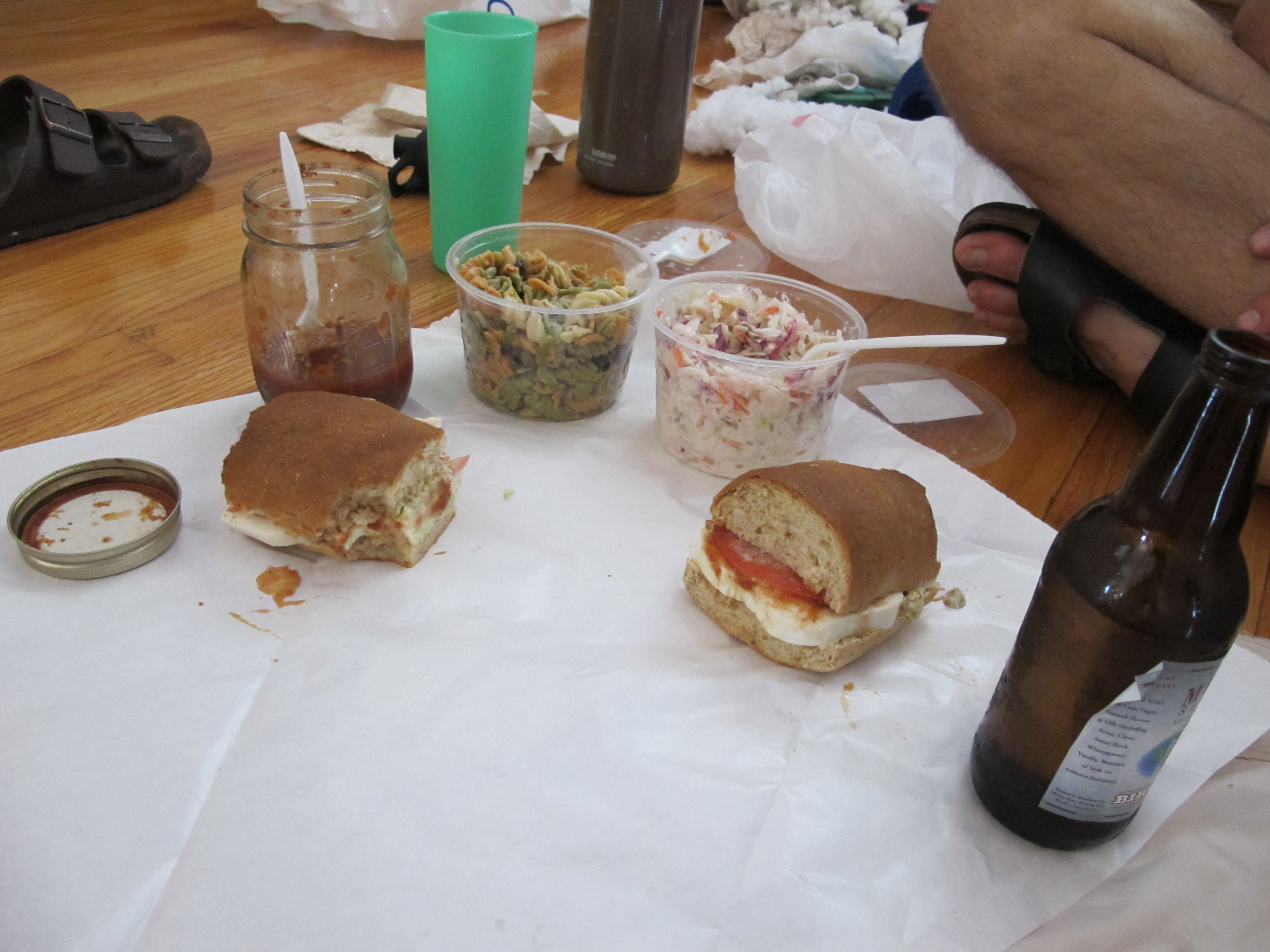
But lunch was good, though, once again, some disposable containers.  Matt’s mom brought us carry-out pizza for dinner.  The pizza box was pretty darn clean, so that at least got recycled.

The good news is that despite the still-crazy state of our apartment, we’ve gotten back into the kitchen the past few nights.  By which I mean Matthew’s gotten back into the kitchen, of course, per our usual weeknight routine.

The garden supplied almost all of the ingredients for Wednesday night’s dinner.  Boiled beets — some cubed for part of the main dish, some thinly sliced for a side with goat cheese.

Potatoes “baked” in the microwave, cubed, and tossed with olive oil and salt to serve as a base for sauteed cabbage with onions [previously] roasted elephant garlic, edamame, and the cubed beet.

The only produce on the plate NOT from the garden was the edamame and the onions (both of which we’re growing but are not ready for harvest yet).

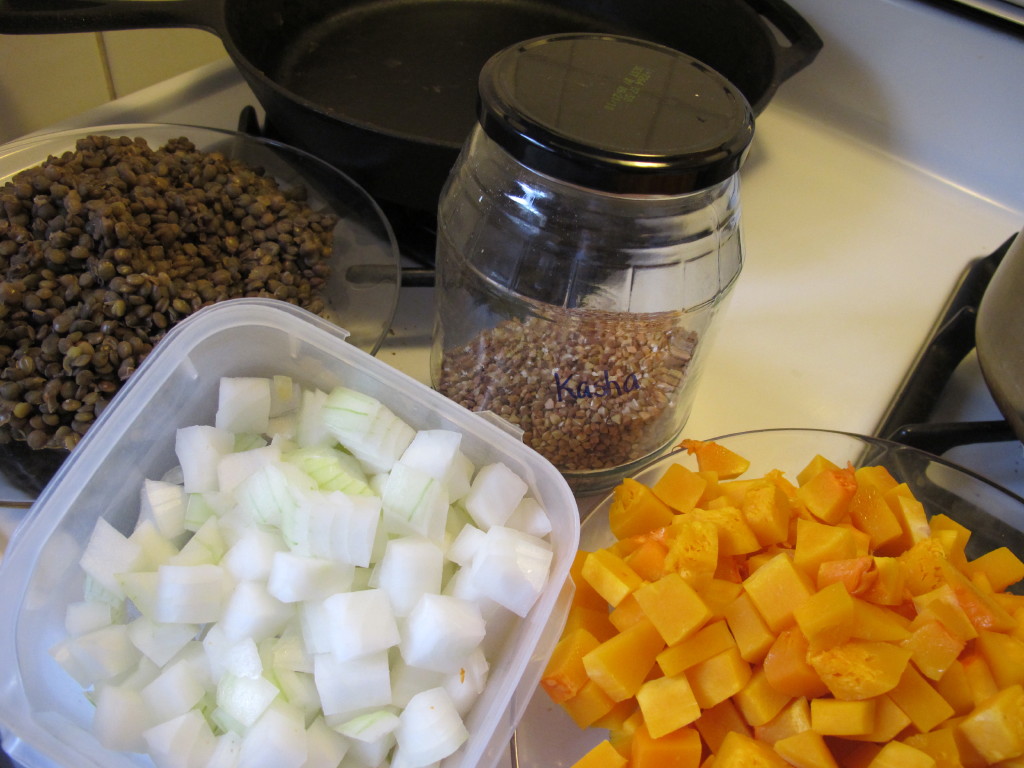
One dish kasha dinner

What’s kasha, you ask?  Well, it’s something that’s been sitting around in a jar in my pantry for far too long.

For a more illuminating answer, kasha is made from crushed, roasted buckwheat grains (AKA buckwheat groats).  I buy it in the bulk aisle at WF.  If you have plain buckwheat, you can essentially make your own kasha by toasting the grains in a dry skillet.

The upcoming move puts me in a “use it up or throw it out” mood, and I don’t like throwing away food, so I headed to the internet for some recipe ideas.  In the process, I learned a thing or two about buckwheat, and I’ll be keeping this food in my kitchen arsenal.

Did you know that you can eat kasha raw?  I crunched some grains while I was cooking and added a bit to my granola the next morning.

Searching for inspiration, I found many interesting breakfast-y recipes, but I needed something for dinner.  In the end, I used Meghan’s Buckwheat Sweet Potato Burgers as the inspiration for my creation.

Kasha, Lentil, & BUtternut Squash Bowl

Recipe by Melissa
Serves 6-8

Ingredients
1 1/2 c. kasha (roasted buckwheat groats)
1/2 t. salt
3/4 c. lentils
1 small butternut squash* or two medium sweet potatoes
3 T. good balsamic vinegar**
3 c. shredded or finely chopped cabbage
1 medium onion, diced
Olive oil, for sauteing
1/3 c. almond butter
2 T. soy sauce

Directions
Peel and dice squash or sweet potato and steam until just tender.  Place steamed squash in a large bowl and pour the balsamic vinegar over the warm squash.  Toss to coat.

In the same [now empty] pan you used for steaming the squash, cover the lentils with water (use enough water so there’s an inch above the dry lentils).  Bring to a boil, and then simmer for 20-30 minutes.  You want them tender with just a bit of bite, not mushy, so start checking after 20 minutes.

Drain the lentils, reserving the cooking liquid.  Add the lentils to the bowl with the squash, and sprinkle 1/4 t. salt over the lentils.

Add enough water to the reserved lentil cooking liquid for a total of three cups.  Bring this to a boil, add the kasha and 1/2 t. salt, cover, and simmer until the liquid is absorbed, 10-15 minutes.

While the lentils and/or kasha simmer, saute the onions in some olive oil.  After 10-15 minutes, add the cabbage to the onions with a bit more olive oil, and saute 5 minutes, or until the cabbage is just tender.

Mix 1/3 cup almond butter, 2 T. soy sauce, and 1/3-1/2 cup water to make a nice, thick sauce.

Once the kasha is cooked, combine the grain, lentils, squash, onions, and cabbage.  If either your original pan or bowl are large enough, use this and avoid another dirty dish!

Serve warm with a spoonful of the almond butter sauce on top.

*The last of our winter squash 2011 harvest.

**The balsamic was a last minute idea, and I wasn’t sure how it would work.  I used our favorite balsamic, which is quite sweet and has relatively low acidity.  I wouldn’t recommend just any balsamic here.


Fennel pesto

In last week’s garden post, I mentioned Matthew’s biodiversity micro-grant award to grow celeriac and paw paws. However, he actually proposed growing three items, not two, with fennel being the third item.

Poor little fennel felt a bit left out after my omission, so today he’s getting his very own post.

If you’ve bought fennel at the grocery store, you probably got something that looked like this:

Fenouil
Fennel (Photo credit: Wikipedia)

Mostly bulb, some stalk, and perhaps a spattering of feathery fronds.

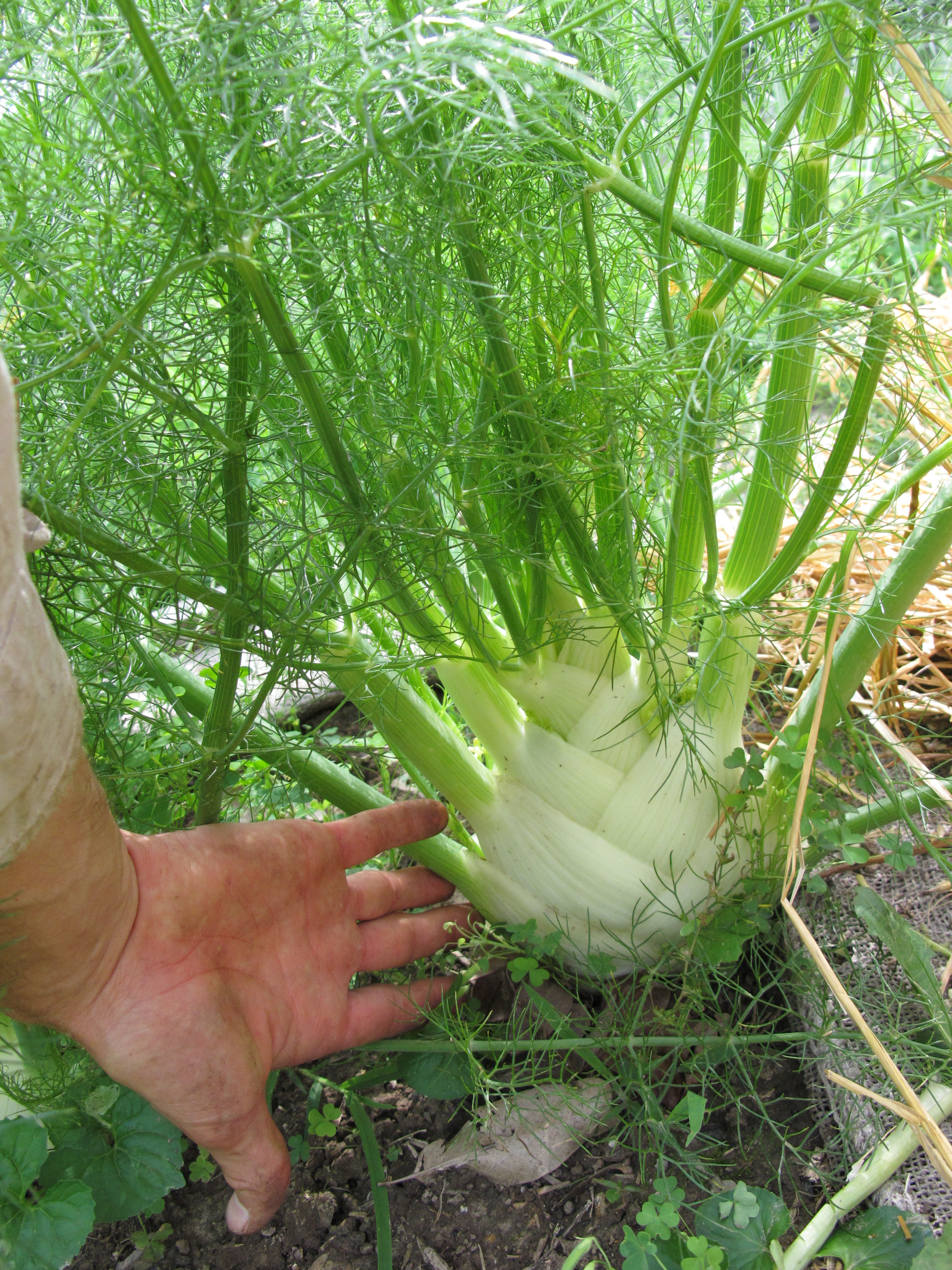
Like a lot of supermarket produce, it looks rather different than the straight-from-the-garden version:

Our fennel (June 2011)

See all the featheriness on top?  The fronds do not keep nearly as well as the bulb, hence the missing top half on most grocery store fennel.

Though this year’s crop is nowhere near that size, we harvested a couple of bulbs for early eating (also making room for the remaining plants to grow larger).  After roasting the bulb, we were left with a lot of fronds, which, I’ll admit, sat in the fridge for quite a few days.

They were at the “use it or toss it to make room for other things” stage.  In Stacy’s recent post about CSA membership, the discussion turned to how to use everything that’s part of the weekly produce delivery.

I hate to waste food, so I chopped the fennel fronds and created a twist on the traditional basil pesto.   If you’re lucky enough to pick up a fresh, locally grown fennel bulb at the farmers’ market or receive one as part of a CSA box, you can make use of the flavorful fronds with this recipe.

Fennel pesto

Recipe by Melissa

Ingredients
1-2 c. chopped fennel fronds and stalks
3/4 c. olive oil
2-3 cloves garlic, peeled and chopped
1/4 t. salt
1/4 c. pistachios (I used roasted & salted)
Opt. 1 T. lemon juice, or to taste*

Directions
Add all ingredients to blender or food processor and process until desired smoothness.

Serving Suggestions

  • Stir into a grain, protein, veggie dish.  I combined cooked couscous, rice, and lentils with chopped raw carrots, summer squash, and kohl rabbi.  Mix in the fennel pesto, adjust salt as needed, and you have a quick, easy meal.
  • Add extra lemon juice (and perhaps a bit of water) to create a tasty salad dressing.  If you still have the fennel bulb, make a salad with a bed of greens, roasted fennel and/or thin slices of raw fennel,
    pistachios, and olives.
  • Use any way that you would use basil pesto, e.g., on top of pasta, as a pizza sauce, etc.
  • Spread onto bread for a simple appetizer or as a sandwich ingredient.

*I didn’t add lemon juice in my original recipe, but  it would be a nice addition.

Related post: Monumental fennel (with recipe for roasted fennel)

Since today is Bike to Work Day, here’s my post from BtW Day last year, when I was 32 weeks pregnant: Finally Bike Somewhere Day.

A tale of two cakes — Cake #2

The chocolate cake goodness, started in this post, continued to my birthday weekend.  When Matthew asked what kind of cake I wanted, I gave him a couple of options: 1) something with chocolate and peanut butter (a cake or a tart) or 2) a chocolate pudding cake.

There are various definitions of “pudding cake,” and for Matthew’s birthday a few weeks ago,, I made him a vanilla rum pudding cake that was definitely more pudding than cake.  We actually weren’t sure why the recipe included the word “cake.”

The inspiration for my request came from a blog post I saw back in January.  Yes, I’ve been dreaming of a chocolate cake with vanilla pudding poured over it for over three months!

Unfortunately, like my original inspiration, all of the pudding cake “recipes” I found in online searches involved boxes — boxed cake mix and boxed pudding.  Eh, no thanks.

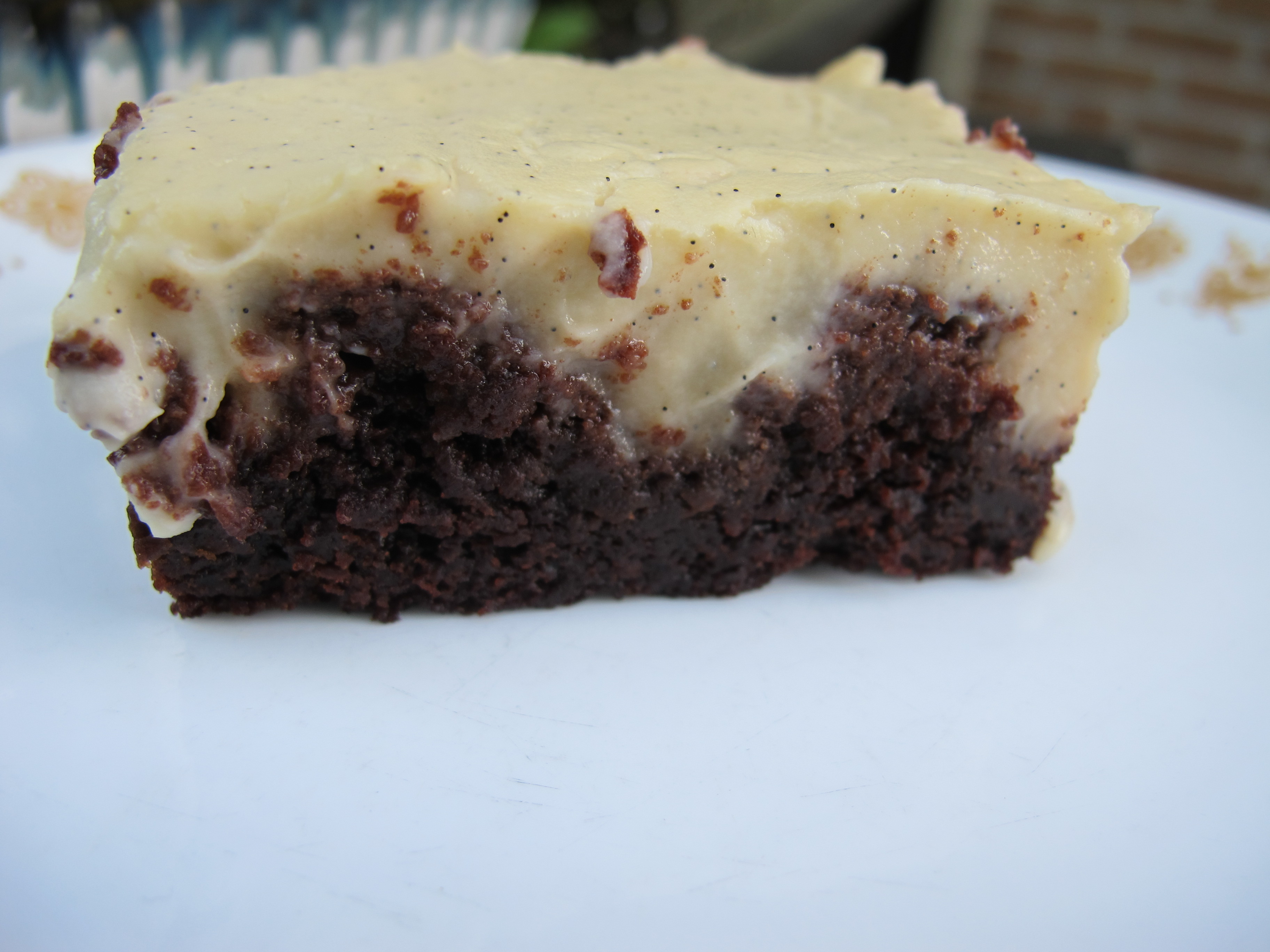
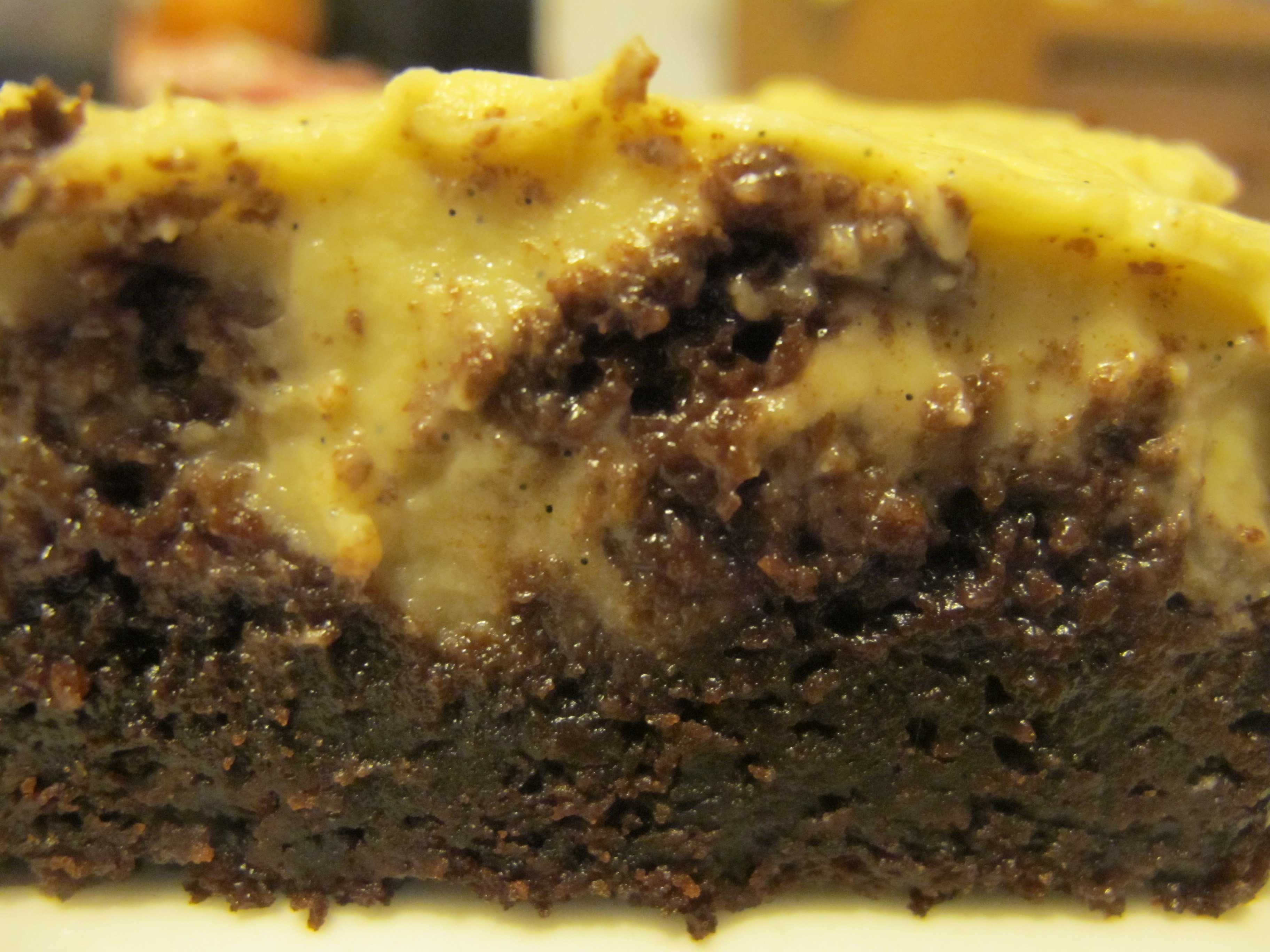
Instead, Matthew whipped up a chocolate cake (in not much more time than it takes to make a cake from a box) and some delicious, creamy vanilla pudding, creating the cake of my dreams.

He started with the chocolate cake from this recipe, making it as a sheet cake in a 9×13 pan instead of a layer cake.  He made two other changes: 1) regular cocoa powder instead of Dutch-process (it’s the only kind we buy — more antioxidants!) and 2) hot water instead of the coffee.

chocolate pudding cake

Recipe by Matthew

Ingredients
One 9×13 chocolate cake (ingredient list and recipe here)
1/2 c. sugar
2 T. cornstarch
1/4 t. salt
3 large egg yolks
1/2 c. heavy cream
5 t. vanilla
2 scraped vanilla beans (optional but delicious)
2 1/2 c. whole milk
5 T. unsalted butter

Directions
Make the chocolate cake.  Once the cake is in the oven, start on the pudding.

Whisk the sugar, cornstarch, and salt in a medium pan.  Then add the egg yolks, cream, vanilla, and vanilla bean scrapings to the same pan and whisk thoroughly.  Whisk in the milk.

Heat over medium high heat, whisking constantly until the pudding has thickened and is fully bubbling.  Continue heating (and whisking) for an additional thirty seconds, then remove from heat.

Whisk in the butter.  Pour through fine mesh strainer (we skipped this step with no ill results).  Set pudding aside for a few minutes to cool and thicken slightly.

When the cake finishes baking and is still warm, poke holes in the cake at one-inch intervals, using a wooden spoon handle.  Make the holes about 2/3 the depth of the cake, NOT all the way to the bottom of the pan.

Pour the warm vanilla pudding over the warm chocolate cake.  Gently spread pudding and help guide it into the holes.  There will still be a thin layer of pudding covering the top of the cake.

Refrigerate for at least an hour, and then revel in the chocolately, vanilla-y, pudding-y goodness.

Note: If you don’t let it set up in the fridge, you’ll have a big, gooey mess.  However, the cake really does taste best at room temperature, or slightly warmer.  I recommend letting it set as directed, then serving cake and allowing to come to room temperature before eating.

A tale of two cakes — Cake #1

My mom and I celebrate our birthdays exactly one week apart, and this year we had Sunday birthdays.  These days, its rare for us to be together to celebrate, but this year my mom spent part of her birthday weekend with us, which meant I was able to treat her to a homemade birthday dinner and cake.

Remember that “One pumpkin, five ways,” post I wrote a couple of weeks ago?  Turns out it should have said SIX ways.  I transformed the last of the pumpkin puree into a delicious chocolate pumpkin cake, a recipe I created by merging our chocolate zucchini cake recipe with the pumpkin bread recipe.

Recipe merge verdict?  Success!  A rich, moist, chocolate cake, mildly sweet, yielding a delicious, buttercream-frosted final product.  Come back later this week for cake #2 (hint: it involves more chocolate and a delicious pudding).

Chocolate Pumpkin Cake

Recipe by Melissa
Yield: One 8×8 cake (double for 9×13 or layer cake)

 Ingredients
1 (15 oz) can pumpkin
1 cup sugar
2 cups whole wheat pastry flour
1/4 cup cocoa powder
1 tsp baking soda
1 tsp baking powder
4 tablespoons butter, melted and cooled
4 oz. semisweet chocolate
2 large eggs, beaten
1 tsp vanilla

 Directions
Cook the pumpkin and sugar together in a medium saucepan over medium high heat, stirring constantly, until thick and shiny, 5 to 7 minutes. Set aside to cool.

Use same, warm pan to melt butter and chocolate together.

Adjust oven rack to the lower middle position and heat the oven to 350 degrees. Grease and flour an 8×8 square cake pan.

Combine the wheat flour, cocoa powder, baking soda, and baking powder in a large bowl. In a separate bowl whisk the cooled pumpkin mixture, butter and chocolate mixture, eggs and vanilla together.

Gently fold the liquid mixture into the flour mixture with a rubber spatula until just combined (do not over mix). The batter will be very thick.

Scrape the batter into the prepared pan and smooth the top. Bake until a toothpick inserted into the center of the loaf comes out with just a few crumbs attached, 40-45 minutes, rotating the pan halfway through baking.

Cool completely before frosting.

Buttercream frosting

Yield: Frosting for one 8×8 cake  (double if doubling cake recipe)

Ingredients
1/2 pound unsalted butter (or use half Earth Balance, half butter)
1/2 pound powdered sugar
1/2 t. vanilla
1/2 t. almond extract

Directions
Set butter out on counter ahead of time to soften slightly.  (Do NOT melt butter!)  Weigh out 1/2 pound of powdered sugar, then sift into bowl.  Using electric beaters, whip butter and sugar together.  Add vanilla and almond.  Do not frost until cake is completely cooled.